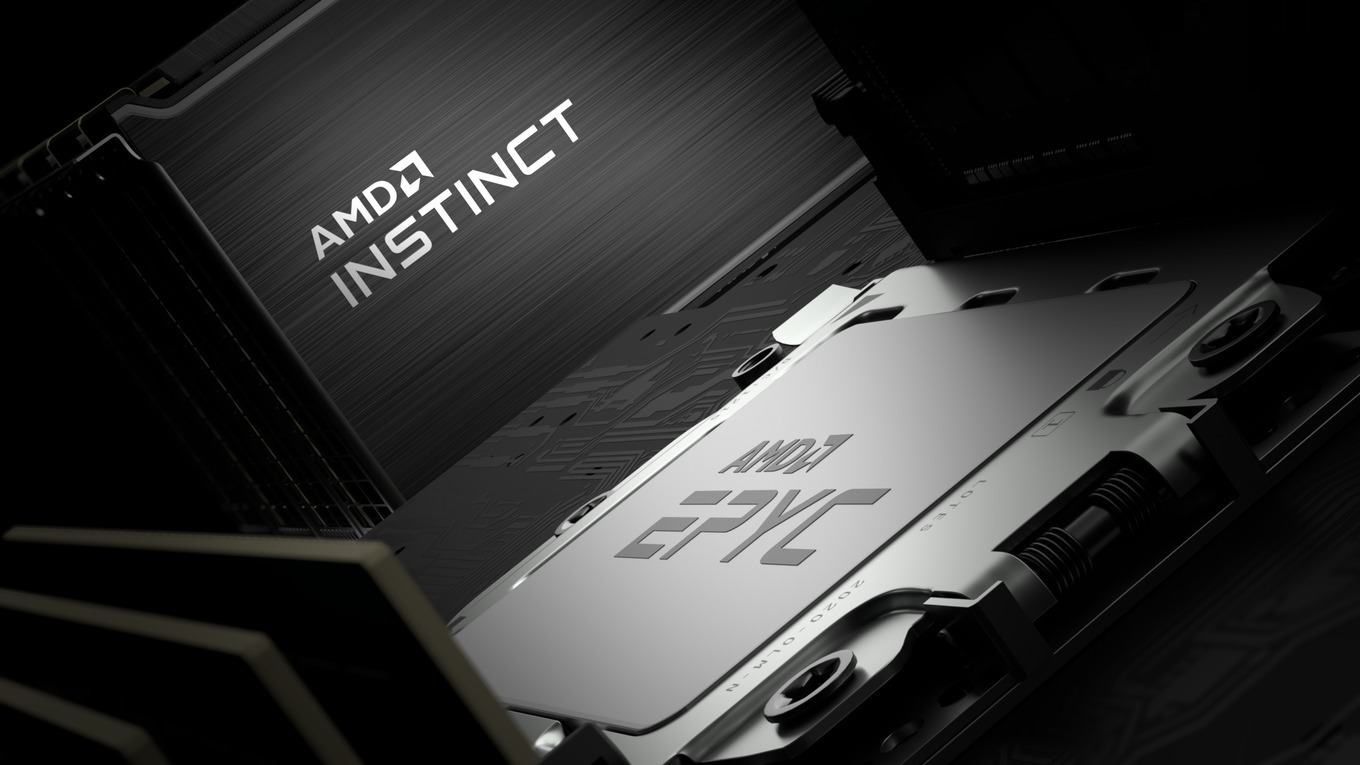
AMD’s momentum in AI is quickly becoming one of the biggest stories in the semiconductor industry, and new analyst expectations suggest the company’s data center run is far from slowing down. With AI spending accelerating across cloud providers, enterprise data centers, and research labs, AMD’s CPU and GPU roadmap is lining up with a market that’s hungry for more compute, more memory bandwidth, and better efficiency.
One of the clearest signals comes from fresh projections that AMD could ship nearly 1.9 million AI GPUs by 2027. Those numbers point to a dramatic ramp in AMD Instinct accelerator volume over the next few years, driven by expanding AI infrastructure and rising demand for large-scale training and inference.
Server CPU growth could be a major near-term catalyst
AI may be the headline, but CPUs still matter more than ever—especially with Agentic AI workflows that lean heavily on strong server processors. Recent commentary from analysts indicates AMD is not facing the same level of constraints in CPUs as some rivals, and AMD’s server CPU revenue is expected to surge this year, with projections calling for roughly 80% growth.
AMD’s EPYC lineup continues to hold a strong competitive position in the data center market, helped by leading-edge manufacturing and modern platform features. At the same time, the broader server CPU market remains highly active, with demand staying strong even as competitors work to refresh their product families. AMD has also emphasized that its platform delivers strong AI inferencing performance, which is becoming a key buying factor as organizations look to deploy AI in production at scale.
AMD Instinct AI GPU shipments may jump sharply through 2027
On the GPU side, updated forecasts point to a significant increase in expected Instinct accelerator unit shipments from 2025 through 2027. The latest outlook suggests AMD could approach around one million AI GPU shipments in 2026, with the MI350 generation positioned as a major driver.
The bigger leap is expected in 2027, when the ramp of the MI450 series could push total AI GPU shipments close to 1.9 million units. If this plays out, it would mark a major step-up in AMD’s ability to supply large volumes into a market where demand for data center GPUs has repeatedly outpaced availability.
Looking further ahead, AMD’s MI500 GPUs are expected to target the 2027–2028 window. These chips are anticipated to introduce co-packaged optics, an important next-generation technology for AI scale-out and data center networking efficiency. This is the direction the entire industry is moving toward as clusters grow and interconnect bottlenecks become harder to ignore.
There’s also growing talk that AMD could land meaningful customer wins with its upcoming MI400 series, including the possibility of a major deal with a leading AI lab—another reminder that design wins can quickly shift momentum in the AI hardware race.
China is another area where AMD’s position looks unusually strong
While the global AI market is intensely competitive, China is shaping up differently due to export restrictions and shifting policies that have reduced the official presence of certain high-end accelerators. In that environment, AMD is estimated to hold a 12% share in China this year—higher than the official share of NVIDIA—largely because official availability has been heavily impacted.
That said, market share in China can be difficult to measure cleanly. Even with stricter controls, some organizations reportedly still obtain advanced AI chips through non-official channels. So while official figures may show a steep drop for some vendors, unofficial activity can blur the real picture.
All eyes on AMD’s upcoming earnings
AMD is set to report first-quarter 2026 earnings soon, and expectations are building. Between the rise of Agentic AI, continued data center expansion, and strong demand for EPYC CPUs worldwide, investors and industry watchers are looking for signs that AMD’s AI and server growth is translating into standout revenue and forward guidance.
If the projected AI GPU shipment ramp and server CPU acceleration continue to track upward, AMD could be positioning itself not just as a strong alternative in AI infrastructure, but as one of the primary engines driving data center compute growth over the next several years.