Fake AMD Ryzen 9 9950X3D2 CPU Scam Reported After Buyer Receives Intel-Based Chip From Amazon
A new CPU scam is raising concerns among PC builders after a buyer reportedly received what looked like an AMD Ryzen 9 9950X3D2 on the outside, but appeared to be something completely different underneath.
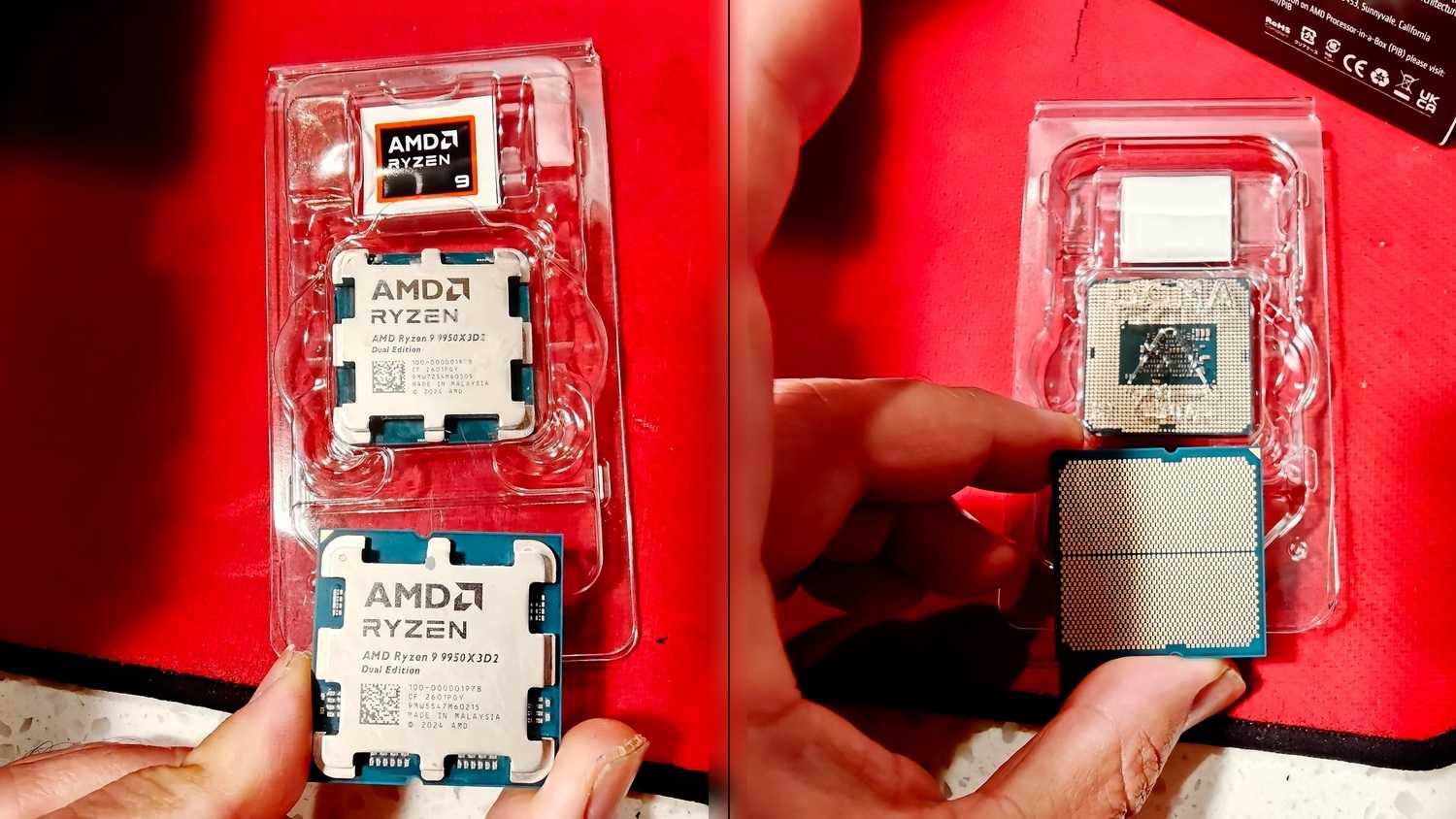
According to a Reddit user, the processor was purchased from Amazon as a sealed product and was listed as sold and shipped by Amazon. The chip was supposed to be AMD’s high-end Ryzen 9 9950X3D2 Dual Edition, a premium Zen 5 processor priced around $899. However, once the buyer inspected the underside of the CPU, it became clear that something was wrong.
From the top, the processor appeared to carry the same integrated heat spreader, or IHS, as the real Ryzen 9 9950X3D2. That is what makes this case especially concerning. Many fake CPU scams can be spotted by obvious differences, such as incorrect markings, unusual font, misplaced surface-mounted components, or poor packaging. In this case, the top of the chip looked convincing enough to pass a quick visual check.
The real issue was found on the bottom of the processor. Instead of matching the layout expected from an AMD Ryzen 9000-series CPU, the underside reportedly had a completely different design. The contact layout and the placement of small components looked much more like an Intel CPU substrate. In simple terms, it appears that someone may have taken an Intel processor base and attached an AMD Ryzen 9 9950X3D2 heat spreader on top of it.
That kind of swap is more sophisticated than the usual fake CPU trick. If the IHS is authentic or convincingly copied, many buyers may not notice anything suspicious until they try to install the processor or compare it closely with verified images of the real chip. For expensive flagship hardware, that creates a serious risk for customers buying through large online marketplaces.
Other users who saw the images suggested that the processor may have been previously purchased, delidded, modified, and returned. If that is what happened, the fake chip could have re-entered inventory and then been shipped to another customer as a sealed retail item. The buyer is expected to be eligible for a refund, but the incident highlights how difficult it can be for shoppers to detect tampered hardware before opening the box.
High-end PC components have become frequent targets for scams because of their high resale value and strong demand. Expensive processors such as the Ryzen 9 9950X3D2 are especially attractive to scammers, since replacing the real chip with a worthless or mismatched part can create a large profit if the return process is abused. Similar concerns have been seen with other premium components, including top-tier graphics cards, where shortages and high prices have made fraud more common.
For PC builders, this case is a reminder to inspect new processors carefully before installation. Buyers should check the packaging, verify the model markings, compare the underside of the chip with official product images, and document the unboxing process when purchasing expensive hardware. If anything looks unusual, it is safer to stop immediately and contact the retailer rather than attempting to install the part.
The reported fake Ryzen 9 9950X3D2 incident shows that CPU scams are becoming harder to spot. A processor can look legitimate from the top while hiding a completely different substrate underneath. As flagship CPUs continue to command premium prices, buyers should remain cautious, especially when purchasing high-value PC hardware online.