Next-Gen 800V DC Power Systems Are Set to Transform AI Data Centers for NVIDIA and Google
The data center industry is entering a major power transition as artificial intelligence workloads push electricity demand to unprecedented levels. With next-generation AI platforms requiring far more energy than traditional server infrastructure can efficiently deliver, companies such as NVIDIA and Google are preparing to move toward 800V DC, also known as high-voltage direct current or HVDC, power architectures.
This shift is expected to play a critical role in supporting upcoming AI hardware, including NVIDIA’s Vera Rubin platform and Google’s future TPU infrastructure. As AI systems become denser, faster, and more power-hungry, conventional 48V and 54V data center power designs are increasingly becoming a limitation. The move to 800V DC is designed to reduce losses, simplify power delivery, and make megawatt-scale AI racks more practical.
Initial shipments of power semiconductor components for 800V DC infrastructure are expected to begin in smaller volumes around the third quarter of 2026. While early deployment will likely be limited, demand is expected to accelerate as hyperscale cloud providers and AI data center operators look for more efficient ways to manage rising power consumption.
Power supply and power management companies are preparing for this transition. Delta Electronics, a major supplier of power switching systems and power supplies, is expected to benefit from growing demand for 800V DC power systems, backup battery units, and advanced power management hardware. The company has also developed row-based 800V DC power systems with liquid cooling, including a 2.4MW liquid-cooled solution using high-voltage DC fans and newer cold plate modules.
The reason for this rapid shift is simple: AI racks are becoming extremely power dense. NVIDIA’s upcoming Rubin Ultra platform is expected to reach around 450kW per rack, while the following Feynman generation could push rack-level power requirements to between 600kW and 1MW. At that scale, older power distribution methods become less efficient, more expensive, and harder to cool.
NVIDIA has already confirmed its plan to adopt 800V DC architectures for future AI data centers. Compared with legacy low-voltage standards, 800V DC reduces current, cuts down on copper usage, decreases cable bulk, and improves overall infrastructure scalability. By delivering power at higher voltage, these systems can move the same amount of energy with less current, which helps reduce heat and energy loss across the data center.
One of the biggest advantages of 800V DC is improved efficiency. Instead of relying on multiple power conversion stages, future systems can reduce the number of conversion steps, such as moving from 800V directly down to the low voltages required by AI chips. Fewer conversion stages mean less wasted energy, which is especially important when a single rack can consume hundreds of kilowatts.
The new architecture also helps reduce the physical footprint of power infrastructure. Lower current requirements allow thinner cables, smaller components, and cleaner rack designs. That frees up valuable space for compute hardware, enabling operators to install more GPUs, accelerators, and networking equipment in the same data center footprint.
Advanced power semiconductors will be essential to making this possible. Gallium Nitride and Silicon Carbide components are expected to play a key role because they can handle high-voltage switching more efficiently than traditional silicon-based components. These materials are becoming increasingly important as AI data centers move toward higher power density and more demanding electrical designs.
Safety is another important part of the 800V DC transition. Although the voltage is much higher than older data center standards, these systems are being designed with specialized protection components, including solid-state relays, high-voltage hot-swap systems, and isolated sensors. These technologies are intended to keep the infrastructure stable, serviceable, and safe for large-scale deployment.
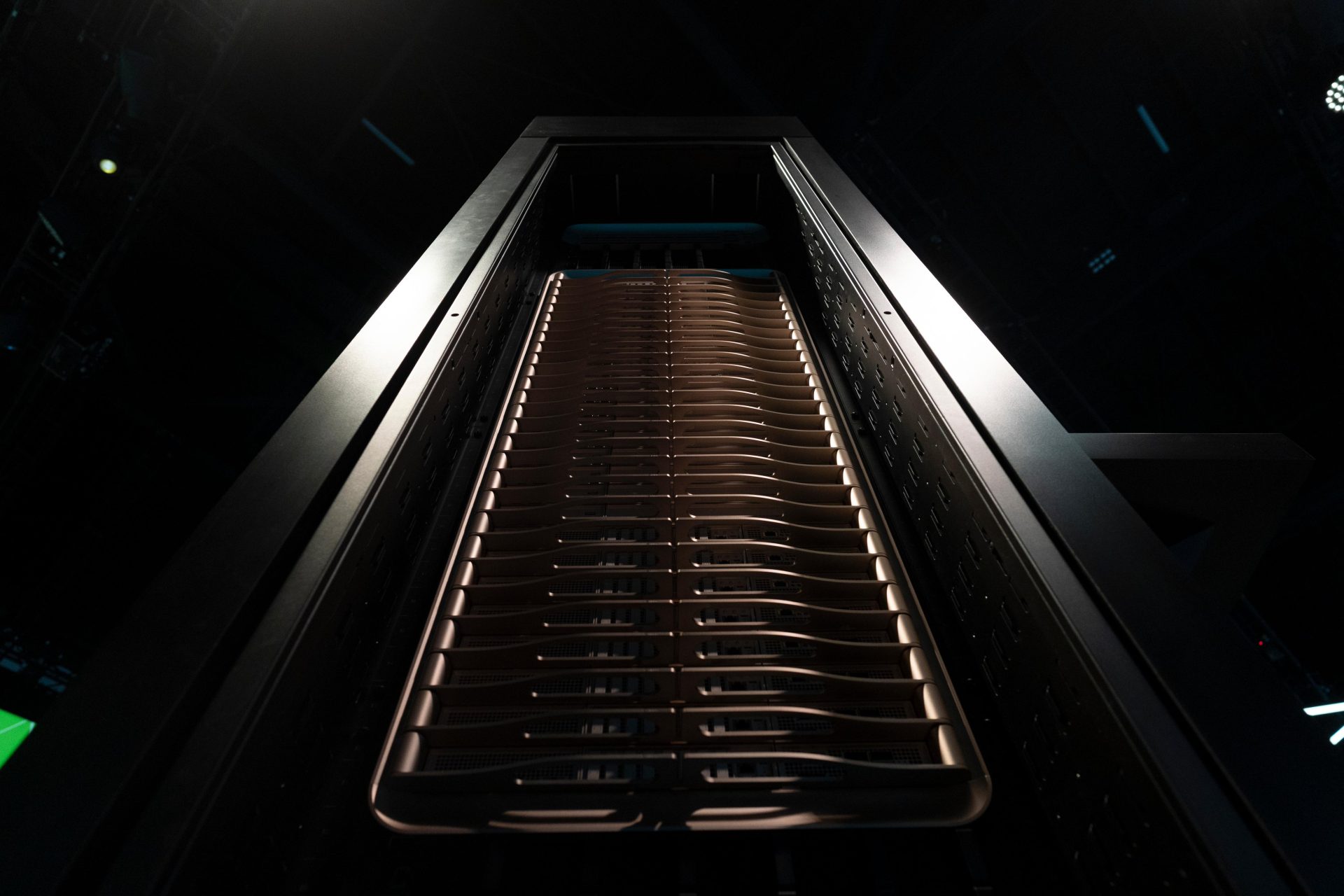
NVIDIA’s first major 800V DC implementation is expected to arrive with its Kyber rack systems in 2027. These racks are expected to support the Rubin Ultra AI GPU family in a dense configuration with 576 Rubin Ultra chips and an all-liquid-cooled design rated around 600kW. This would represent a major step forward in AI data center engineering and could set the standard for future high-performance computing infrastructure.
Google’s interest in HVDC power is also tied to the growing energy demands of AI training and inference. As TPU platforms become more powerful, efficient power delivery becomes just as important as chip performance. For hyperscalers, reducing electrical losses across thousands of racks can translate into major savings in both energy cost and infrastructure complexity.
The move to 800V DC will also create new opportunities across the power semiconductor supply chain. Voltage regulator module makers, power supply vendors, cooling specialists, and component manufacturers are expected to scale production as demand rises. As AI data centers continue to evolve, power delivery is becoming one of the most important battlegrounds in the industry.
In the coming years, the success of AI infrastructure will not depend only on faster GPUs or more advanced accelerators. It will also depend on whether data centers can deliver enough power efficiently, safely, and at scale. The arrival of 800V DC systems marks a major turning point, paving the way for the next generation of AI factories built around megawatt-class racks, liquid cooling, and high-efficiency power electronics.