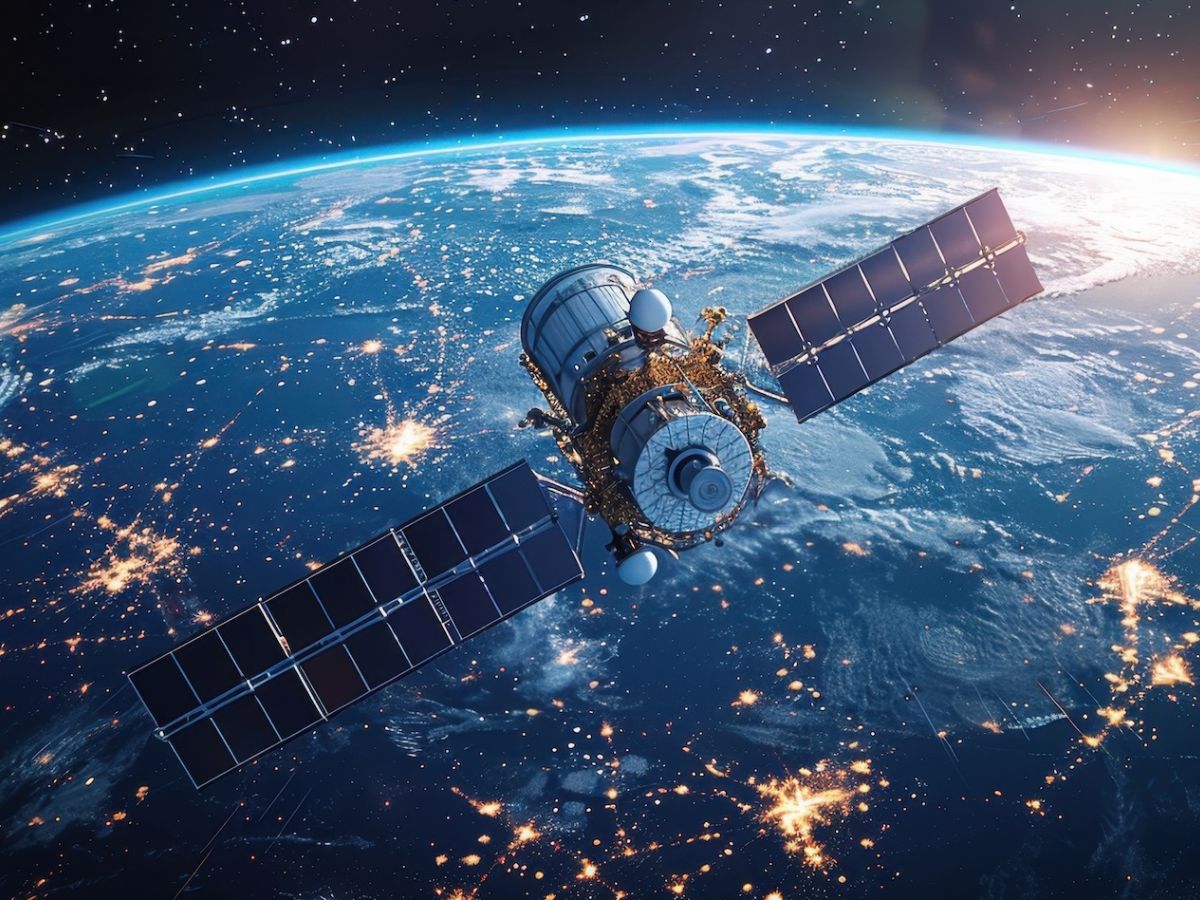
Artificial intelligence (AI) is making incredible strides across various sectors, including space exploration. Recently, a NASA-led mission achieved a groundbreaking milestone with a satellite successfully executing a mission autonomously, without human intervention.
This mission utilized a technology called Dynamic Targeting, developed by NASA’s Jet Propulsion Laboratory (JPL) in collaboration with Open Cosmos, a company that manufactured the compact satellite. Despite being the size of a briefcase, the satellite was equipped with a machine learning processor designed by Ubotica.
During this fascinating mission, the satellite performed a maneuver to scan 500 km ahead of its orbit to capture an image. Following this, Ubotica’s AI analyzed the image to determine cloud coverage. Depending on the cloud status, the satellite had two options: if the sky was clear, it would tilt back to take a high-resolution image of Earth’s surface. However, if it detected clouds, it would refrain from capturing further images to conserve resources like time, bandwidth, and storage.
While we’re not yet at the point of having spacecraft traveling independently through space at high speeds, this development marks a significant leap forward. Ben Smith from JPL highlights the importance of this advancement by stating that intelligent targeting allows satellites to prioritize ground imaging over cloud-covered areas, providing scientists with more usable data.
Currently, scientists often sift through numerous satellite images, many of which are unusable due to cloud cover. This intelligent AI application not only streamlines the data collection process but also enhances the speed and efficiency of observing natural disasters such as wildfires or volcanic eruptions. As technology like this continues to improve, the potential for timely and accurate data collection in space exploration and Earth observation grows immensely.