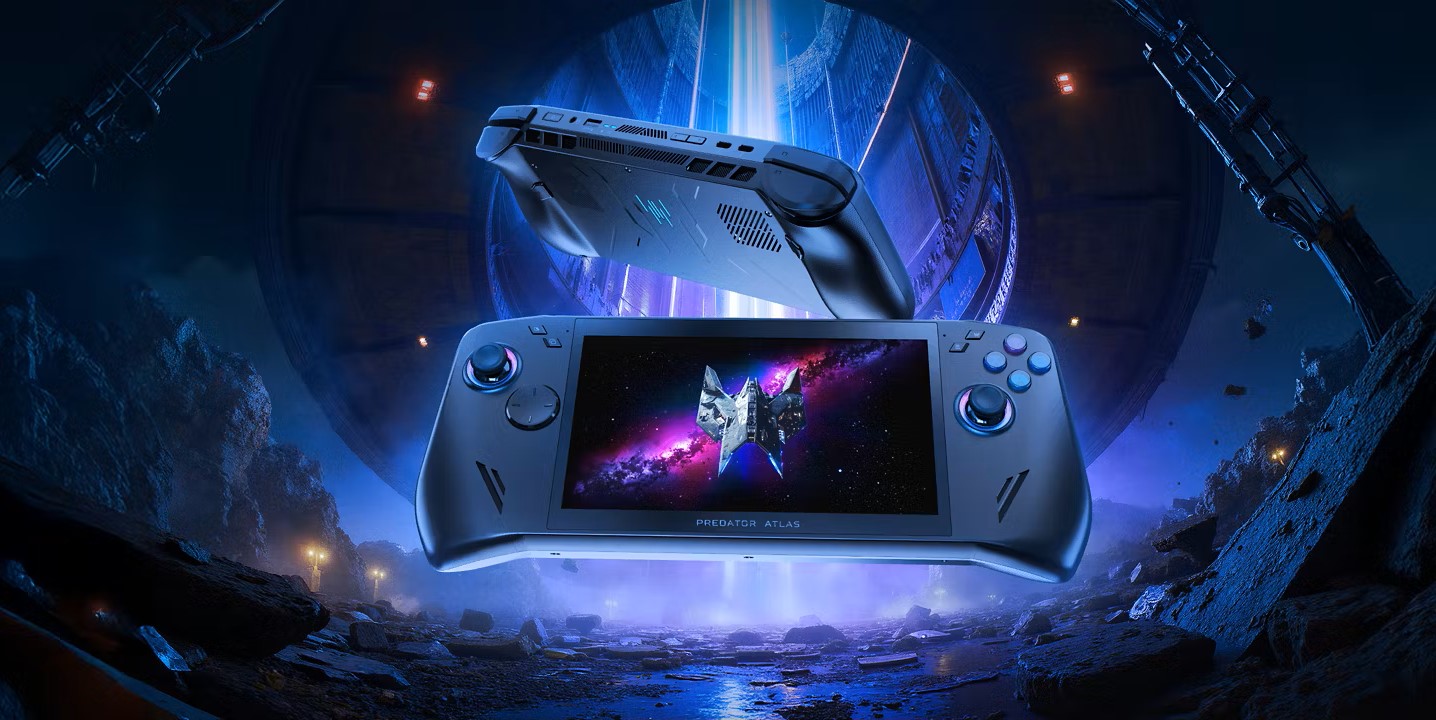
Acer Predator Atlas 7 Gaming Handheld Arrives With Intel Arc G3, 120Hz VRR Display, and Up to 24GB RAM
Acer has expanded its gaming handheld lineup with the Predator Atlas 7, a more compact version of the previously introduced Predator Atlas 8. Designed for players who want a smaller portable gaming PC without giving up too much power, the new handheld keeps many of the same core features while switching to a 7-inch display.
The Predator Atlas 7 is built around Intel’s Arc G3 platform, giving users a choice between the Intel Arc G3 and Arc G3 Extreme configurations. These chips include up to 14 CPU cores and integrated Arc graphics options that go up to the Arc B390. Since the handheld uses the same main hardware platform as the larger Atlas 8, gaming performance should be very similar in many titles, especially when playing at handheld-friendly settings.
One of the key differences is memory capacity. The Predator Atlas 7 supports up to 24GB of LPDDR5X RAM running at 7467 MT/s, while the larger Atlas 8 can go up to 32GB. Storage remains competitive, with Acer offering up to a 1TB PCIe Gen 4.0 2280 SSD. That should provide enough speed and space for modern PC games, launchers, and media files.
The display is where the Predator Atlas 7 clearly separates itself from its larger sibling. Acer has equipped the device with a 7-inch IPS-level screen featuring a 1920 x 1080 resolution, a 16:9 aspect ratio, a 120Hz refresh rate, and variable refresh rate support. The panel also reaches up to 500 nits of brightness and covers 100% of the sRGB color range, making it suitable for both indoor gaming and brighter environments.
Because the Predator Atlas 7 uses a smaller 1080p display compared to the Atlas 8’s 8-inch 1920 x 1200 panel, battery life may be slightly better in some situations. Acer has kept the same large battery capacity of up to 80Wh, which could make the Atlas 7 an appealing option for gamers who prioritize portability and longer play sessions.
Cooling is also carried over from the bigger model. The handheld features a dual-fan cooling system with Acer’s AeroBlade fans and Vortex Flow thermal design. This setup is intended to keep temperatures under control during extended gaming sessions, especially when running demanding PC titles.
Acer has made some changes to the controls as well. While the Predator Atlas 8 uses TMR joysticks, the Predator Atlas 7 will be available with either Carbon Film or TMR joystick options. For the triggers, the Atlas 7 uses Hall Effect technology, while the Atlas 8 adds adjustable trigger modes on top of Hall Effect support.
Connectivity remains strong for a modern gaming handheld. The Predator Atlas 7 includes Wi-Fi 7 support and two Thunderbolt 4 ports, giving users fast wireless networking and flexible wired expansion options for accessories, displays, docks, and external storage.
In simple terms, the Predator Atlas 7 is a smaller and slightly trimmed-down version of the Predator Atlas 8. It keeps the same Intel Arc G3-based performance foundation, the same storage limit, the same 80Wh battery capacity, the same 120Hz VRR display technology, and the same advanced cooling approach. The main compromises are the smaller screen, lower maximum memory capacity, and fewer trigger customization options.
Acer announced that the Predator Atlas 7 would arrive in North America in the fourth quarter of 2024, with availability in the EMEA region planned for November. Pricing has not yet been revealed.
For gamers looking for a compact Windows gaming handheld with a high-refresh 7-inch display, Intel Arc graphics, up to 24GB of fast LPDDR5X memory, Wi-Fi 7, Thunderbolt 4, and a large battery, the Predator Atlas 7 could become an interesting alternative to larger portable gaming PCs.