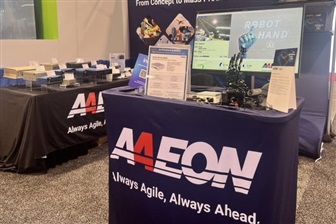
AAEON sees the edge AI market shifting from early momentum to a breakout phase, and it believes the industrial PC sector is poised to benefit most over the next three to five years. As real-time intelligence moves closer to where data is generated—in factories, warehouses, vehicles, clinics, and remote sites—the company expects demand to accelerate and AI to represent a steadily larger share of its revenue mix.
Edge AI is gaining traction because it solves problems cloud-only systems can’t address on their own. Processing data on-site reduces latency for time-critical decisions, strengthens privacy and compliance by keeping sensitive information local, and can lower bandwidth and cloud costs. For industrial PCs, that translates into a new generation of rugged, compact systems built to run AI workloads reliably in harsh environments.
Why this inflection point matters:
– Latency-sensitive use cases are scaling fast, from machine vision on production lines and robotics navigation to predictive maintenance and quality inspection.
– Cost and compliance pressures favor on-device inference, especially where connectivity is limited or data sovereignty rules apply.
– Hardware advances—more efficient GPUs and NPUs, better thermal solutions, and power-optimized designs—are making high-performance AI feasible at the edge.
For the IPC ecosystem, the opportunity spans multiple verticals. In manufacturing, AI-enhanced vision systems can detect defects in milliseconds and adapt to changing SKUs without retooling. Logistics providers are deploying edge analytics for inventory tracking and autonomous mobile robots. In transportation and smart cities, real-time video analytics powers traffic management and safety monitoring. Healthcare and energy sectors benefit from on-premises inference that safeguards data while enabling faster insights.
As demand intensifies, buyers will look for systems that combine compute density with reliability and lifecycle longevity. Key evaluation points include:
– Performance-per-watt and thermal headroom for sustained inference
– Scalable AI acceleration options to match workload complexity
– Hardened designs, extended temperature support, and robust I/O for legacy and modern equipment
– Software stacks that simplify deployment across containers, frameworks, and toolchains
– Long-term availability and service models aligned with industrial lifecycles
The road ahead isn’t without challenges. Fragmented software ecosystems, model optimization for constrained devices, and fleet management at scale all require careful planning. Yet these hurdles are increasingly solvable with standardized toolchains, model compression techniques, and edge MLOps practices that streamline updates and monitoring across distributed sites.
What to do now to prepare for the surge:
– Identify the top latency-critical workloads and pilot them on representative edge nodes
– Benchmark models with realistic data and thermal conditions rather than lab-only tests
– Prioritize platforms with clear upgrade paths for AI accelerators and connectivity
– Build a deployment blueprint that covers security, remote management, and lifecycle support
AAEON’s outlook captures a broader market shift: the next three to five years are set to transform edge computing from a promising concept into a primary engine of growth for industrial PCs. As AI revenue share rises, companies that align early—selecting the right hardware, software, and operational practices—will be positioned to lead in the era of intelligent, real-time operations at the edge.