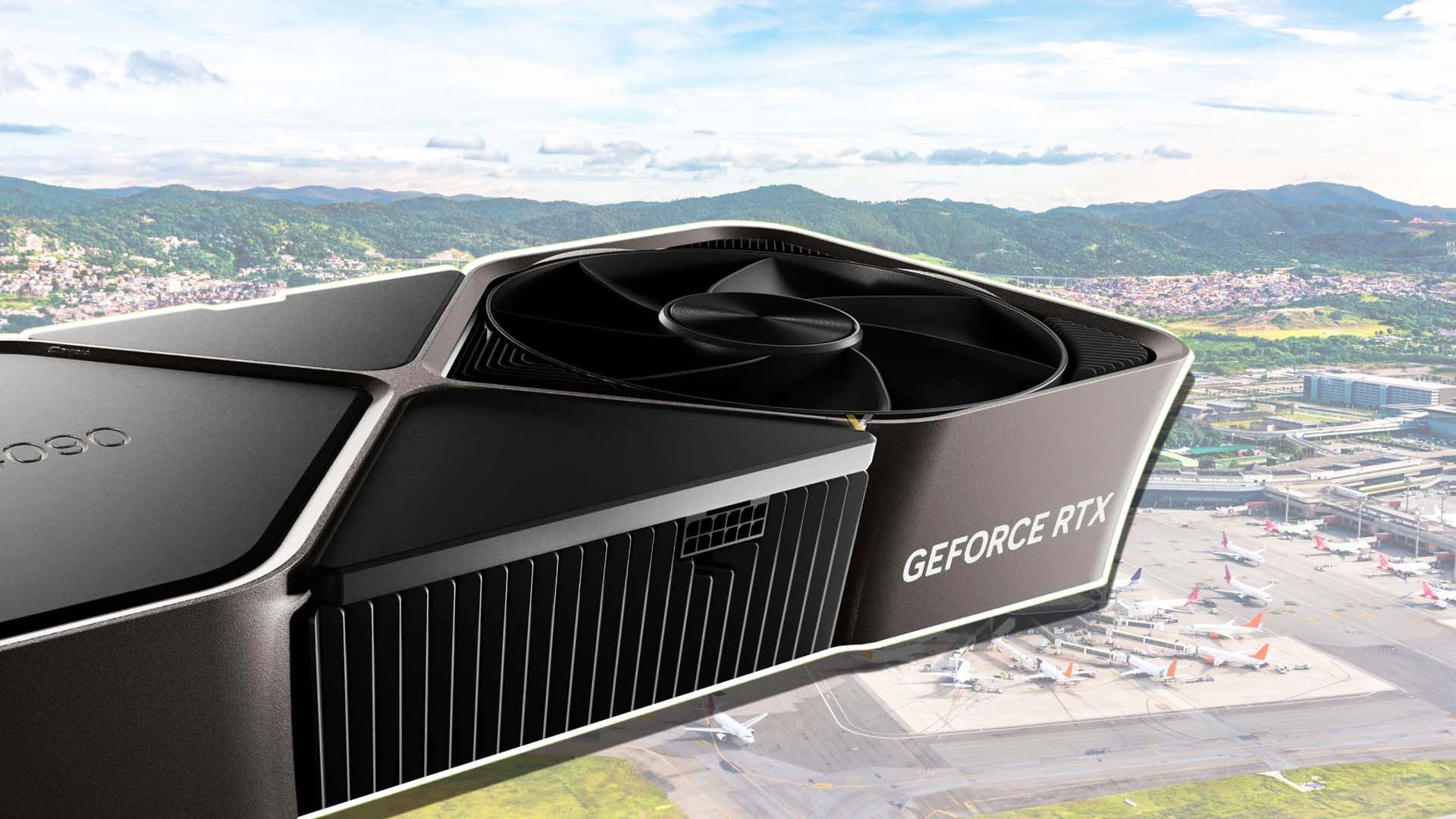
Two Pallets of NVIDIA GeForce RTX 5090 GPUs Reportedly Vanish at São Paulo Airport
A shipment of high-end NVIDIA GeForce RTX 5090 graphics cards has reportedly gone missing after arriving at Guarulhos International Airport in São Paulo, Brazil, raising fresh concerns over the security of premium electronics moving through major logistics hubs.
According to reports, two pallets containing ZOTAC-made GeForce RTX 5090 GPUs disappeared after reaching the airport terminal. The shipment was valued at around R$ 2.5 million, or roughly $500,000 based on the declared cost of the goods. However, the real-world retail value could be far higher, especially given the intense demand surrounding NVIDIA’s latest flagship graphics card.
The RTX 5090 launched with an official price of $1,999, but limited availability and strong buyer interest have pushed resale prices far beyond that level in some markets. In certain online listings, the card has reportedly appeared for anywhere between $5,000 and $7,000. That makes a large shipment of RTX 5090 GPUs a highly tempting target for criminals looking to profit from the booming demand for top-tier PC gaming and AI hardware.
The missing graphics cards were reportedly imported by Oderço, a distributor based in Maringá, Paraná. After the shipment could not be located, company president Oderço Matos addressed the situation publicly through a video posted on the distributor’s social media channels. He said the company is still waiting for clear answers and has not received information that could explain where the goods went.
Matos also highlighted how unusual the incident is for the company. Oderço has been importing products since 2008, and in its 38 years of operation, the distributor says it has never experienced a missing or misplaced shipment of this kind. That detail adds to the seriousness of the case, especially considering the value and visibility of the product involved.
At this stage, many important questions remain unanswered. It is still unclear exactly when the pallets disappeared, whether the goods went missing during airport handling, customs processing, storage, or another stage of the logistics chain. There has also been no confirmed public explanation from airport operators, customs officials, logistics partners, or law enforcement regarding what may have happened.
The case is drawing attention not only because of the value of the missing hardware, but also because of what the RTX 5090 represents in the current technology market. NVIDIA’s GeForce RTX 5090 is one of the most powerful consumer graphics cards available, featuring 32GB of GDDR7 memory and massive memory bandwidth of up to 1.79TB/s. It is designed for demanding 4K gaming, heavy creative workloads, advanced rendering, and AI-related tasks.
For PC enthusiasts, the RTX 5090 is a dream upgrade. For professionals experimenting with local AI models, it is also a powerful tool capable of handling smaller to mid-sized workloads at impressive speeds. That combination of gaming appeal, productivity performance, and AI capability has made the card one of the most sought-after pieces of computer hardware on the market.
The timing of the disappearance also adds to the wider discussion around RTX 5090 availability. Recent speculation suggested that the GPU had been discontinued after it disappeared from NVIDIA’s online marketplace, but NVIDIA later denied those claims. Even so, limited stock and high demand have continued to fuel inflated resale prices, making shipments of the card especially valuable.
For now, the disappearance of the RTX 5090 pallets remains unresolved. The incident puts a spotlight on the challenges of securing high-value electronics as they pass through major international transport hubs. Guarulhos International Airport is one of the busiest airports in Latin America, and any unexplained loss of premium hardware there is likely to raise concerns among distributors, retailers, and consumers alike.
Whether the missing GPUs are recovered will depend on how quickly the involved parties can trace the shipment’s path and identify where the breakdown occurred. Until more official details are released, the case remains a striking example of how valuable graphics cards have become in an era driven by gaming, content creation, and artificial intelligence.