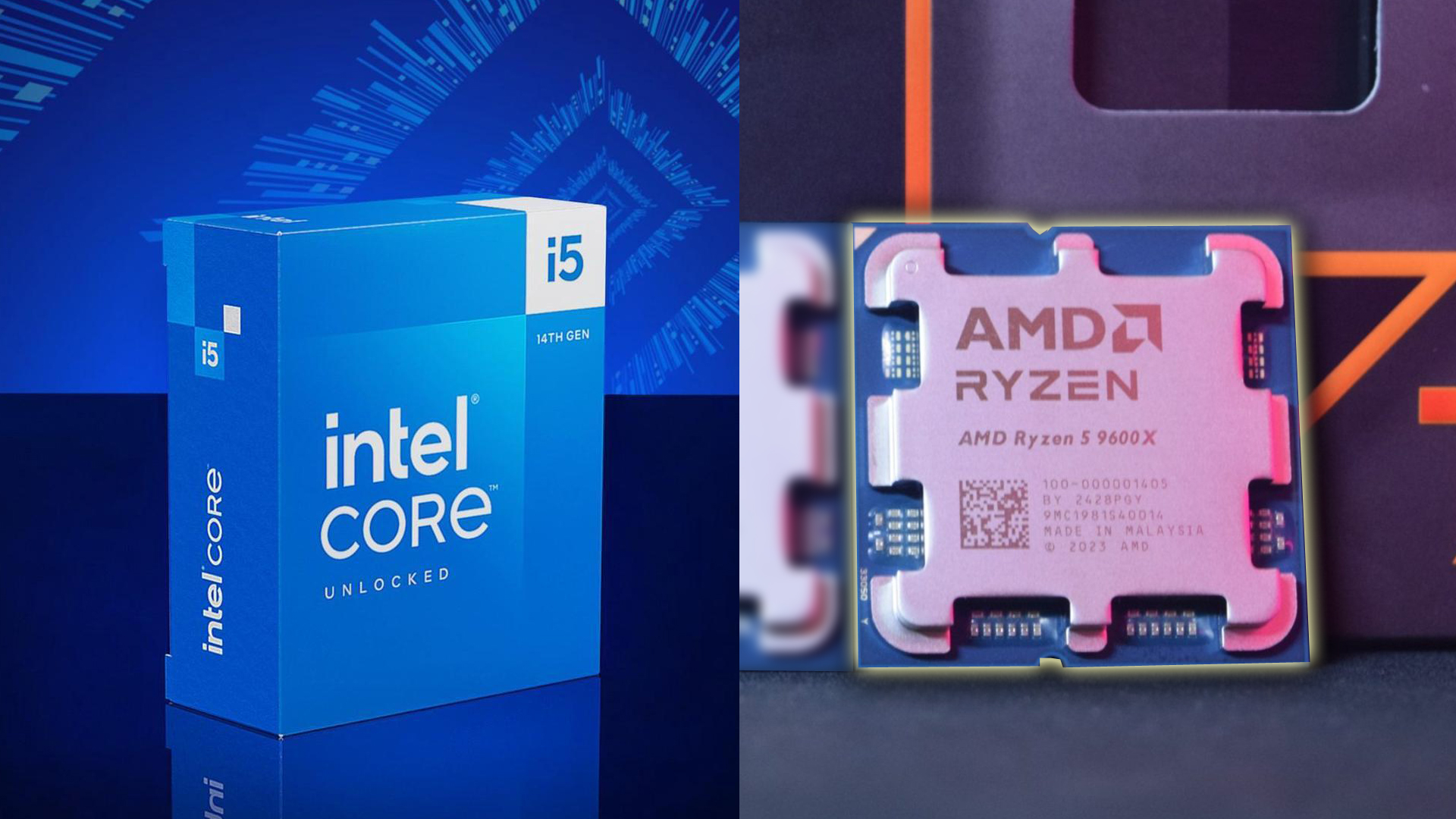
Why does a 6-core chip keep outselling a 14-core rival at the same price? A few years ago, that question would have sounded absurd. Yet here we are: the Ryzen 5 9600X continues to move faster off shelves than the Core i5-14600K, even though the Intel part packs far more cores and stronger productivity muscle. If you’re expecting a simple “because it’s faster in games,” the story is more nuanced. Performance is close in most titles. The difference comes from what gamers value and how platforms evolve.
Here are the four big reasons the Ryzen 5 9600X keeps winning the shopping cart battle.
1) Gaming-first priorities
Most buyers in this price range are building a gaming PC, not a workstation. They know a well-tuned 6-core/12-thread CPU is plenty for modern games, especially paired with a capable GPU. The 9600X is laser-focused on that sweet spot: strong IPC, snappy clocks, and cooler operation that keeps frame times tight. In many titles, it trades blows with or even edges out the 14600K despite the Intel chip’s core count advantage.
This mirrors broader market behavior. Gamers often gravitate to the part that feels purpose-built for frames and responsiveness—even if it isn’t the absolute best value on paper. Look at how chips like the Ryzen 7 7800X3D and 9800X3D command attention: small uplifts matter when your main metric is smooth, stable FPS.
2) A longer upgrade runway with AM5
Platform longevity is a major purchase driver. AM5 is designed to stick around, with support extending into future Zen generations. That means a 9600X build today can turn into a simple drop-in upgrade to a future X3D chip when prices fall or a new gen lands, extending the life of your system without a full rebuild.
On the other side, the Core i5-14600K sits at the tail end of LGA1700. That limits straightforward CPU-only upgrades down the line. History matters here: AM4 owners who started with early Ryzen chips were able to jump all the way to late-cycle stars like the Ryzen 7 5800X3D, squeezing extra years of top-tier gaming performance out of the same board.
3) Higher efficiency, easier thermals
Frame rate per watt doesn’t headline every spec sheet, but it influences real-world builds. The 9600X is typically 15–20% more power-efficient in gaming than the 14600K, which translates into:
– Lower heat output and quieter cooling
– Less demanding power and cooling requirements
– Better sustained clocks in compact or airflow-constrained cases
Even modest efficiency gains add up across long gaming sessions, especially if you care about noise, temps, or small-form-factor builds.
4) Momentum, trust, and gamer mindshare
Brand momentum matters. Over several generations, Ryzen earned a reputation for delivering meaningful gaming improvements, highlighted by innovations like 3D V-Cache. That consistency has built trust. In the same way GeForce became synonymous with gaming GPUs for many players, the Ryzen name now signals “the gamer’s CPU” to a huge slice of the market.
Combine that perception with a compelling upgrade path and strong efficiency, and you get a halo effect that pulls buyers toward the 9600X—even when the competition is technically similar in raw gaming performance.
So which one should you buy?
– Pick the Ryzen 5 9600X if your priority is gaming performance, efficiency, and a clear upgrade path on AM5.
– Pick the Core i5-14600K if you routinely run heavy multi-threaded workloads and want more cores for productivity today.
In short, gamers aren’t ignoring specs—they’re prioritizing what matters to them. The Ryzen 5 9600X nails that formula: fast where it counts, cool and efficient, and sitting on a platform built for easy, meaningful upgrades. That’s why it keeps winning at checkout.