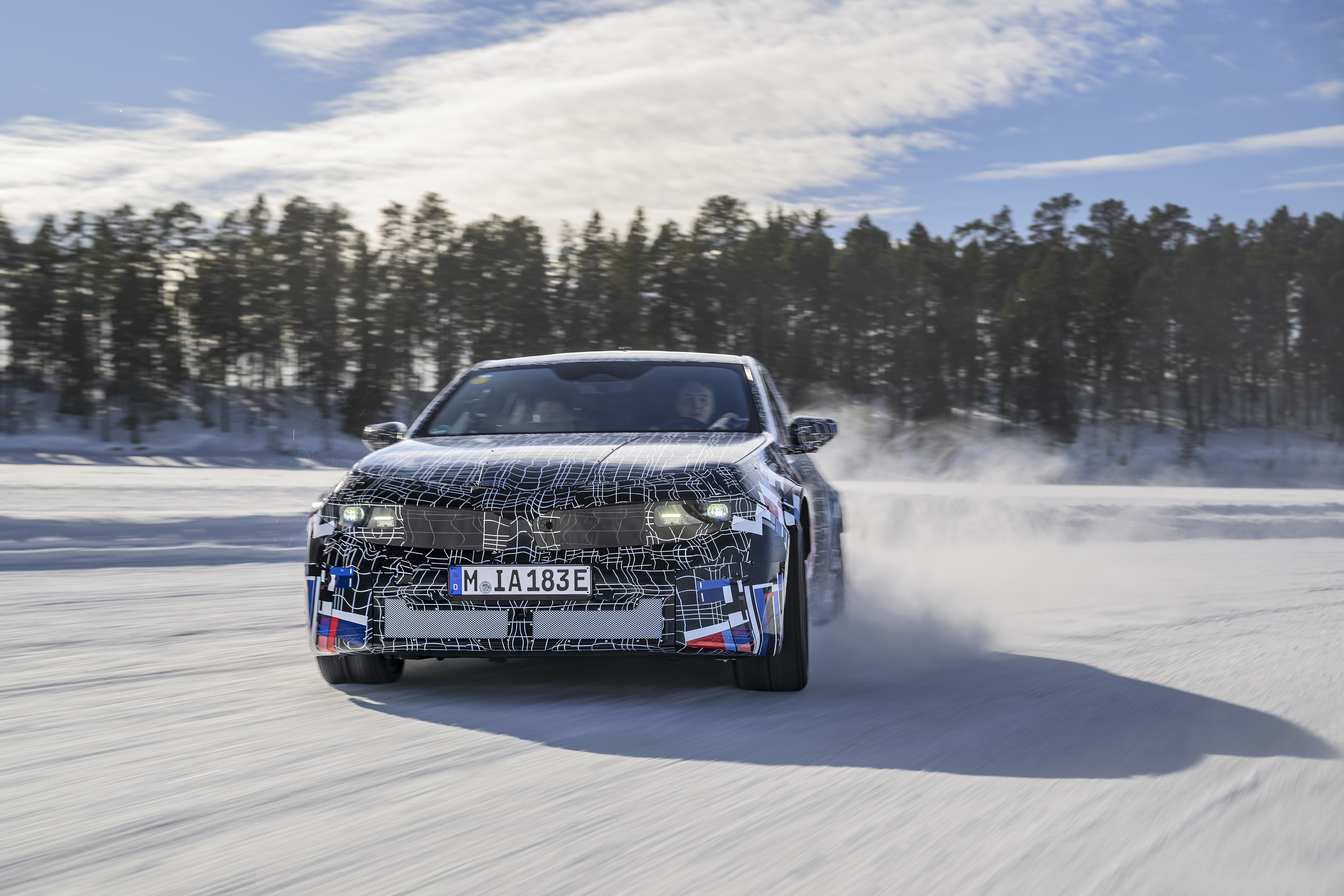
BMW is preparing a major turning point for its most iconic performance sedan: the next-generation BMW M3 is going fully electric. Scheduled to arrive as part of BMW’s electric M lineup starting in 2027, the new M3 will ride on the brand’s “Neue Klasse” platform and aims to bring the familiar attitude of the gasoline-powered M3 into the EV era—without losing the sharp, rear-driven feel enthusiasts expect.
Instead of simply electrifying an existing sedan, BMW is building a purpose-developed high-performance machine with a radically different drivetrain layout. The headline feature is a quad-motor setup, with one electric motor at each wheel. This design allows extremely precise torque vectoring, meaning power can be distributed independently to each wheel for sharper cornering, stronger traction, and a more adjustable driving character.
To make all of that work seamlessly, BMW is introducing a central control unit that oversees the drivetrain and chassis control systems. BMW says this new brain dramatically accelerates data processing over current setups. In practice, it replaces much of the traditional mechanical hardware with intelligent software control. Instead of relying on a mechanical differential, the system can continuously fine-tune torque distribution across all four motors to match grip, speed, steering input, and driver intent.
For drivers who want that classic M-car balance, BMW is also leaning into flexibility. Because the front axle can be decoupled, the electric M3 can switch between all-wheel drive and rear-wheel drive. That means you can run AWD when you want maximum traction, then switch to a rear-wheel-drive feel when you’re chasing the traditional M3 style—potentially improving long-distance efficiency as well.
BMW also plans to add simulated gear shifts and a dedicated sound design intended to echo the experience of internal combustion performance cars. The idea is to preserve emotion and engagement, even though the powertrain is fully electric.
Here are the key known details about the upcoming electric BMW M3:
– Quad-motor system with one motor per wheel, enabling highly precise torque distribution and torque vectoring
– High-voltage battery with more than 100 kWh of usable capacity
– Ability to switch between AWD and RWD thanks to individual wheel control and optional front-axle decoupling
– Natural fiber elements used in place of carbon fiber to cut the CO2 footprint by around 40%
– 800V electrical architecture aimed at shorter charging times at compatible DC fast-charging stations
– Battery housing designed as a load-bearing structural element within the chassis
Importantly, this electric M3 isn’t expected to immediately replace the current gasoline model. BMW is positioning it alongside the existing M3 generation, which is likely to remain on sale for several more years with the S58 inline-six. That gives buyers a clear choice: stick with the current, traditional formula if you want the pure combustion experience, or wait for 2027 if you’re after BMW’s next big leap in performance technology.
What about an electric BMW M3 Touring? Demand for practical performance is clearly growing, and the M3 Touring has become a standout example. Sales momentum for the wagon surged significantly in 2024, reinforcing how many buyers want everyday usability without giving up true M-car performance. With that in mind, it wouldn’t be surprising to see BMW offer an electric M3 Touring as well—at least in key markets where wagons remain popular, such as Germany.
If BMW delivers on the promise of a software-defined quad-motor setup while preserving the M3’s playful, rear-biased personality, the 2027 electric BMW M3 could become one of the most important performance EV launches of the decade.