iPhone battery capacity has been creeping up year after year, and the trend is expected to continue. The latest round of chatter suggests the eSIM version of the iPhone 17 Pro Max could land with a 5,088mAh battery, while the iPhone 18 Pro Max may finally push beyond that mark. For a long time, many people assumed Apple was boxed in by space constraints, meaning larger batteries simply wouldn’t fit inside the iPhone’s tightly packed design.
A new battery swap experiment challenges that idea in a big way.
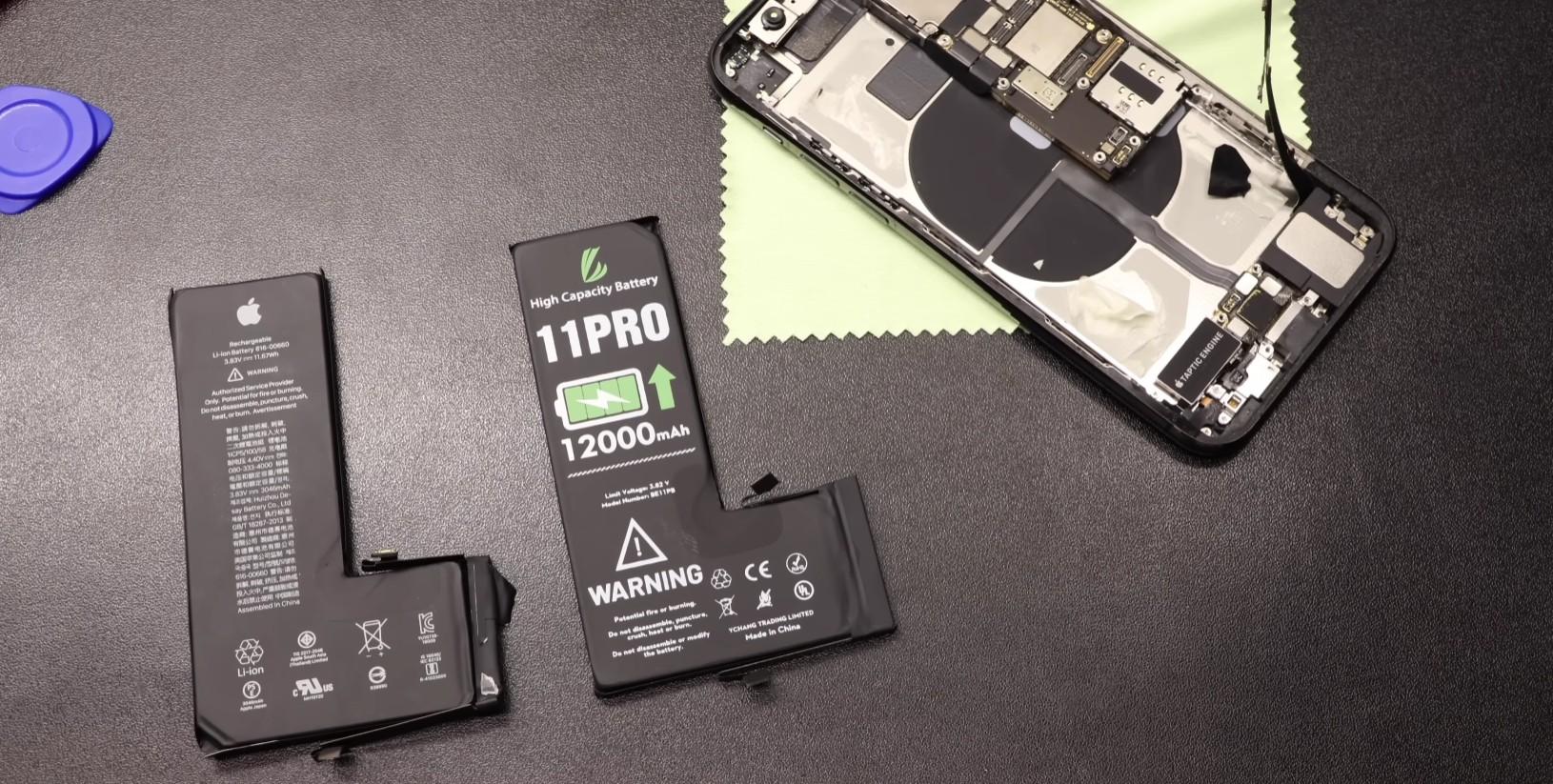
In a recent repair-focused video, a content creator took an iPhone 11 Pro—nearly seven years old—and replaced its original 3,046mAh battery with a massive 12,000mAh unit. The phone used in the test reportedly had degraded battery health sitting at 67 percent, making it a good candidate for a replacement. But instead of a standard swap, the goal was to see just how far battery size could be pushed.
The most surprising part wasn’t just the huge capacity increase—it was the fit. The upgraded battery appeared to match the physical size of the stock cell, suggesting there wasn’t any meaningful “space compatibility” issue inside the device. That fuels speculation that the replacement battery could be based on newer silicon-carbon battery technology, which can offer higher energy density without dramatically changing the battery’s footprint.
While Apple strongly discourages unofficial battery replacements and warns against third-party components from unverified sources, the broader smartphone industry has already been moving toward higher-density battery tech—especially among Chinese phone makers that have been using these approaches for a couple of years. In that context, the idea of stuffing significantly more capacity into an older iPhone design doesn’t seem as far-fetched as it once did, at least in a controlled test.
There is one caveat: although the upgraded battery was marketed as 12,000mAh, the device reportedly showed a rated capacity of 10,000mAh instead. Even so, that’s still an enormous jump—roughly a 330 percent increase over the original iPhone 11 Pro battery. For anyone who has ever wished their iPhone could last multiple days on a charge, it’s an eye-opening demonstration.
So what does this actually reveal about iPhone battery sizes?
At minimum, it suggests Apple’s battery decisions aren’t purely determined by internal space. The more likely explanation comes down to Apple’s priorities at scale: when you’re shipping millions of phones, battery consistency, supply chain reliability, safety testing, and long-term durability matter just as much as raw capacity. Apple may prefer to take the conservative route—accepting criticism for smaller batteries—rather than risk higher failure rates, overheating issues, or worst-case scenarios like damaged devices and safety incidents.
In other words, the iPhone battery size debate may be less about what can physically fit, and more about what Apple is willing to approve, certify, and produce reliably for a global launch.