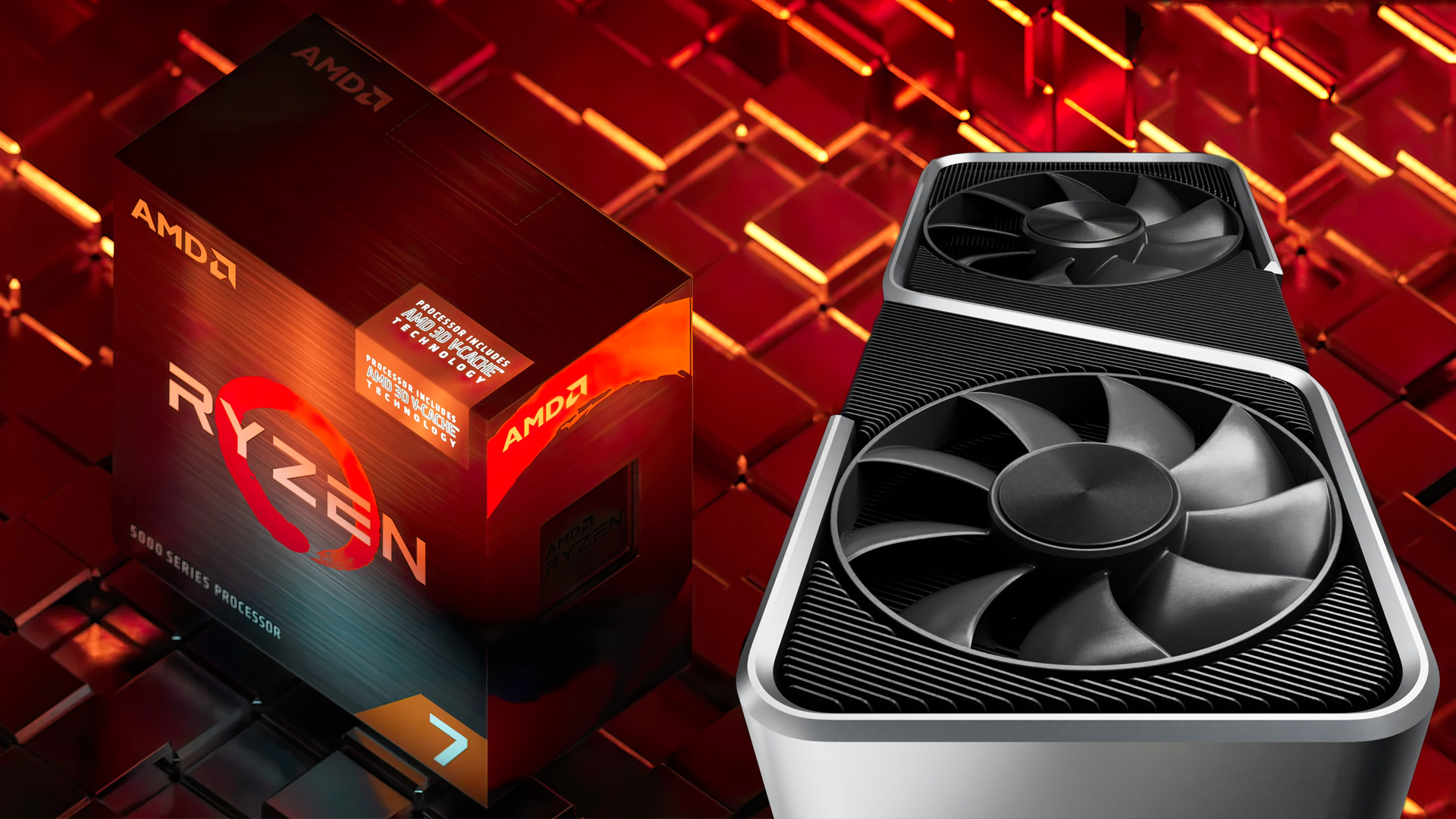
The PC hardware market is in a strange place right now. Instead of pushing truly affordable next-gen upgrades, manufacturers seem increasingly willing to bring back older parts to keep interest (and sales) alive. And based on what’s reportedly coming, two familiar names are about to return to the spotlight: AMD’s Ryzen 7 5800X3D and NVIDIA’s GeForce RTX 3060 12GB.
On paper, a relaunch of discontinued hardware doesn’t sound exciting. But in today’s pricing climate, it’s easy to understand why a lot of PC gamers are paying attention.
The Ryzen 7 5800X3D didn’t disappear that long ago, and the fact that it’s already poised to come back says a lot about how well it has aged. For anyone who has been on the AM4 platform for years, it remains one of the best drop-in upgrades available. AM4 has proven it can stay relevant for nearly a decade when performance gains are strong, and the 5800X3D is a big reason why. Even with newer, faster 3D V-Cache chips on the market, it still delivers excellent gaming performance today, especially where it matters most for mainstream players: smooth 1080p and 1440p gaming.
Of course, the latest X3D processors crush it in raw numbers. Chips like the Ryzen 9800X3D, 9850X3D, and the recent Ryzen 9 9950X3D2 Dual Edition are in another league for both gaming and productivity. The problem is that “just buy current-gen” isn’t realistic for a lot of builders right now. And it’s not only the CPU price that gets in the way—it’s the whole platform cost. High DDR5 prices make modern builds harder to justify if you’re trying to maximize performance per dollar.
That’s where an AM4-based build starts looking good again. Pairing a Ryzen 7 5800X3D with an affordable B450 or B550 motherboard and a DDR4 kit can keep costs under control while still delivering a fast, responsive gaming PC. Add a budget-friendly graphics card and you can land in a price range that feels far more achievable than a brand-new DDR5 platform build.
This is also why the rumored return of the GeForce RTX 3060 12GB is getting attention. No, it can’t compete with NVIDIA’s higher-end modern GPUs. But the budget segment today has an issue that gamers keep running into: VRAM limits. Under roughly $350, the options often include cards like the RTX 5060 or RTX 5050-class products that can feel constrained by 8GB of video memory in newer titles. The RTX 3060’s 12GB doesn’t magically create higher frame rates, but it can make a real difference in avoiding stutters, texture issues, and memory-related bottlenecks—especially in modern games that are less forgiving at higher settings.
With uncertainty around other entry-level VRAM configurations, the RTX 3060 12GB stepping back in to “fill the gap” makes a certain kind of sense. Combined with a Ryzen 7 5800X3D, it creates a pairing that could become one of the more affordable, practical options for a large number of gamers who want strong 1080p performance without rebuilding an entire system from scratch.
That said, there’s an uncomfortable takeaway here. If current-generation parts were priced more reasonably—CPUs, GPUs, and especially DDR5 memory—there wouldn’t be so much demand for relaunching older hardware in the first place. A Ryzen 7 5800X3D and RTX 3060 system won’t be the ideal choice for higher resolutions in 2026-era gaming. But for the majority of players still gaming at 1080p, it could be “good enough” in exactly the ways that matter.
And that may be the bigger story: older hardware isn’t coming back because people are nostalgic. It’s coming back because it still hits the affordability sweet spot that newer products often miss.