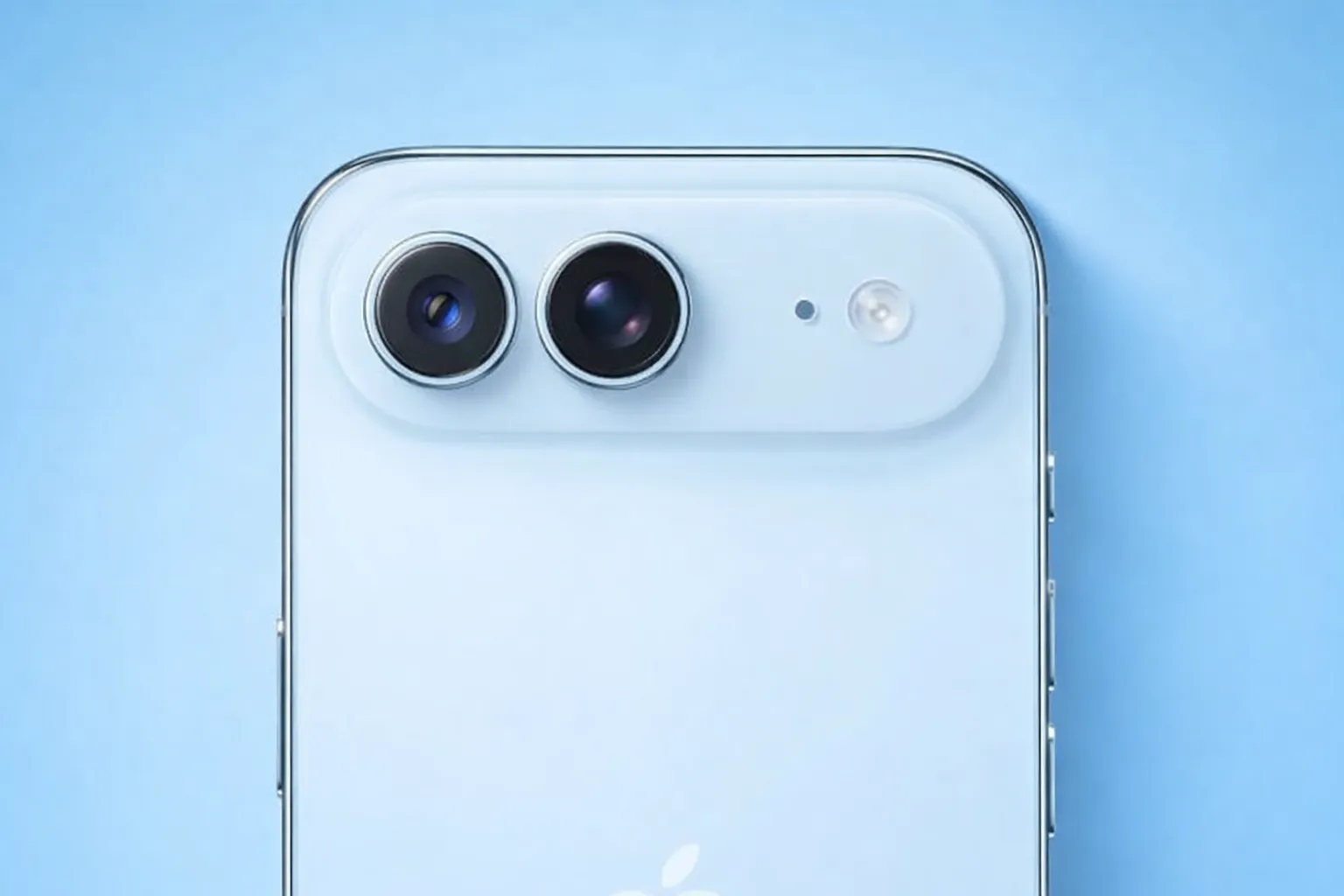
Apple’s next-generation iPhone lineup is shaping up to be one of the biggest design shakeups in years, and the biggest question right now is what happens to the front-facing camera, the TrueDepth sensors that power Face ID, and the Dynamic Island experience. With numerous leaks and rumors circulating at once, the picture is still changing—but a new claim adds an important detail: under-display Face ID may not be coming to Apple’s thinner “Air” model anytime soon.
According to a recent tip shared on X, Apple is still testing an under-display TrueDepth system for Face ID. This aligns with the broader rumor wave suggesting that future Pro models—often mentioned in connection with the iPhone 18 Pro and iPhone 18 Pro Max—could move closer to a cleaner, more uninterrupted display. In those same rumors, the front-facing camera is expected to shift toward the top-left corner of the screen, and the Dynamic Island interface may move with it, relocating from its current top-center position.
However, the same tipster suggests a key limitation for the iPhone Air 2: thickness. The claim is that an under-display TrueDepth Face ID module likely won’t work on the Air model because the device won’t be thick enough to accommodate the required hardware. In other words, even if Apple perfects under-display Face ID for higher-end iPhones, the slimmer iPhone Air 2 may be constrained by physical space.
That raises a natural follow-up: if under-display Face ID isn’t feasible on the iPhone Air 2, what will Apple do instead? While nothing is confirmed, there are a couple of realistic paths Apple could take without changing the intent of its current biometric strategy. One possibility is that Apple keeps a more traditional Face ID setup on the Air model, similar to what current iPhones use today. Another possibility is a shift toward Touch ID, which would help Apple maintain secure authentication while saving internal space—especially as rumors already point to Touch ID playing a role in other upcoming Apple form factors.
It’s also worth noting that the same thread indicates Apple may not place the front camera and Dynamic Island elements in the top-left corner on non-Pro iPhone 18 models. If true, that could mean Apple is planning different screen layouts across the lineup—reserving the more dramatic changes for Pro devices while keeping the standard and Air models closer to familiar designs.
As for timing, the iPhone Air 2 is expected to arrive later than the next immediate iPhone generation, with current expectations pointing to a launch window in fall 2026 or possibly 2027. If Apple is indeed pushing a thinner design, that could explain why some cutting-edge components might debut on Pro models first before filtering down to slimmer devices later—if they can be made compact enough.
For now, the biggest takeaway is this: under-display Face ID appears to be on Apple’s roadmap, but the ultra-thin iPhone Air 2 may not be able to use it due to thickness constraints, forcing Apple to explore alternative solutions for biometric security on its thinnest iPhones.