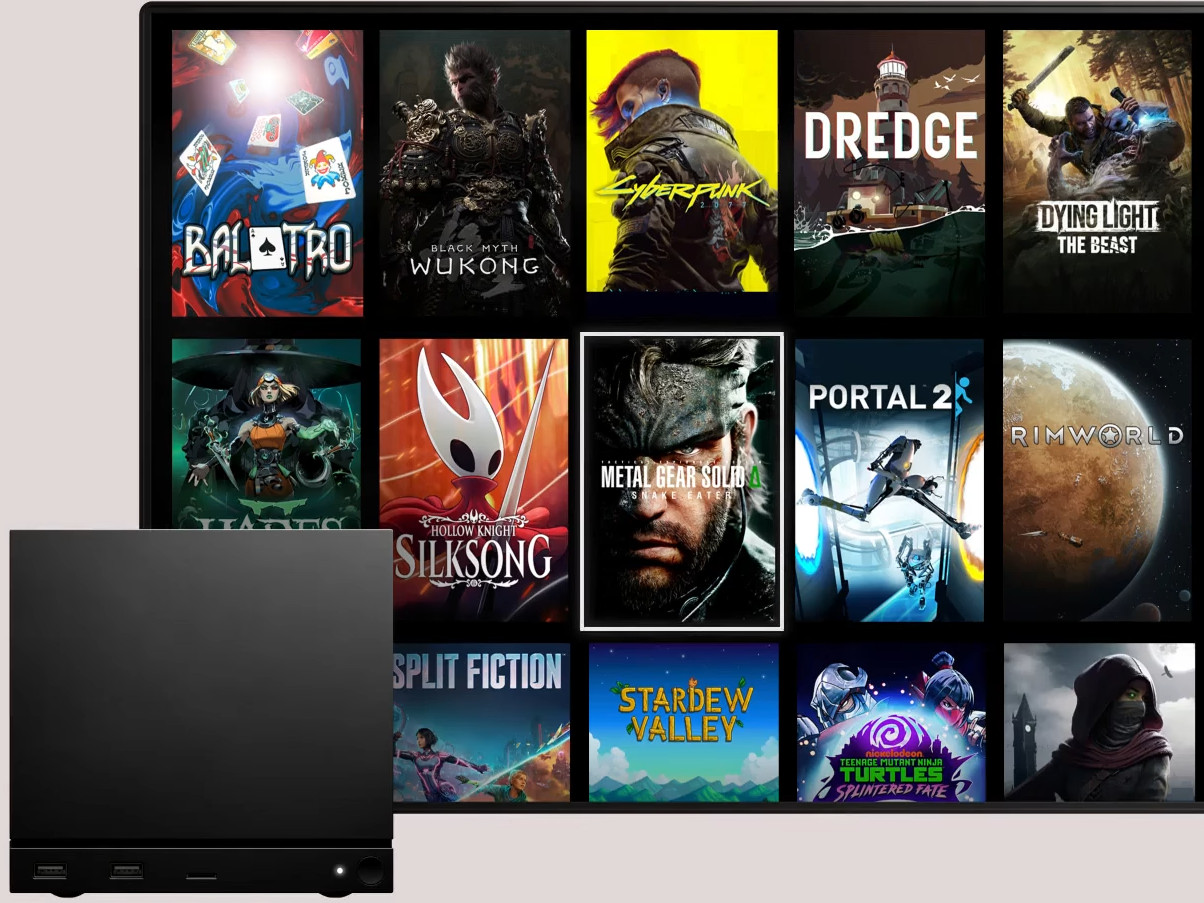
Valve’s next Steam Machine is already being talked about as having hardware in the same class as the PlayStation 5. Now the big question isn’t whether it can deliver console-style gaming in the living room—it’s whether Valve can make the price irresistible at exactly the right moment.
That moment may be right now. With the PlayStation 5 lineup getting notable price increases—roughly $100 more for the standard models (about $599 for the Digital edition and $649 for the Disc version) and around $200 more for the PlayStation 5 Pro (now near $899)—the market has shifted in a way that rarely happens in the console space. When the main competitor gets more expensive, a well-timed alternative that costs less (or offers better value at similar pricing) suddenly looks far more attractive to mainstream buyers.
If Valve announces Steam Machine pricing and a launch date soon, the company has a rare opportunity to position it as a true PlayStation 5 alternative. Hitting below key thresholds like $649 or even under $899 could change the conversation quickly—especially as more industry voices frame Valve as a serious competitor for the living room, not just the PC desk.
So why are these price hikes happening in the first place? A big driver is the ongoing supply pressure around RAM and NAND flash. Memory and storage have become disproportionately expensive, and since modern consoles are essentially specialized PCs, they’re not immune. Add in unpredictable global trade conditions, shifting tariff risks, and the cost of importing components, and it becomes easier to see why hardware manufacturers are being forced into tougher pricing decisions than usual.
Those same market conditions also help explain why Valve has been cautious about locking in a final Steam Machine price or release window. Component pricing and supply can turn stable projections into risky promises, and we’ve already seen how uneven availability can impact hardware lines in this space.
Still, from a tactical standpoint, PlayStation’s higher prices open the door for Valve to market Steam Machine aggressively as a PS5-class competitor. Performance should be strong enough to make that argument convincingly. A simulated Steam Machine build tested across 27 games reportedly landed around the $600 mark before adding RAM—without any of the manufacturing scale advantages Valve could potentially leverage. In other words, a consumer-style “rough equivalent” already looks viable, and a Valve-produced system could plausibly sharpen that value even further.
There’s also the business model advantage Valve has that traditional console makers rely on, too: platform revenue. Steam is one of the most profitable game storefronts in the world, which gives Valve flexibility. If it chooses, Valve could price the Steam Machine aggressively—even at thin margins—because the real long-term win is game sales and ecosystem lock-in. In the console world, this kind of strategy has historically been common when companies want fast adoption.
Performance-wise, expectations should be set correctly. A Steam Machine likely won’t match the absolute graphical ceiling of the PlayStation 5 Pro if the GPU is meaningfully weaker. But raw visuals aren’t the only metric that matters, especially for players prioritizing smooth gameplay. If the Steam Machine’s CPU is stronger than what’s inside the PS5 and PS5 Pro—and the Pro still shares the same general CPU baseline as the standard model—then Valve’s system could have a real advantage in frame rates in CPU-heavy titles, particularly when users tune settings for performance.
And on PC, settings flexibility is the point. Many players would gladly trade ultra-high visuals for stable 60 FPS (or higher), lower latency, and smoother responsiveness. That’s where modern upscaling technologies can tilt the value equation further. With broad support for AMD FSR and Intel XeSS on PC, Steam Machine could achieve excellent real-world performance at console-friendly resolutions. If future support for newer upscaling features arrives as rumored, the gap in perceived image quality could narrow even more—especially for people gaming from a couch at typical TV viewing distances.
Put simply: PlayStation just made itself more expensive in a period when budgets are tight and buyers are paying closer attention to value. If Valve can capitalize with the right price and a clear launch plan, Steam Machine could become the most compelling “PS5 alternative” conversation starter the console market has seen in years.