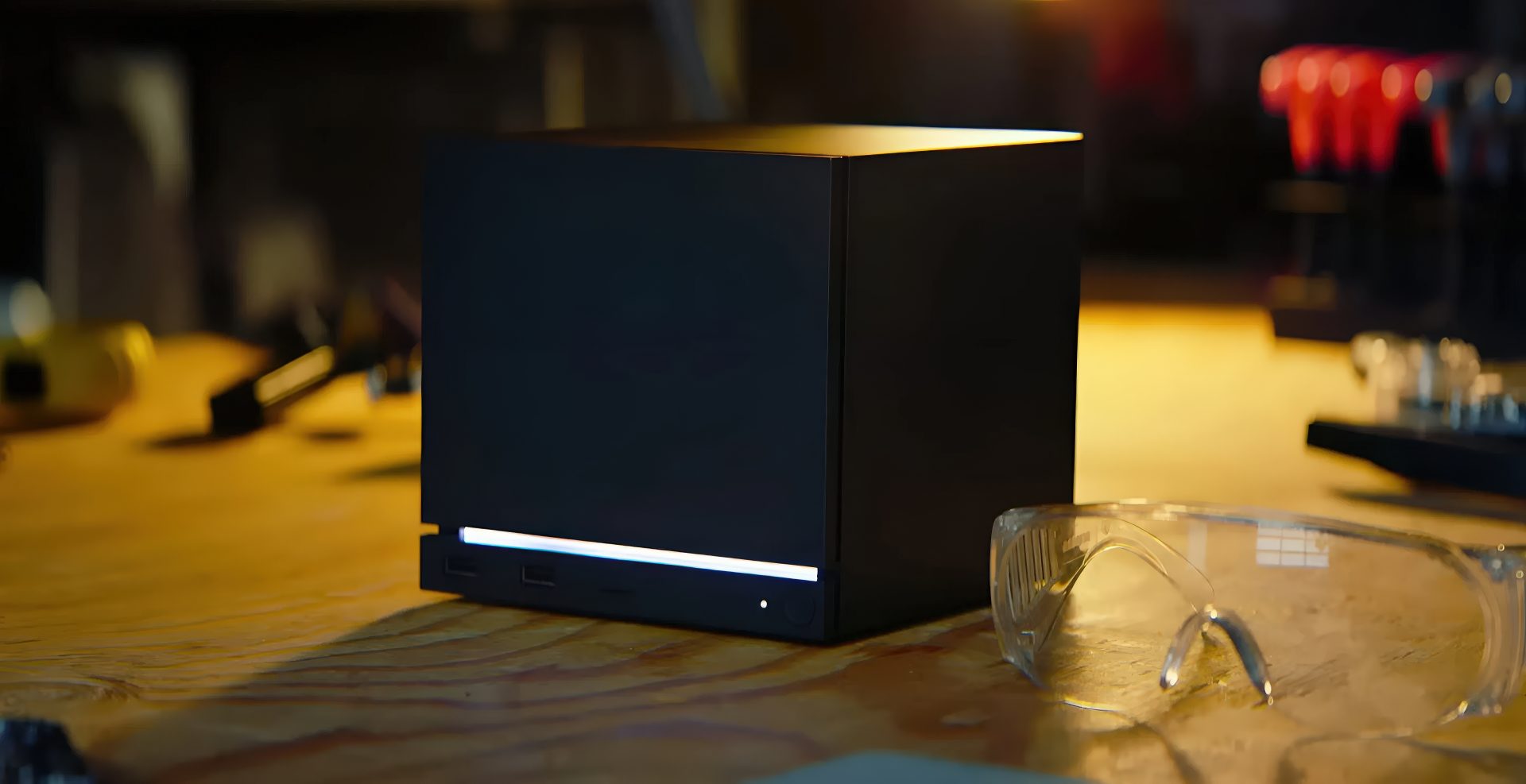
Valve Steam Machine benchmarks suggest solid 30W performance, but pricing may decide its fate
Fresh benchmark results for Valve’s upcoming Steam Machine have appeared online, offering a clearer look at what gamers may be able to expect from the system’s CPU performance. Based on the latest numbers, Valve’s compact SteamOS-powered gaming PC appears to deliver performance in the same general range as some older 6-core AMD Ryzen desktop processors, though with much lower power consumption.
Valve has previously suggested that the new Steam Machine would offer performance equal to or better than a large portion of gaming PCs currently in use. These early benchmark results show that the system could be a capable mainstream gaming device, but they also highlight one major question: how aggressively will Valve price it?
The Steam Machine concept is not new. Valve first introduced the idea years ago alongside SteamOS, with the original plan relying on multiple PC makers producing their own versions of Steam-based living room gaming systems. That approach never fully took off, but Valve’s recent hardware success with the Steam Deck has changed the picture.
This time, Valve appears to be taking a more focused approach. Instead of leaving hardware specifications up to different manufacturers, the new Steam Machine is expected to arrive with a fixed configuration designed by Valve. That should make optimization easier, especially since the system is built around SteamOS and aimed directly at PC gamers who want a console-like experience.
According to the available specifications, the Steam Machine uses a custom 6-core, 12-thread AMD processor based on the Zen 4 architecture. The chip is paired with a semi-custom discrete GPU featuring 28 compute units. The system is also expected to include 16 GB of DDR5 memory and 8 GB of GDDR6 memory, though it remains unclear whether Valve will use a unified memory design.
The latest Geekbench 6 results identify the processor as “AMD Custom CPU 1772.” The chip reportedly boosts up to 4.86 GHz and includes 30 MB of L3 cache. That is an impressive clock speed for a processor tuned around a 30W power target, especially in a compact gaming machine.
In the new benchmark run, the Steam Machine reaches up to 2,334 points in single-core performance and 7,392 points in multi-core performance. These numbers are close to previous results seen for the same device, suggesting that performance has remained fairly consistent during testing.
For users moving from the Steam Deck to the Steam Machine, the CPU uplift could be substantial. Based on these figures, Valve’s new system may offer nearly double the CPU performance of the handheld, which would make a noticeable difference in more demanding games, emulation, multitasking, and general system responsiveness.
However, when compared with desktop Ryzen processors, the picture becomes more complicated. AMD’s Ryzen 5 5600X, a 6-core Zen 3 desktop CPU released in 2020, can still outperform the Steam Machine’s custom chip in some areas. Meanwhile, newer Zen 4 desktop chips such as the Ryzen 5 7600X remain well ahead.
That comparison does not tell the full story, though. Desktop Ryzen processors typically operate with much higher power limits, often starting around 65W or more. Valve’s custom chip appears to be running at roughly half that power level, making its performance more impressive from an efficiency standpoint.
This efficiency could be one of the Steam Machine’s biggest strengths. A lower-power gaming PC can mean less heat, quieter cooling, and a smaller form factor, all of which matter for a device designed to fit into a living room or entertainment setup. If Valve can combine strong power efficiency with a polished SteamOS experience, the system could appeal to users who want PC gaming without the complexity of building or maintaining a traditional desktop.
Still, the CPU is only part of the equation. The 28 compute unit GPU will be crucial to the Steam Machine’s gaming performance. If Valve is targeting smooth 1080p or 1440p gaming with optimized SteamOS support, the graphics hardware will need to deliver consistent results across modern titles. The success of the Steam Deck has already shown that Valve can extract a lot of performance from carefully selected hardware, especially when software optimization is part of the strategy.
The biggest challenge may be price. Rumors suggest the Steam Machine could land somewhere around $900 to $1,000. At that level, expectations will be high. Buyers will compare it not only with entry-level and mid-range gaming PCs, but also with current-generation consoles, which remain far more affordable.
If Valve wants the Steam Machine to compete directly with consoles, the final price will need to be compelling. A compact SteamOS gaming PC with strong efficiency, easy setup, and access to a massive Steam library could be attractive, but only if the value proposition makes sense.
The timing also matters. The PC hardware market has been dealing with rising component costs, memory shortages, and pricing pressure across multiple categories. If building a comparable small-form-factor gaming PC becomes more expensive, Valve may have an opportunity to make the Steam Machine look more competitive. But if the price climbs too high, many gamers may simply choose a traditional PC or a console instead.
For now, the latest Steam Machine benchmarks suggest a system that is efficient, capable, and potentially much faster than the Steam Deck in CPU-heavy workloads. Its custom AMD Zen 4 processor may not match modern desktop Ryzen chips, but its 30W performance is respectable.
The final verdict will depend on three things: real-world gaming performance, SteamOS optimization, and price. If Valve gets all three right, the Steam Machine could become a serious living room gaming option for players who want the flexibility of PC gaming in a simpler, console-style package.