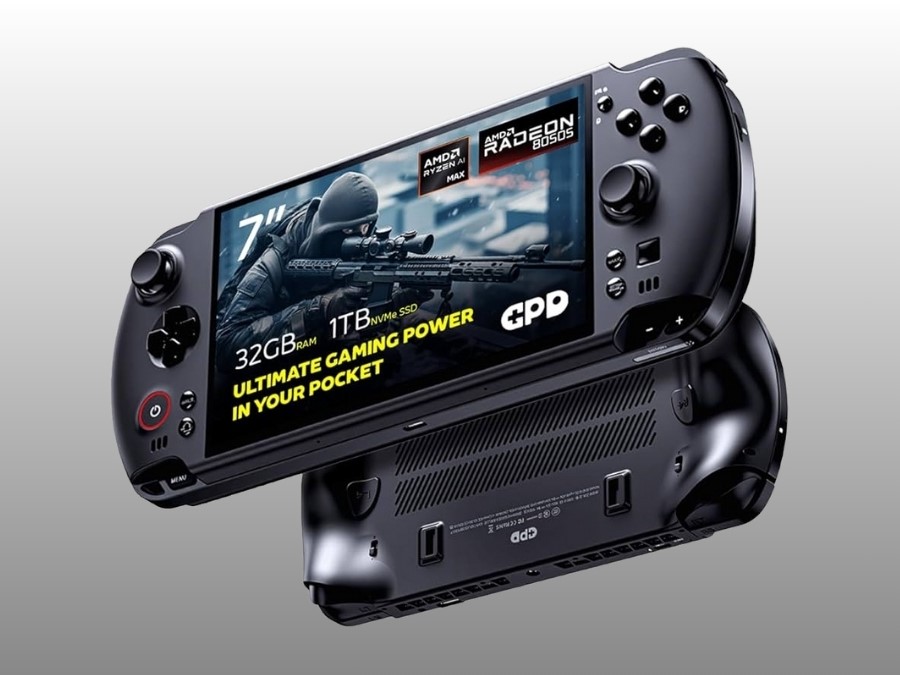
Gaming handhelds have come a long way in a short time. The newest devices pack faster CPUs, stronger GPUs, and more memory than ever, making it possible to play many modern games smoothly while traveling, commuting, or simply moving from room to room. But despite the impressive performance gains, former Blizzard Entertainment president Mike Ybarra argues that high-end gaming handhelds still don’t make financial sense for most players—especially when compared with traditional consoles.
The debate picked up after Digital Foundry posted impressions of the GPD Win 5 on X, describing it as the first handheld they’d tested that could deliver performance in the same ballpark as a PS5, but in a portable design. Ybarra jumped into the conversation with a value-focused counterpoint: even if the performance is real, the price-to-performance ratio is hard to justify.
His biggest criticism was cost. The GPD Win 5 was discussed around the $1,500 mark, and pricing for the Ryzen AI Max 385 configuration is even higher, starting at $1,870 on the GPD Store. Ybarra acknowledged the appeal of running high-end games on a handheld, but said the price is simply too steep for what most buyers get in return.
In his view, consoles remain the best deal in gaming hardware. He argued that for significantly less money, players could purchase a PS5 Pro and still have plenty of budget left for games, subscriptions, and accessories. He also pointed to the console business model as a major reason why value tends to favor PlayStation and Xbox hardware: consoles are often sold with the hardware priced aggressively, while platform holders earn back profits over time through subscriptions, digital storefront sales, and royalties from third-party game publishers. The result is a more affordable entry point that reaches a much wider audience.
Ybarra also emphasized practical affordability. Spending $1,500 or more on a single gaming device is out of reach for a lot of players, and he warned that the situation may not improve. With GPU and RAM costs trending upward, premium handheld gaming PCs could get even more expensive in the future, pushing them further into luxury territory rather than becoming a mainstream option.
Another part of his argument focused on longevity. He suggested that current consoles like the PS5, PS5 Pro, and Xbox Series X still have plenty of life left, with enough power to stay relevant for at least another four years—or even longer if the generation stretches. From that perspective, a console purchase can offer a longer, more predictable performance runway for the money.
At the same time, consoles aren’t completely free of added costs. The PS5 Pro’s $749.99 price tag is only part of the equation, since players who want to truly see the benefits may also need a solid 4K TV. Even with that consideration, Ybarra’s main point remains: when most people compare real-world costs, consoles continue to deliver stronger overall value than today’s ultra-premium handhelds.