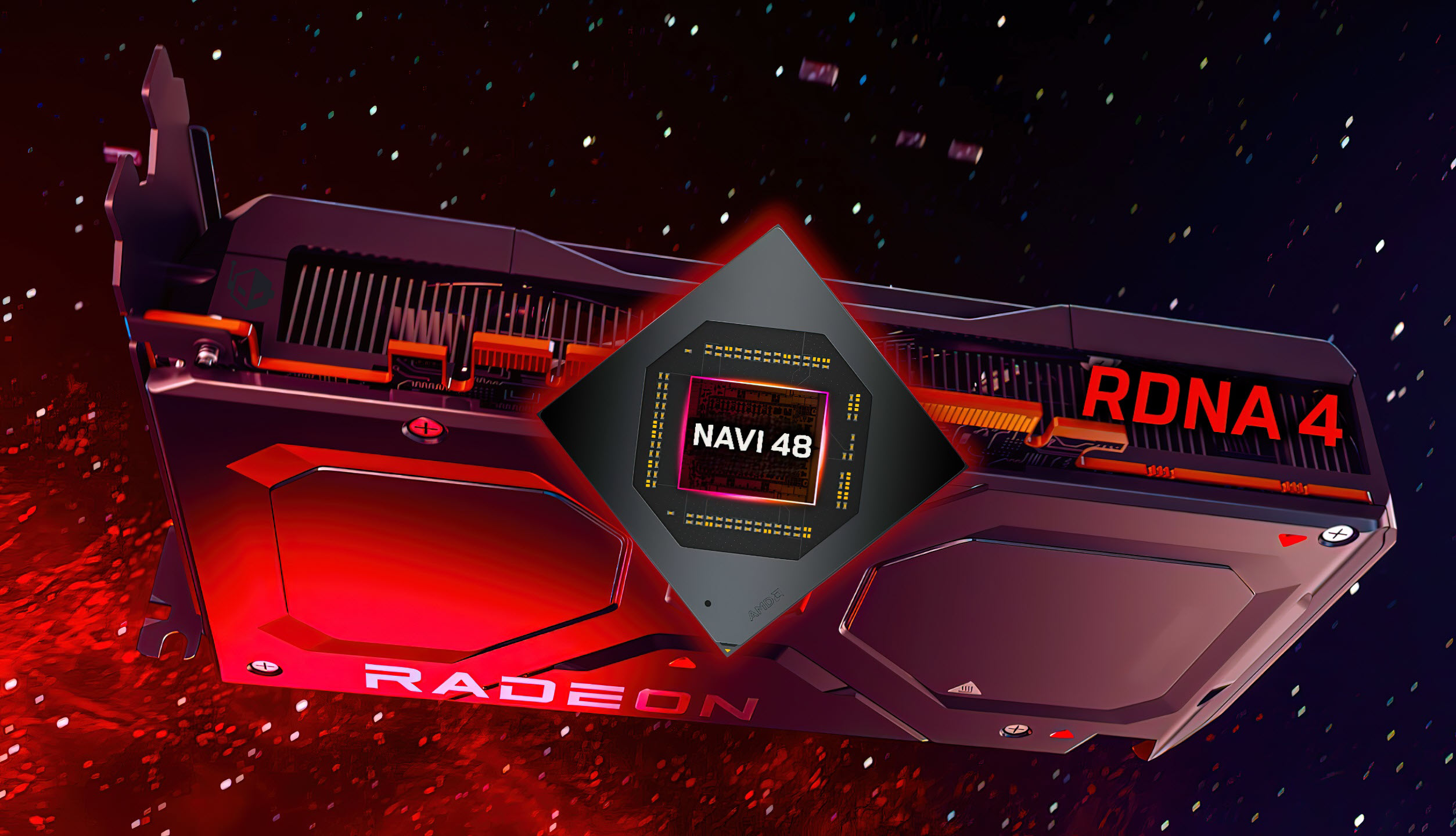
Anticipation within the tech community is high as AMD’s latest GPU innovation, the Navi 48, has been confirmed to be part of the Radeon RX 8000 series of graphics cards. This next-generation chip, which is based on the RDNA 4 architecture, has recently been sighted within ROCm (Radeon Open Compute) development patches, indicating that AMD is making significant progress towards its release.
The Navi 48 GPU has been revealed as one of the core components in the upcoming Radeon RX 8000 lineup. Alongside its counterpart, the Navi 44 GPU, this chip is expected to deliver advanced performance suited for higher-end gaming. The GPU’s appearance in ROCm activity suggests that early testing is underway, paving the way for the new technology’s integration into future products.
From what has been gathered, the Navi 48 GPU appears to be a competitive successor to AMD’s previous high-end offerings such as the Navi 31 (RDNA 3) and Navi 21 (RDNA 2), but with an emphasis on a more mainstream audience. Consumers are especially curious about the expected performance, which is rumored to rival the Navi 31, but with an emphasis on value.
Pricing strategy will also play a significant role in the GPU’s market reception. With the current AMD Radeon RX 7900 series offering entry-level RDNA 3 technology at a newly updated price, the gaming community is hopeful for an even more cost-effective solution with the Navi 48. If AMD can balance superior performance and affordability within the $400-$500 range, it could present an attractive option compared to the competition.
One of the intriguing aspects of the RDNA 4 architecture is its fresh design approach. This innovation could enhance capabilities in ray tracing and provide new features such as AI-enhanced upscaling technology. There’s a potential for it to compete with NVIDIA’s DLSS, as it could address some limitations of the current FSR (FidelityFX Super Resolution) by improving image quality through AI acceleration.
As for memory support, there is speculation that the new lineup could include compatibility with GDDR7 memory, however, AMD might opt for more cost-effective faster GDDR6 options at first. Additionally, the architecture of the GPUs is rumored to be monolithic, moving away from the multi-chiplet design (MCD) that was introduced only a year ago.
While specific details on specifications and release dates remain limited, it is clear that AMD’s RDNA 4 GPUs will mark an important evolution in the Radeon product family. As gamers and tech enthusiasts alike await further information, it is evident that the Radeon RX 8000 series, with the inclusion of the Navi 48 GPU, is set to bring impactful advancements in the realm of gaming graphics cards.