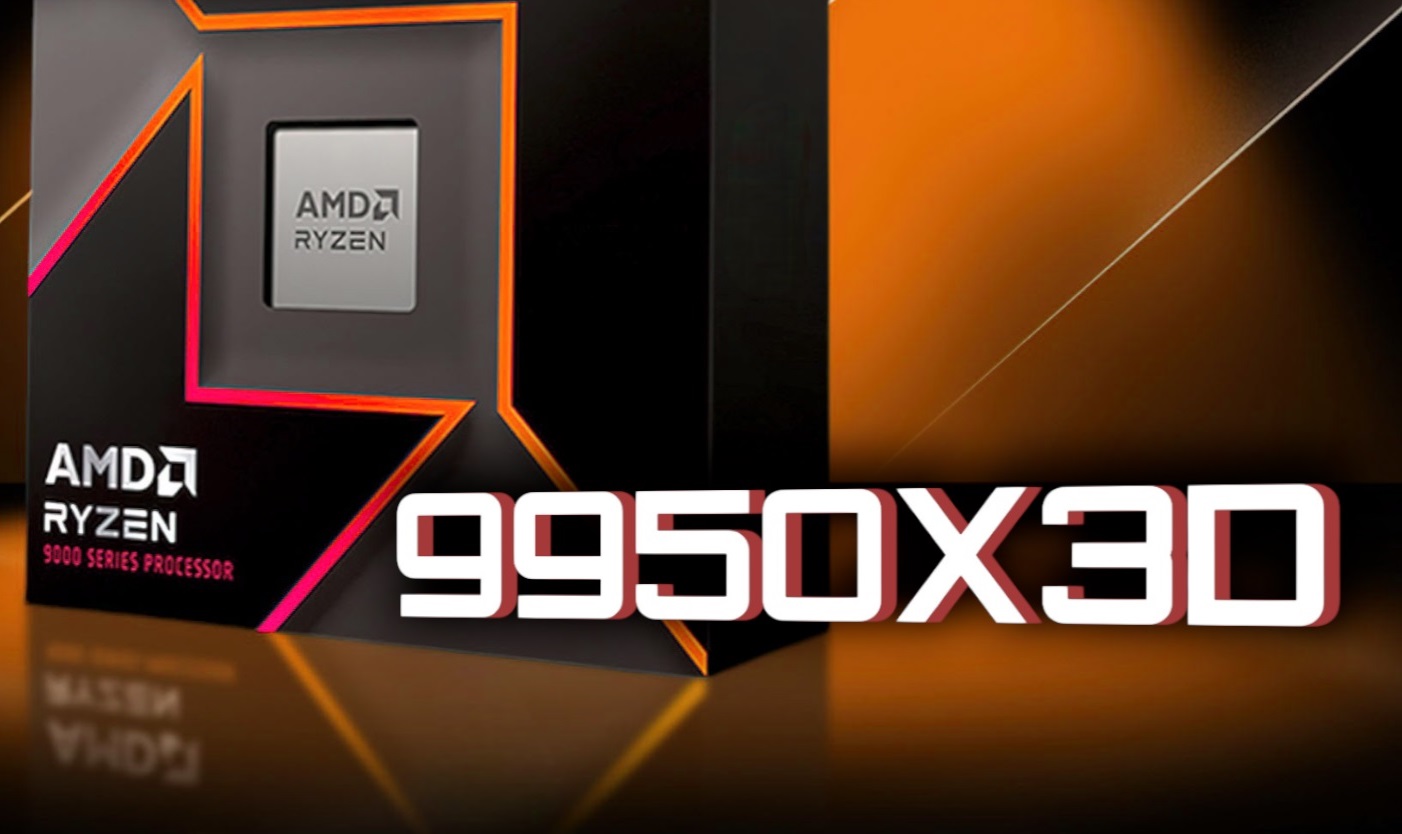
Get ready to experience next-level performance with AMD’s latest powerhouse, the Ryzen 9 9950X3D. This flagship CPU from AMD, packed with advanced 3D V-Cache technology, is already turning heads in early benchmark tests, signaling a significant leap from its predecessor, the Ryzen 7 7950X3D.
This advanced processor boasts an impressive 16 cores and 32 threads distributed over two Zen 5 CCDs. It’s designed for those who seek nothing but the best, offering 128 MB of total cache, including a 3D V-Cache stack, which promises to deliver exceptional performance boosts. While specifics like clock speeds and thermal power design (TDP) remain under wraps, whispers suggest it might harness enhanced second-generation 3D V-Cache technology, possibly supporting increased clock speeds alongside a flexible 120-170W TDP.
Recent testing in the Factorio benchmark suggests that the Ryzen 9 9950X3D has achieved a remarkable 655 UPS, showcasing a dramatic performance uplift—up to 64%+ compared to the Ryzen 7 7950X3D and an 18% improvement over the Ryzen 7 9800X3D. This benchmark not only sets a new performance standard but also underscores AMD’s commitment to innovation and quality.
Anticipate the Ryzen 9 9950X3D to make its debut around early 2025, with a grand reveal expected at CES 2025. Given its powerhouse status and cutting-edge efficiency, it will be positioned at a premium price. As AMD keeps us on our toes with these exciting launches, expect additional details to unfold soon to fuel your tech enthusiasm.
In the evolving landscape of desktop CPUs, AMD’s Ryzen 9000 series, known as “Granite Ridge,” continues to pique interest with its potential specs. While the Ryzen 9 9950X3D keeps us guessing, the series promises configurations such as integrated RDNA 2 graphics and support for lightning-fast DDR5-5600 memory, ensuring it remains a vital contender in both performance and versatility.
So, prepare yourself for the future of gaming and computing with AMD’s latest innovations. Keep an eye out for upcoming announcements that promise to redefine what you thought was possible in the CPU domain.