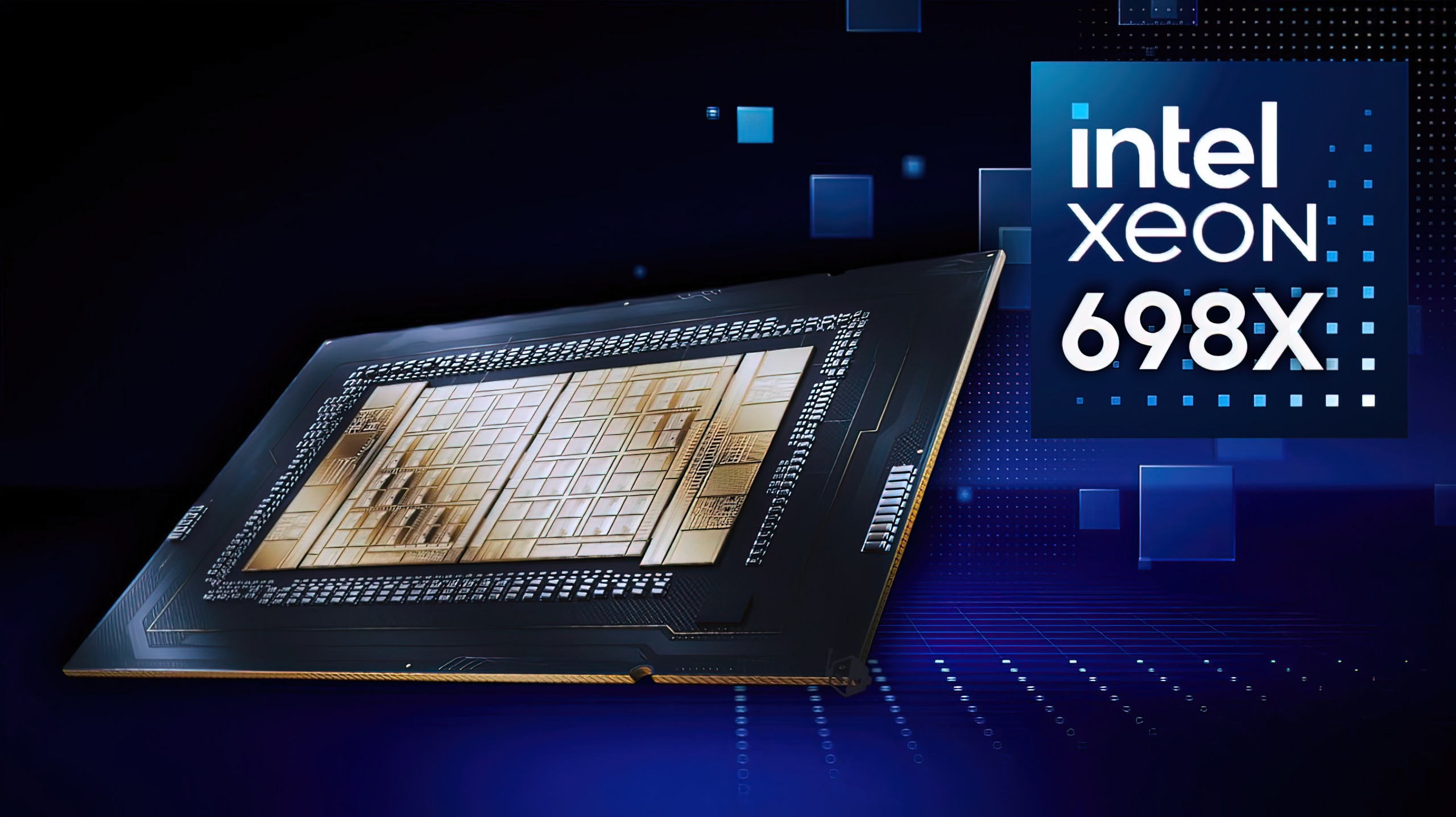
Intel’s next-generation Xeon workstation lineup is starting to take shape, and a new leak is putting the spotlight on what could be the most powerful chip in the stack: the Intel Xeon 698X, part of the upcoming Granite Rapids-WS family. While Intel hasn’t officially pulled the curtain back yet, multiple listings and benchmark sightings are painting a clearer picture of what high-end workstation users may soon be able to buy.
According to the leaked details, the Xeon 698X is positioned as a flagship “X” series part and is expected to be an unlocked model. The headline feature is its massive core count: 86 cores and 172 threads, built on Intel’s Redwood Cove P-Core architecture. It’s also rumored to start around a 2.0 GHz base frequency, with boost speeds reported up to about 4.60 GHz. Interestingly, a benchmark entry suggests it may spike even higher in practice, hinting that final boost clocks may not be fully locked in yet.
Where Granite Rapids-WS looks especially aggressive is cache. The leak points to 336 MB of L3 cache plus 172 MB of L2 cache, totaling a huge 508 MB of combined cache. For heavy workstation workloads that thrive on large datasets—rendering, simulation, large-scale compilation, engineering tools, and content creation pipelines—that kind of cache budget can be just as important as raw core count.
Power targets also look notable for a chip of this size. The Xeon 698X is said to carry a 350W TDP. That’s still firmly in “serious cooling required” territory, but it’s also a meaningful detail when you compare it to Intel’s current top workstation Xeon.
To put the leak into context, Intel’s existing flagship workstation CPU from the prior generation, the Xeon W9-3595X (Sapphire Rapids-WS), offers 60 cores and 120 threads, along with 112.5 MB of L3 cache and 120 MB of L2 cache. It runs at 2.0 GHz base and up to 4.8 GHz boost, with a rated 385W TDP and the ability to draw substantially more under maximum turbo conditions.
Based on the leaked specs alone, the Xeon 698X would represent a major step up in workstation-class density and on-chip memory:
It would scale cores and threads by about 43% over the current flagship, nearly triple the L3 cache, increase L2 cache by roughly 43%, and more than double total cache overall. At the same time, it’s listed with a 35W lower base TDP, though the tradeoff could be slightly lower boost clocks on paper compared to the W9-3595X.
A Geekbench 6 result for the Xeon 698X has also surfaced, reportedly tested on a reference platform with 256 GB of DDR5 memory. The recorded scores were 2532 in single-core and 21,030 in multi-core. Those numbers may look underwhelming for a CPU with 86 cores, but there’s an important caveat: Geekbench 6 often doesn’t scale cleanly at very high core counts, so it may not reflect what this processor can do in real workstation applications. In other words, these early benchmark figures are more of a “proof it exists” moment than a final verdict on performance.
The same benchmark entry also suggests the chip may have boosted close to 4.8 GHz during the run, which raises questions about whether the leaked 4.60 GHz boost figure is conservative, unfinished, or simply not representative of all-core versus peak single-core behavior.
The broader Granite Rapids-WS family is also beginning to leak out, with additional models rumored to include parts such as the Xeon 696X (listed at 64 cores/128 threads with a 2.4 GHz base and up to 4.6 GHz boost, plus 336 MB L3 and a 350W TDP) and several other SKUs with varying cache sizes and clocks. Some entries still have incomplete fields, so expect the lineup to shift as more reliable details emerge.
For now, the Xeon 698X leak is most exciting for one reason: it signals that Intel is preparing a true next-gen workstation platform that prioritizes core count and cache at a scale aimed at the heaviest professional workloads. As more benchmarks appear—especially in rendering, simulation, and production-grade creator apps—we’ll get a much clearer sense of how Granite Rapids-WS stacks up where it matters most.