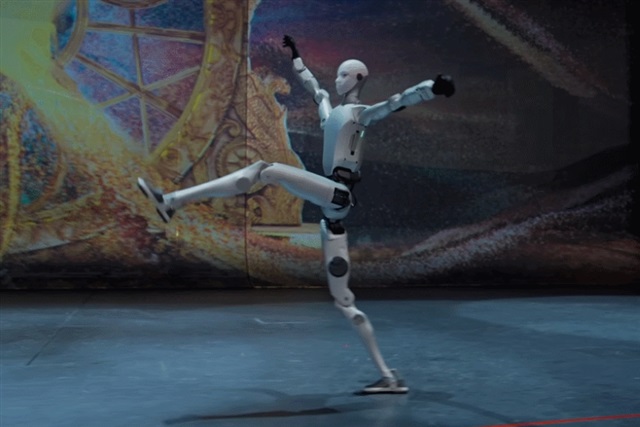
Unitree Robotics has unveiled the H2, a full-scale bionic humanoid that is already turning heads across the global robotics community. More than just a flashy prototype, the debut positions humanoid robots as a serious contender for real-world work, signaling a broader shift from science fiction to commercial reality. With investors paying close attention, the launch underscores how quickly the humanoid market is maturing.
The H2’s bionic design hints at a focus on humanlike movement, balance, and interaction—key ingredients for robots expected to operate safely and efficiently around people. While detailed specifications are still tightly held, the message is clear: Unitree aims to move beyond lab demos and into practical, performance-driven applications where humanoids can deliver value in everyday environments.
Why this matters now is simple. Industries around the world face persistent labor shortages, rising costs, and mounting pressure to automate tasks that are physically demanding, repetitive, or hazardous. A capable commercial humanoid robot could step into roles that require human-scale reach and dexterity without the need to redesign spaces for machines. Think logistics operations, basic assembly, inspection, facility services, and customer-facing support—areas where the ability to navigate existing human environments is a major advantage.
The timing also aligns with a broader convergence of AI, sensing, power systems, and mechatronics. Improvements in control algorithms, perception, and materials are narrowing the gap between concept and deployment. As these components become more efficient and accessible, the case for humanoid robots shifts from experimental to economic. That’s why the H2’s reveal is resonating not just with technologists but with investors looking for the next wave of real-world AI platforms.
Commercial viability, however, will hinge on a few critical factors. Reliability and uptime must meet industrial expectations. Safety needs to be integral, ensuring robots can work alongside people without incident. Total cost of ownership has to be compelling compared to traditional automation or human labor. And customer-ready support—training, maintenance, and software updates—will be essential to scale beyond pilots. Companies developing humanoids are now under pressure to demonstrate not only performance but also clear business outcomes.
For Unitree, the H2 marks a strategic statement: the company is serious about bringing humanoid robots to market. Expect early deployments to focus on controlled environments and well-defined tasks where the technology can prove its worth before expanding to more complex scenarios. As real-world case studies accumulate, market confidence tends to snowball—accelerating adoption and funding.
The broader implications are hard to ignore. Humanoid robots could help address aging populations, fill critical gaps in 24/7 operations, and enable new service models in retail, hospitality, healthcare support, and smart buildings. They also raise important conversations around workforce transformation, training, and the creation of new, higher-skilled jobs that supervise, program, and maintain these systems.
What to watch next:
– Pilot programs and field trials that demonstrate repeatable ROI in logistics, manufacturing support, and facility operations
– Advances in safety, compliance, and human-robot interaction that enable deployment in public or semi-public spaces
– Ecosystem growth, including software platforms, third-party applications, and tools that make humanoids easier to customize for specific tasks
– Investor momentum as capital flows toward companies that ship, service, and scale reliable humanoid solutions
The debut of the H2 is more than a product announcement—it’s a signal that the race to build practical, commercial humanoid robots is entering a decisive phase. With momentum building and market interest intensifying, Unitree’s move underscores a pivotal moment for robotics: the era of performance-ready, human-scale machines is arriving, and the business case is coming into focus.