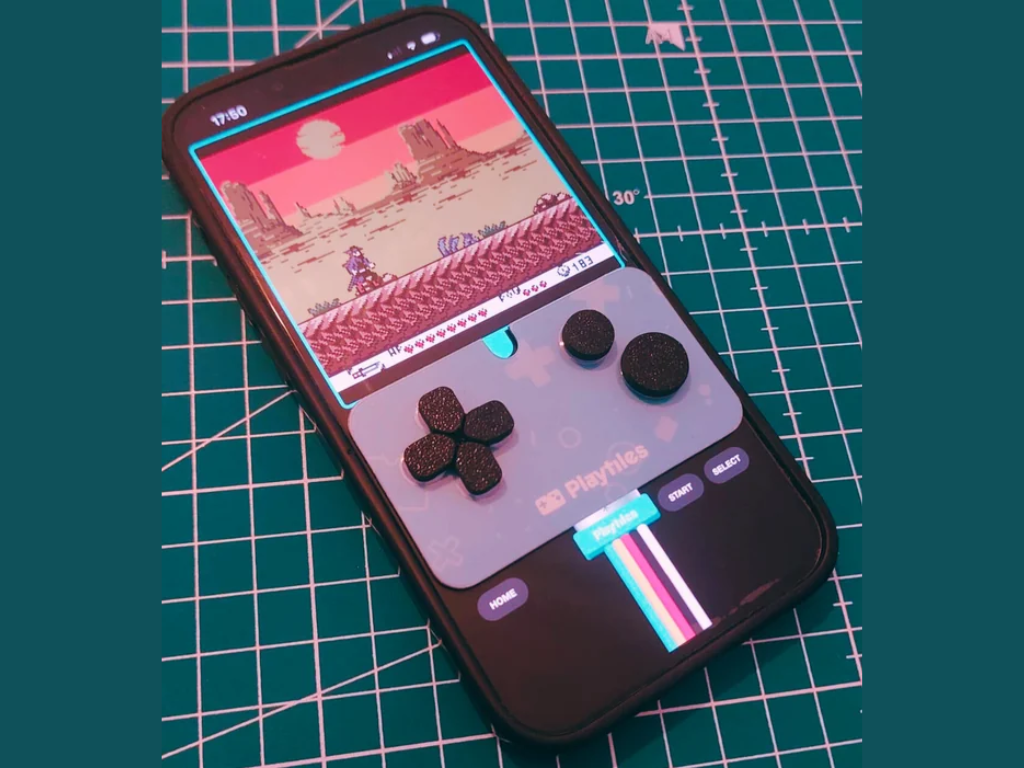
Playtiles, the ultra-compact phone gamepad that sparked plenty of curiosity when pre-orders opened in July, is now officially in the wild. The first batch has started shipping to early backers, and early hands-on impressions confirm what many mobile gamers hoped: it’s real, it works, and it’s priced to be impulse-buy friendly—starting around $12.
At first glance, Playtiles looks almost too simple to matter: a credit-card-sized piece of plastic with a D-pad and two action buttons that sits directly on your phone’s screen. But the big twist is how it functions. There’s no Bluetooth pairing, no charging, no batteries, and no sticky adhesive to peel off later. Instead, Playtiles physically presses down on the on-screen controls in compatible games, turning slippery touch buttons into something you can actually feel. The result is a more handheld-like experience for mobile gaming, without having to carry a full controller.
Compatibility is also a major part of the appeal. Playtiles can work with modern iPhone and Android devices as long as the phone is wider than 68mm and the game allows on-screen controls to be repositioned. That last part matters—since Playtiles needs the virtual buttons placed exactly where its physical buttons land, games with customizable touch layouts are the best fit.
Beyond the hardware, Playtiles includes a built-in discovery angle that’s meant to keep things convenient. A QR code on the unit launches a browser-based Playtiles OS, which acts like a mini hub where players can browse a catalog of titles. Early supporters who grabbed the Season 1 bundle are set to receive 12 weeks of bite-sized retro games built with GB Studio, aimed at quick sessions and classic handheld vibes.
Shipping progress has been steady since production ramped up in October. Review units went out first, followed by Season 1 developers, and then pre-orders began getting fulfilled. By mid-December, shipments were already arriving in mailboxes across the US and Europe—always a good sign for a crowdfunding-style gadget that some people worried might never materialize.
So how does it feel in real life? Early backers have been largely positive, praising the tiny footprint, the surprisingly sturdy build for something so thin, and the simple satisfaction of using real buttons instead of tapping glass. Some users also mentioned enjoying the ability to run their own Game Boy Color ROMs, which taps directly into the retro audience Playtiles seems built for.
A few minor hiccups did pop up, especially around accessing the Season 1 titles. The good news is that at least some of those issues were resolved with something as simple as rescanning the QR code, suggesting the problems were more setup-related than structural.
There are critics, too. A handful of buyers say Playtiles can feel “too basic” when you look at it up close—because it is, in many ways, a straightforward physical overlay for touch controls. But that simplicity is also the point, and it helps explain the low cost. With options like the budget-friendly Lagoon Pack around $14, or a higher-tier bundle around $28 that includes Season 1 games, Playtiles positions itself as an inexpensive upgrade for anyone who plays retro-style mobile games and wants better control without committing to a bulky controller.
For mobile gamers who are tired of missing inputs, sliding thumbs, and awkward touch layouts, Playtiles is shaping up to be a clever little solution—a pocketable, no-power, no-pairing way to make phone gaming feel more like the handhelds many of us grew up with.