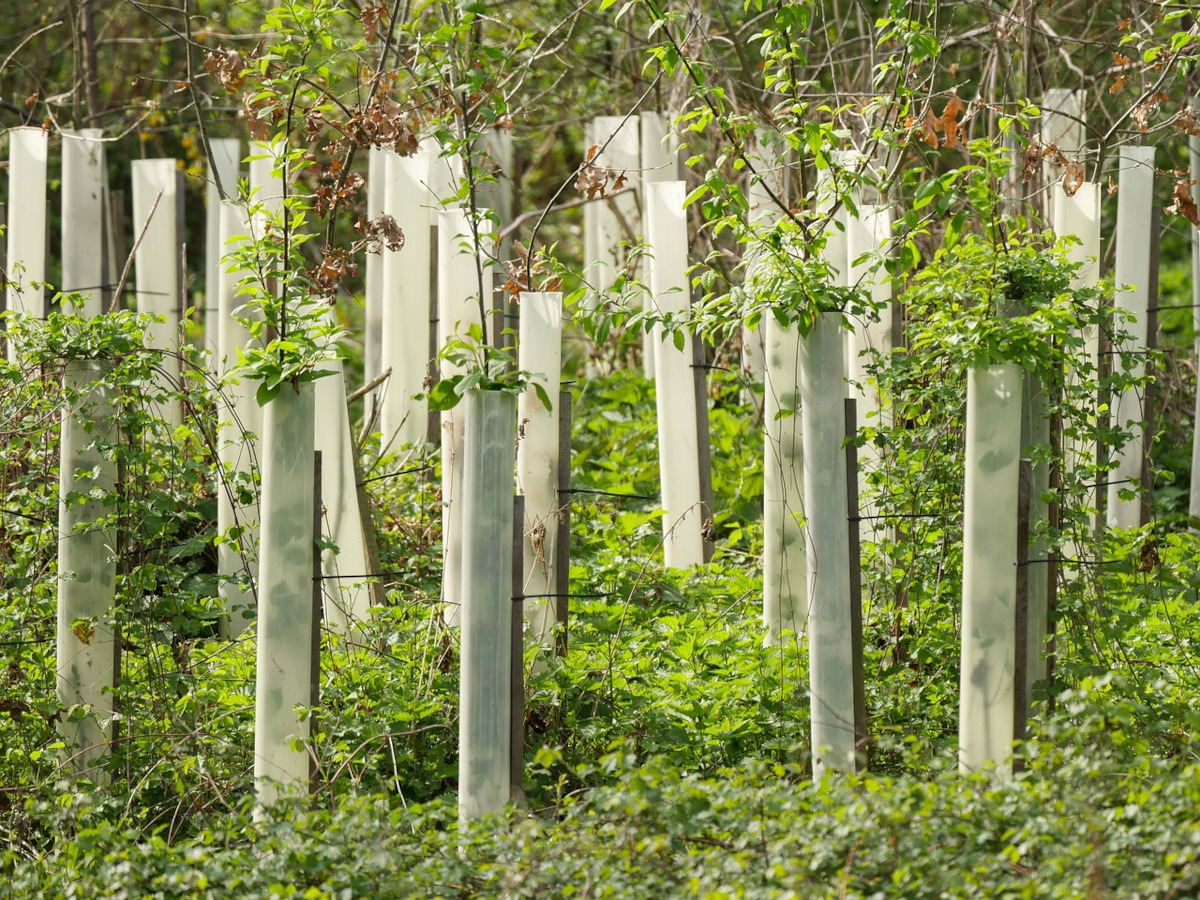
In the 1930s, the United States Midwest suffered from a severe drought that was exacerbated by decades of environmental mismanagement, including massive deforestation and intensive farming. This era saw the transformation of the once-fertile Great Plains into the “Dust Bowl,” a region plagued by dust storms and damage to its agricultural lands.
Quick to recognize the root causes, the authorities established an agency committed to reversing the damage. A vast reforestation effort unfolded, with an almost 100-mile-wide greenbelt established in the Great Plains to combat erosion. This reforestation spread across the eastern United States, an area that had been largely forested before colonial times.
The impact of such extensive forest restoration is an excellent case study for environmental regeneration. While the eastern US has benefitted from this reforestation, the western US has not experienced a similar resurgence in forest cover.
Utilizing over a century’s worth of robust weather data, researchers have been able to demonstrate the tangible benefits of reforestation efforts. The study found that average temperatures in reforested regions of the East have remained stable in the face of climate change. In some heavily reforested areas, there has even been a slight decrease in temperatures over broad regions. Conversely, the Western US has seen a substantial increase in temperatures across the board.
The impact of reforestation is particularly pronounced in proximity to new forests. There, the average annual temperature is 1 to 3 degrees Celsius lower than it was before the trees were planted. During extreme heat events, these areas can experience cooling of up to 7 degrees Celsius. This illustrates the potential cooling effect that large-scale tree planting can have on nearby urban environments.
However, much reforestation is still needed worldwide—with estimates ranging from hundreds of billions to a trillion trees—to be part of a comprehensive solution to combatting the escalating rise in global temperatures. The benefits of such projects are long-term, with measurable improvements expected to manifest in approximately half a century.
The evidence is clear: it is imperative to start tree-planting initiatives now to ensure a cooler and more sustainable future.


