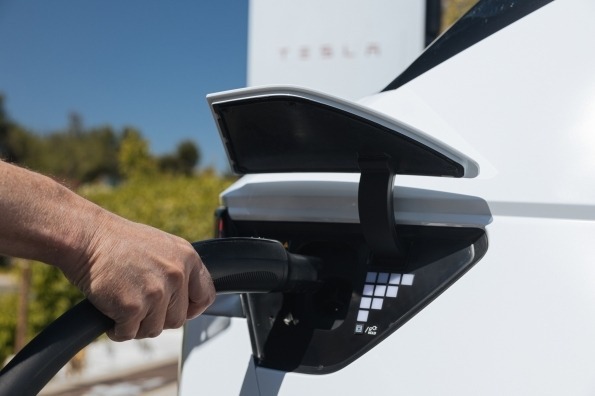
Tesla’s charging connector is poised to revolutionize the electric vehicle (EV) landscape by becoming the go-to standard for charging ports. This shift is happening as numerous automakers are incorporating NACS (North American Charging Standard) ports into their vehicles or supplying adapters to accommodate them.
During a keynote address at the Alliance for Automotive Innovation’s annual Merge 2024 event, Kristin White, the Acting Administrator of the US Department of Transportation’s Federal Highway Administration (FHWA), indicated that Tesla’s innovations are setting the stage for a new federal charging standard. She mentioned that the J3400 connector and port—an open-source equivalent of Tesla’s design certified by the international SAE standardization body—will likely become part of the official federal guidelines.
“Expect an upcoming update from federal agencies on the J3400 standard,” White announced, highlighting its significance for the future of EV infrastructure. An official confirmation is anticipated following the publication of new FAQs regarding the J3400 standard, with a critical webinar scheduled for December 17.
The importance of establishing a universal standard for EV charging is underscored by President Biden’s Inflation Reduction Act. This legislation includes the National Electric Vehicle Infrastructure (NEVI) program, which aims to deploy half a million chargers along the nation’s highways and in rural areas, all backed by federal investment.
Further cementing this trend, Nissan recently joined the array of EV manufacturers granting their vehicles access to Tesla’s extensive Supercharger network. By 2025, it is expected that virtually all electric cars will feature the J3400 port as automakers align with this emerging standard.
If adopted as the federal benchmark, the J3400 connector could streamline the construction of charging stations, reducing costs and accelerating the broader adoption of electric vehicles—thereby making EVs a more practical choice for consumers nationwide.