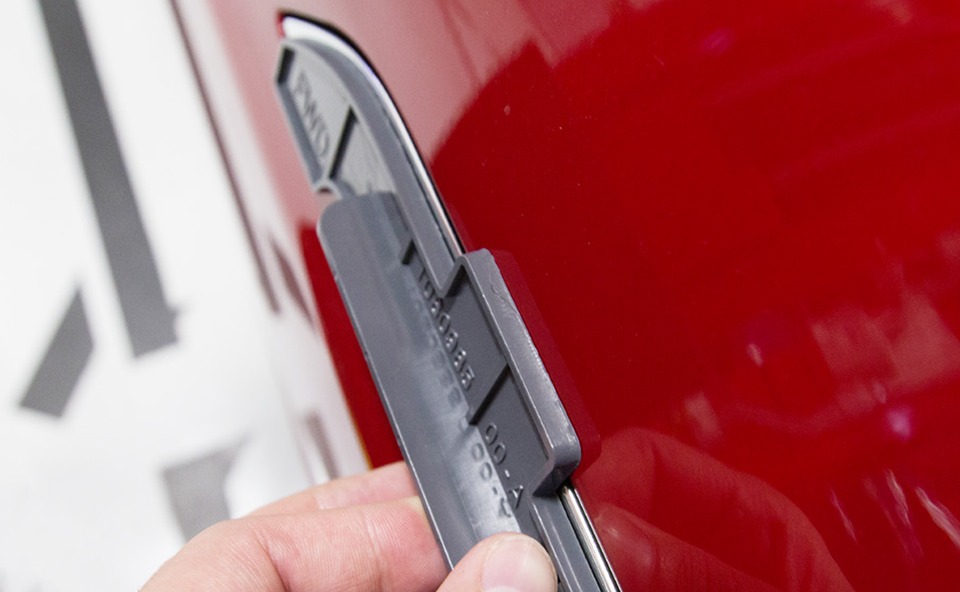
Tesla’s signature flush door handles may be headed for a rethink as safety regulators at home and abroad intensify scrutiny. The electric-car maker is preparing changes inside and out, responding to incidents where occupants struggled to exit during power loss or handle malfunctions, and to looming rules that could restrict flush exterior handles in key markets.
In the United States, the National Highway Traffic Safety Administration is probing cases involving the Model Y in which passengers reportedly couldn’t exit because the concealed exterior handles malfunctioned or because occupants didn’t know how to use the emergency egress when power was lost. In China, regulators are moving toward a ban on exterior handles that sit flush with the bodywork, citing reliability concerns and complications during crashes—changes that would affect multiple automakers, not just Tesla.
Tesla’s chief designer, Franz von Holzhausen, says the company is already evaluating a comprehensive overhaul of its door hardware. Speaking from the upcoming autonomous Robovan, he noted Tesla has a “very good solution” ready should flush handles become a regulatory target. Asked whether the redesign might resemble flat pull-out styles used by some exotic brands, he didn’t share specifics, but said he isn’t worried about ergonomics or feasibility.
The bigger shift may come inside the cabin. Today, Tesla doors open via an electronic button, with a secondary mechanical lever as a backup if power goes out. The front-door emergency levers are easy to spot, but the rear ones are tucked under a small cover—an arrangement that has led to confusion among renters and new drivers, and to viral stories of children unable to exit. Tesla plans to merge the electronic and mechanical systems so the same action people already use to open the door—pressing the button—will also work in an emergency. As von Holzhausen put it, building on existing muscle memory is the goal.
Beyond compliance, the redesign speaks to a broader tension between sleek aerodynamics and real-world usability. Flush door handles improve efficiency and styling but can be less intuitive in high-stress moments or when components fail. Integrating electronic and mechanical latching into a single, obvious touchpoint could reduce that friction, make emergency egress more consistent, and satisfy stricter safety expectations.
While Tesla hasn’t provided a timeline or detailed look at the new hardware, the direction is clear: more intuitive, more visible, and more robust door mechanisms that maintain design flair without compromising safety. Owners should expect changes that make it easier for passengers to exit quickly—front or rear, powered or not—without having to hunt for hidden releases.
If regulators finalize new standards, the updated handles could roll out across multiple models, aligning Tesla’s minimalist design language with a renewed focus on human factors and fail-safe operation. For shoppers and current owners, that means the next evolution of Tesla’s doors will likely prioritize clarity and dependability as much as clean lines and efficiency.