In a bold move during a challenging economic period, Elon Musk addressed a demand slowdown and escalating costs at Tesla by making significant cuts to the workforce, including more than 10% of its staff. This reduction impacted the Supercharger network team, responsible for installing and maintaining Tesla’s charging stations. Dissatisfied with the extent of these layoffs, Musk ended up terminating the entire team of 500 members after a disagreement with department head Rebecca Tinucci, who later joined Uber.
Despite these layoffs, Musk emphasized Tesla’s intention to continue growing the Supercharger network, albeit at a slower pace focusing on maximizing uptime and expanding existing locations. This strategy saw a reversal when many of the laid-off Supercharger team members were rehired.
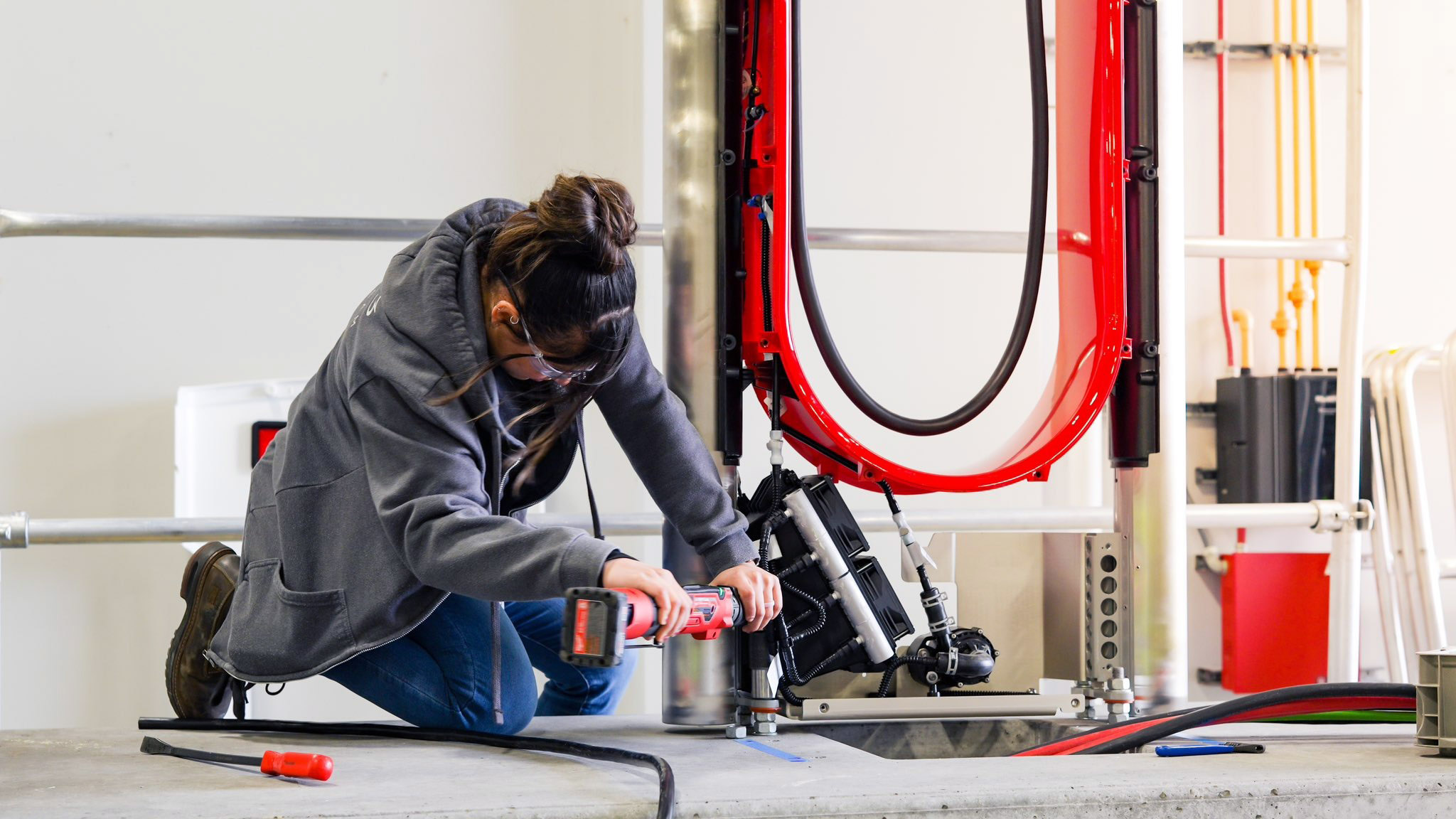
Tesla is now encountering an unexpected challenge from acts of vandalism targeting its Supercharger stations, largely driven by political activism surrounding Musk. To combat this, Tesla has committed to replacing any damaged Superchargers within 48 hours. For larger-scale damages, Tesla benefits from its innovative Prefabricated Supercharger Units (PSUs), developed by its Giga New York team in Buffalo. These PSUs come with multiple charging piles pre-installed on a unified concrete foundation, equipped with complete electrical wiring, making them grid-ready. This prefabrication allows new sites to become operational in days instead of weeks.
In the past, Tesla dealt with cable vandalism—either as part of anti-EV protests or for copper theft—by branding its cables with the Tesla logo, rendering them unsellable. However, the recent escalation to outright torching of Supercharger stations demands a broader response. For instance, a Supercharger station set ablaze in Littleton, Massachusetts, was swiftly restored by Tesla within two days, returning to normal operations by March 5.
This efficient PSU production process not only promises faster network expansion—up to 70% more cost-effective than competitors—but also proves invaluable in maintaining operational continuity in the face of increased vandalism threats. Tesla’s commitment to rapid repairs and innovative solutions ensures that its charging infrastructure remains robust, ready to face new challenges head-on.