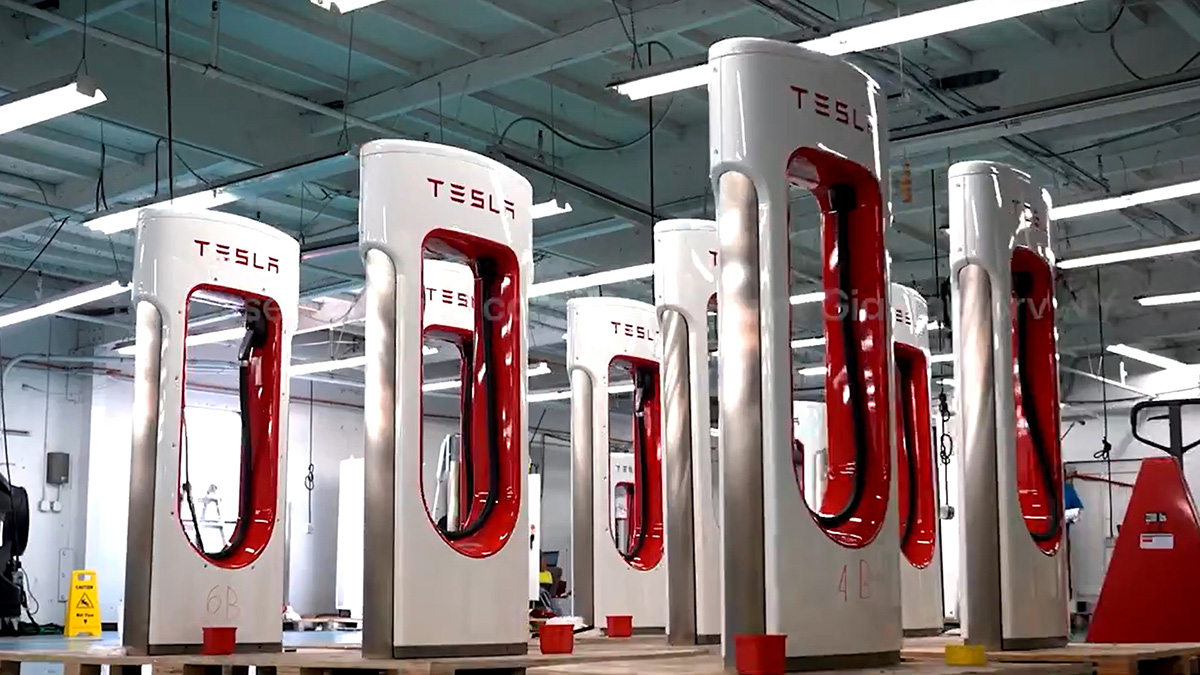
Tesla is on track to revolutionize the electric vehicle (EV) charging landscape with its Supercharger network, which is anticipated to generate substantial revenue for the company in the coming years. With the adoption of prefabricated Supercharger stations, Tesla has slashed the installation time by half, further accelerating the expansion of its charging network.
The Supercharger network is expected to become a significant revenue stream for Tesla, with predictions that it could bring in yearly profits of around $740 million by 2030. Last year, the network generated $1.74 billion in revenue, highlighting its potential for growth. With over 180,000 Superchargers planned to be installed worldwide, Tesla is looking to accommodate not only its own vehicles but also other EVs, albeit charging them at a higher rate.
Tesla’s business model suggests that each Supercharger could distribute an average of 280 kWh per day, amounting to a total of 18.4 TWh in 2030. With an electricity cost averaging 40 cents per kWh and a conservative profit margin of 10%, as suggested by Elon Musk, the charging network stands to contribute significantly to the company’s financial success.
The efficiency of Supercharger installations has seen a dramatic improvement, with Tesla now able to deploy charging stations in as little as four days using prefabricated units. This represents a 50% reduction in setup time compared to just two years prior, underlining Tesla’s commitment to making its Supercharger network the default EV charging standard.
Enhancing the charging experience, Tesla has introduced Supercharger locations that mimic traditional gas stations, featuring innovative amenities such as retail outlets and coffee shops. This not only provides additional convenience for drivers but also opens up new avenues for revenue through higher-margin retail operations. The company has even ventured into creating an iconic charging station in Los Angeles, which will include a drive-in movie theater and a diner reminiscent of the 1950s.
As Tesla continues to focus on its Supercharger network’s growth, the company is set to change the dynamics of EV charging, offering quick and efficient services coupled with an enjoyable customer experience. This expansion is expected to cement Tesla’s position as a leader in the electric mobility industry and showcases its innovative approach to integrating charging solutions into the broader automotive ecosystem.