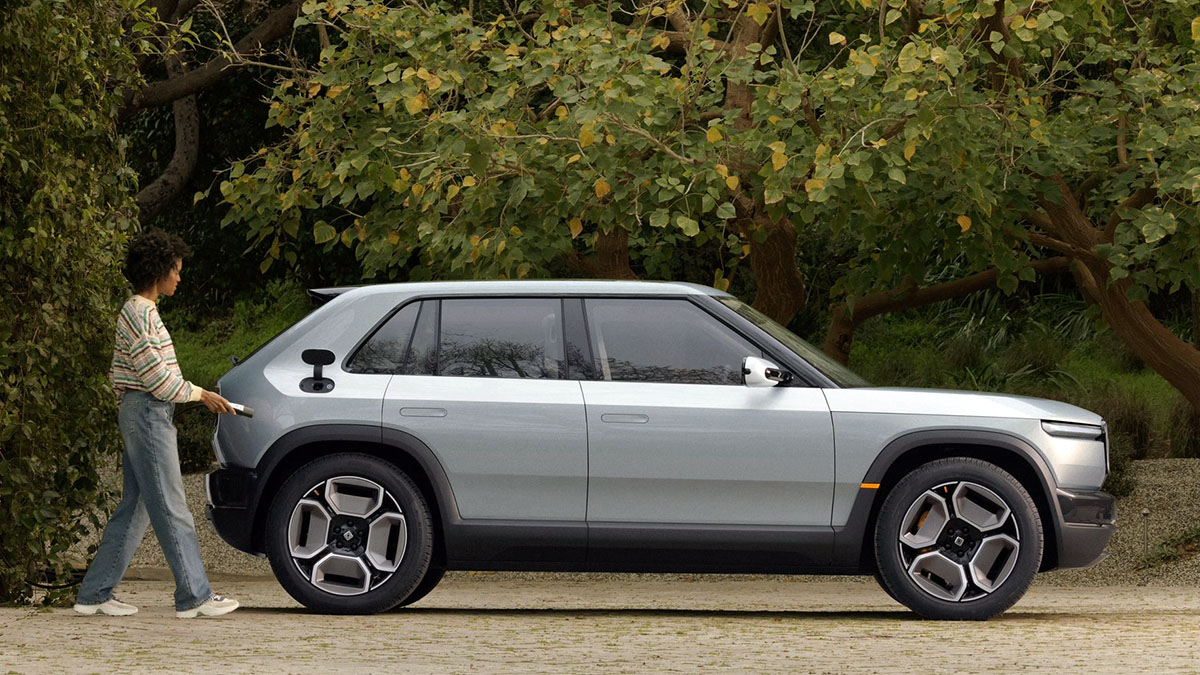
Rivian’s upcoming electric vehicles, the R3X, R3, and the prototype R2, as announced by CEO RJ Scaringe, feature a significant change in their design by relocating the charging port. The new Rivian models will sport a NACS (North American Charging Standard) port positioned at the rear right, paving the way for direct connection to Tesla Superchargers. This strategic move departs from the traditional front-left CCS (Combined Charging System) port placement and has sparked quite a bit of conversation among Rivian enthusiasts and the EV community.
While the repositioning choice has been met with some criticism due to compatibility concerns with the current length of Tesla Supercharger cables, Rivian stands by its decision, highlighting the individuality of electric vehicle manufacturers and their need not to follow in Tesla’s footsteps exactly.
On the flip side, some industry voices have expressed caution regarding this configuration change, citing how most Supercharger cables might not reach the new charging port location. In light of this, suggestions have been made to consider other placement options, such as the front right, to synergize better with the existing charging infrastructure and street parking conveniences.
Tesla has been vocal in encouraging EV manufacturers to standardize charge port locations for better compatibility. This uniformity would optimize the ease of use for EV drivers across different brands when using shared charging infrastructures like Tesla’s Supercharger network. Progress is evident as Tesla recently began outfitting its newest V4 Supercharger stations with longer cables and even allowed direct Supercharger access for Ford’s electric vehicles.
Acknowledging the possibility of inconvenience when non-Tesla vehicles use the Supercharger stations—due to varying port locations—Tesla has provided updated guidance for EV owners to park thoughtfully to avoid taking up multiple charging spots. Furthermore, the company is determined to address this challenge by developing a NACS-to-NACS extension cable that will enable a more flexible charging experience for electric vehicles with different port placements. Although specific details regarding the cost, length, and release timing of the extension cable remain undisclosed, it is touted as a promising solution to prevent potential conflicts and congestion at Supercharger sites.
As the electrified mobility space evolves, interoperability among different EV charging networks and connectors becomes increasingly imperative. Through standardization and innovative solutions like extension cables, EV manufacturers and charging network providers are working to ensure a seamless and harmonious charging experience for all electric vehicle owners.