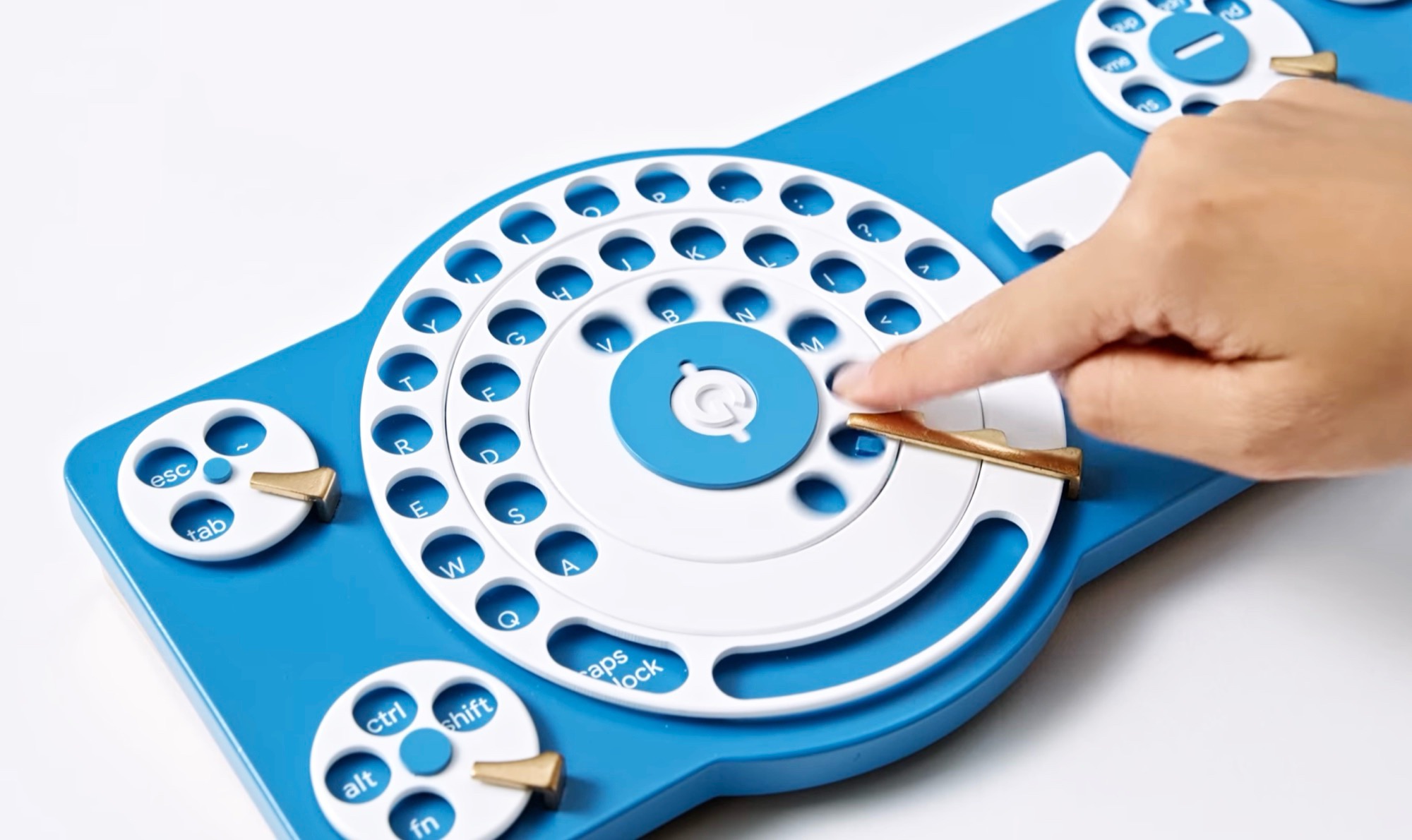
Meet the Gboard Dial, an experimental keyboard concept that trades traditional keys for a set of rotating dials. Instead of tapping, you spin to select a character, confirm the input, and the dial snaps back to its starting position. It’s a quirky, tactile twist on typing that turns every sentence into a hands-on interaction.
The layout is surprisingly thought-out. A large triple dial houses all letters, the most common punctuation marks, and even the spacebar. A small dial in the bottom-left corner keeps essential modifiers—Alt, Ctrl, Fn, and Shift—within quick reach. Up top on the left, dedicated dials handle Escape and Tab. On the right half, additional dials are mapped to arrow keys, numbers, mathematical symbols, and a range of shortcuts, so navigation and number entry don’t get left behind.
Is it fast? Not really. This is more about the experience than raw speed. If you’re paid by the hour, it might even make work a bit more entertaining. The appeal here is the novelty, the precision of rotating to your exact character, and the satisfying rhythm as each dial returns home after input.
While you can’t buy the Gboard Dial from Google, the company has released the design as an open-source project. That means makers and DIY enthusiasts can access the files and build their own version with a 3D printer. If you’re into custom keyboards, experimental human–computer interfaces, or just love a good weekend build, this is an eye-catching conversation piece that’s equal parts functional and fun.
Why it matters for creators and tinkerers:
– It’s a fresh interface concept for anyone exploring alternative input methods.
– The open-source release lowers the barrier to experimenting with hardware customization.
– The dial-based design could inspire new accessibility tools or niche workflows where precision trumps speed.
Whether you’re a gadget lover, a mechanical keyboard hobbyist, or a 3D-printing pro, the Gboard Dial invites you to rethink how typing can feel. It may never replace your daily driver, but as a playful, open-source experiment, it’s the kind of project that sparks ideas—and smiles.