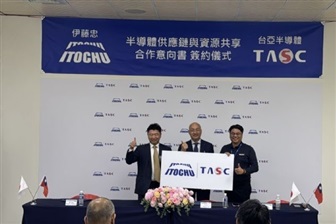
Taiwan-Asia Semiconductor Corporation (TASC) is stepping up its push into two fast-growing, high-impact tech areas: compound semiconductors and non-invasive blood glucose monitoring. The company has announced a new memorandum of understanding (MOU) with Itochu Taiwan, a move designed to strengthen collaboration, accelerate commercialization, and deepen TASC’s footprint in advanced semiconductor applications and next-generation health technology.
The partnership signals a clear strategy shift toward markets where demand is rising quickly and long-term potential is strong. Compound semiconductors—often seen as a critical building block for modern power electronics and high-frequency communications—continue to gain momentum across industries, from automotive electrification to industrial power systems and advanced connectivity. By working closely with Itochu Taiwan, TASC aims to improve how it develops and positions its compound semiconductor capabilities, building a broader pathway from technology development to real-world adoption.
At the same time, the agreement underscores growing interest in medical technology that can solve everyday problems at scale. Non-invasive blood glucose monitoring has been one of the most sought-after breakthroughs in digital health, with the promise of reducing the need for finger-prick testing while making glucose tracking easier and more accessible for users. TASC’s inclusion of this field within the MOU highlights its intention to explore opportunities beyond traditional semiconductor markets, connecting materials and device innovation to healthcare applications that could reach wide consumer and clinical audiences.
While the announcement centers on an MOU—typically an early-stage framework rather than a final commercial deal—it often serves as a meaningful signal of direction. For TASC, aligning with Itochu Taiwan is a practical way to expand business development reach, identify new market channels, and create more momentum behind both compound semiconductor initiatives and non-invasive glucose monitoring efforts.
As competition intensifies in both advanced semiconductor technologies and wearable or sensor-driven health solutions, partnerships like this can be a smart way to move faster, reduce barriers to entry, and turn innovation into deployable products. For observers tracking Taiwan’s evolving high-tech ecosystem, TASC’s agreement with Itochu Taiwan adds another indication that the next wave of growth won’t be limited to chips alone—it will also be shaped by how semiconductor innovation powers new medical and consumer technologies.