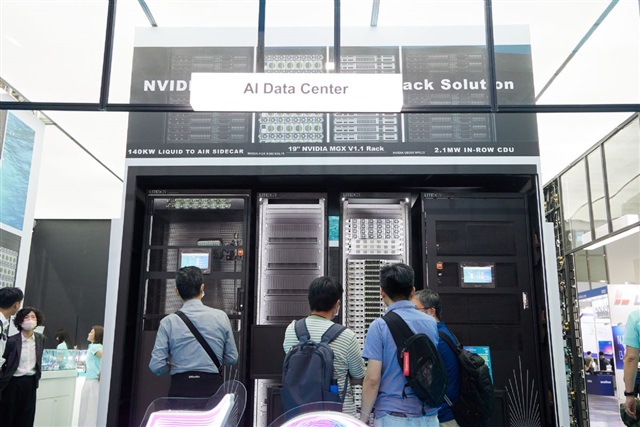
Taiwan’s AI Data Center Boom Highlights a Growing Global Power Challenge
Taiwan’s push to become a major hub for AI data centers is drawing attention to a much bigger issue facing the global technology industry: artificial intelligence requires enormous amounts of electricity, and many power grids are not ready for the speed of this expansion.
As demand for AI services rises, companies are racing to build facilities packed with high-performance servers, advanced chips, cooling systems, and networking equipment. These data centers are essential for training and running large AI models, cloud services, automation tools, and next-generation digital platforms. But behind the rapid growth is a difficult question: where will all the power come from?
Taiwan is already a critical part of the global technology supply chain, especially in semiconductor manufacturing. Its importance has grown even further as AI chips become central to everything from cloud computing to consumer electronics. Now, with interest rising in AI infrastructure, Taiwan is facing pressure to support more energy-intensive facilities while also keeping its existing industries supplied with stable electricity.
AI data centers are not like traditional office buildings or smaller server rooms. They operate around the clock and require consistent, high-quality power. Any interruption can affect services, reduce efficiency, and create costly delays. As AI models become larger and more complex, the electricity needed to support them continues to increase.
This is creating tension between ambition and infrastructure. Governments want to attract investment, technology companies want to expand quickly, and consumers want faster AI-powered services. However, electricity grids, power plant development, permitting systems, and renewable energy projects often move at a much slower pace.
One of the biggest challenges is grid capacity. Even if a region has enough total electricity generation on paper, local transmission networks may not be strong enough to deliver huge amounts of power to a new data center site. Upgrading substations, transmission lines, and distribution systems can take years. In many countries, the approval process for new energy infrastructure is slow and complex, making it harder to match the rapid growth of AI demand.
Another major issue is clean energy. Many technology companies have committed to reducing carbon emissions and using renewable power. But AI data centers need electricity at all hours, while solar and wind power are variable. This means companies often need a combination of renewable energy, energy storage, backup systems, and reliable grid connections. Building that mix is expensive and time-consuming.
Taiwan’s situation reflects this global balancing act. The island must support its high-tech manufacturing base, maintain energy security, and manage public concerns about power supply and environmental impact. At the same time, it is trying to remain competitive in the AI era, where countries that can offer reliable electricity, strong connectivity, and fast approvals may gain a major advantage.
The challenge is not limited to Taiwan. Across the world, data center developers are facing similar problems. In some regions, projects are being delayed because local grids cannot handle the power demand. In others, authorities are reviewing how much electricity should be allocated to data centers compared with homes, factories, transportation, and other essential services.
The rise of AI is changing how countries think about energy planning. For years, data centers were seen mainly as digital infrastructure. Now, they are increasingly viewed as major industrial power users. This shift means governments may need to plan AI growth alongside energy expansion, rather than treating them as separate issues.
For technology companies, the pressure is also rising. Building more efficient chips, improving cooling systems, and optimizing AI workloads could help reduce electricity use. Some firms are exploring advanced cooling methods, smarter server management, and data center locations near renewable energy sources. Others are looking at long-term power purchase agreements to secure cleaner electricity.
Still, efficiency improvements may not fully offset the rapid growth in AI demand. As more businesses adopt AI tools and more consumers use AI-powered apps, the need for computing power is expected to keep rising. This makes energy availability one of the most important factors shaping the future of the AI industry.
Taiwan’s experience serves as a warning and a lesson. The global race to build AI data centers cannot succeed on computing hardware alone. It also depends on power grids, energy policy, permitting reform, renewable generation, and long-term infrastructure planning.
Countries that solve these issues early could become leaders in the next phase of AI development. Those that fall behind may struggle to attract investment, even if they have strong technology talent or strategic locations.
The AI boom is often described in terms of chips, models, and software. But its future may be decided just as much by electricity. Without reliable and scalable power, even the most advanced AI systems cannot run. Taiwan’s data center ambitions are now showing the world that the next big challenge for artificial intelligence is not only digital. It is electrical.