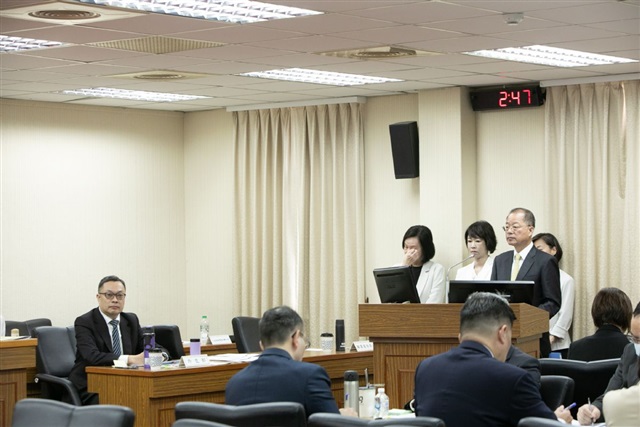
Taiwan’s ambitions to become a major hub for artificial intelligence and robotics are hitting a serious roadblock, as a political standoff in the Legislative Yuan threatens to stall the country’s 2026 central government budget. With the budget still unresolved, billions of New Taiwan dollars that were expected to fuel new technology investment are now effectively frozen, putting planned projects and momentum at risk.
In recent years, Taiwan has been working to scale up next-generation industries that can strengthen its economy and reinforce its role in the global tech supply chain. Artificial intelligence and robotics have been positioned as key pillars of that strategy, with new funding expected to support research, commercialization, advanced manufacturing upgrades, and broader adoption of automation across industries. But all of those efforts depend heavily on government-backed investment that can move quickly—especially as other countries accelerate their own AI and automation agendas.
The current legislative deadlock is creating uncertainty at a time when speed matters. When budgets are delayed, the impact goes beyond paperwork: it can slow decision-making for public agencies, disrupt timelines for multi-year initiatives, and create hesitation across the private sector. Companies planning to co-invest, collaborate on pilot programs, or expand AI and robotics capacity often wait for clear signals that funding and policy support will be stable. If that clarity disappears, timelines slip and opportunities can shift elsewhere.
A stalled budget also risks weakening Taiwan’s ability to compete in areas where consistent funding is essential. AI development relies on long-term investment in computing resources, talent pipelines, and applied research. Robotics programs similarly require sustained support for testing, deployment, and industrial integration. When funding pauses midstream, it can interrupt progress and make it harder to maintain continuity across universities, labs, startups, and manufacturing partners.
Beyond innovation, the delay could affect broader economic goals tied to productivity and labor challenges. Robotics and automation are frequently promoted as practical solutions to workforce shortages and rising operational costs. If planned funding is held back, industries that were counting on incentives or partnerships to modernize may be forced to delay upgrades, which can ripple into competitiveness and growth.
For readers tracking Taiwan’s technology outlook, the key issue is clear: the country’s AI and robotics push is not just about ambitious plans—it’s about execution. And execution depends on predictable budgets. Until the Legislative Yuan breaks the deadlock and clears the 2026 central government budget, Taiwan’s next wave of AI and robotics investment remains on hold, leaving one of its most high-profile innovation drives stuck at the starting line.