Taiwan OSAT Leaders Prepare Major Expansion as AI Chip Demand Moves Beyond Wafer Fabs
The global AI boom is no longer limited to cutting-edge wafer manufacturing. As demand for advanced AI processors, accelerators, and high-performance computing chips continues to surge, the pressure is now shifting deeper into the semiconductor supply chain, especially into packaging and testing.
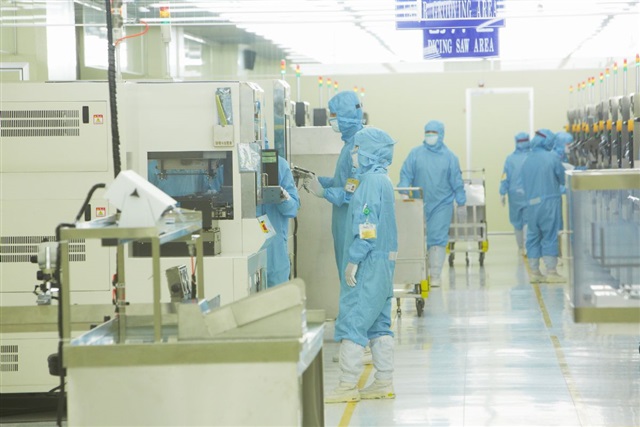
Taiwan’s largest outsourced semiconductor assembly and test providers are preparing a new wave of capacity expansion as the AI investment cycle accelerates. These companies play a critical role in turning manufactured wafers into finished, tested chips ready for use in data centers, servers, cloud infrastructure, and next-generation AI devices.
Advanced semiconductor packaging has become one of the most important battlegrounds in the AI hardware race. Modern AI chips require far more than traditional assembly methods. They often depend on complex packaging technologies that allow multiple chips, memory stacks, and interconnects to work together with higher speed, better power efficiency, and improved performance.
This growing demand is creating fresh opportunities for Taiwan’s OSAT industry. As chip designers and foundries ramp up production for AI-related products, packaging and testing capacity must expand alongside them. Without enough backend capacity, even the most advanced wafers cannot move efficiently into final products.
The expected investment push, estimated at around US$14.6 billion, reflects how important backend semiconductor services have become in the broader AI supply chain. Capacity additions may include advanced packaging lines, testing facilities, automation upgrades, and infrastructure designed to support high-performance chips used in artificial intelligence workloads.
The expansion also highlights a major shift in the semiconductor industry. For years, much of the attention focused on leading-edge process nodes and wafer fabrication plants. While those remain essential, AI chips are increasingly dependent on packaging innovation to deliver real-world performance. Technologies such as chiplet integration, high-bandwidth memory packaging, and advanced testing solutions are becoming central to the future of AI computing.
Taiwan’s position in the semiconductor ecosystem gives its OSAT providers a strong advantage. With close ties to major chipmakers, foundries, and electronics manufacturers, these companies are well placed to benefit from rising demand for AI servers, GPUs, custom accelerators, and other high-performance chips.
The latest expansion plans suggest that the AI semiconductor supply chain is entering a broader growth phase. Investment is no longer concentrated only at the front end of chip production. Instead, it is spreading across the entire manufacturing process, from wafer fabrication to advanced packaging, final assembly, and testing.
As artificial intelligence adoption continues to grow across cloud computing, enterprise software, consumer electronics, automotive systems, and industrial applications, demand for powerful and efficient chips is expected to remain strong. That means semiconductor packaging and testing will become even more important in determining how quickly AI hardware can reach the market.
For Taiwan’s OSAT leaders, this is a critical moment. The companies that can expand capacity, improve advanced packaging capabilities, and deliver reliable testing services will be positioned to capture a larger share of the fast-growing AI chip market.