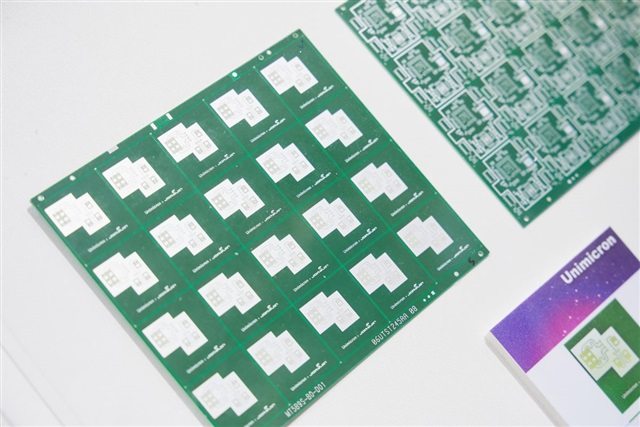
Taiwan’s advanced chipmaking ecosystem continues to ride the AI wave, and Eclat Forever Machinery is leaning into that momentum. The Taiwan-based maker of equipment for manufacturing high-end IC substrates told investors it expects stronger performance in 2026 than in 2025. According to Chairman Chou Cheng-chun, demand from major AI server chipmakers remains robust, providing a clear tailwind for the company’s outlook.
This matters because IC substrates sit at the heart of the AI hardware boom. These complex, multilayer structures serve as the foundation that connects advanced processors to the outside world, enabling the power delivery and ultra-dense signaling AI accelerators require. As companies scale up production of next-generation GPUs, custom AI chips, and high-core-count server CPUs, they need more substrate capacity, tighter process control, and better yields—exactly the areas where specialized equipment suppliers step in.
When a toolmaker projects a stronger year further out, it often signals that its customers are planning capacity additions and technology upgrades well in advance. Substrate lines are capital intensive and take time to qualify. Orders placed today translate into installations, acceptance, and revenue recognition months down the road. An improving 2026 outlook suggests a pipeline of projects timed to meet the next wave of AI server deployments, as hyperscalers and cloud providers refresh infrastructure to support larger models and more memory bandwidth.
Taiwan’s position in this supply chain is strategic. The island hosts a dense cluster of substrate manufacturers, advanced packaging houses, and materials suppliers, all supported by experienced equipment makers. That proximity can shorten development cycles, simplify support, and speed up yield learning—key advantages when AI demand is moving fast. Japan also plays a critical role through materials, precision components, and niche process tools that feed into substrate and packaging flows. Together, these ecosystems underpin the reliability and scale that top-tier chipmakers depend on.
For Eclat Forever Machinery, strong demand from leading AI server chipmakers typically translates into:
– A healthier order book as substrate producers expand and modernize lines.
– A mix shift toward tools tuned for high-density, high-layer-count substrates used in AI accelerators.
– Longer visibility on installations and service contracts as customers lock in capacity.
There are practical reasons the surge may extend into 2026. AI chips are pushing packaging limits with larger die sizes, chiplets, and higher I/O counts, all of which stress substrate design rules. Meeting performance targets often requires tighter registration, finer lines and spaces, and more rigorous inspection—all enabled by specialized process and metrology equipment. As designs evolve, substrate makers tend to upgrade toolsets to support new materials and higher reliability standards, creating a multi-year refresh cycle.
Of course, the industry remains cyclical. Lead times for critical components, qualification bottlenecks, and shifting capex priorities can influence the pace of installations. Geopolitical considerations and export controls also add uncertainty to global equipment flows. But the core driver—expanding AI data center capacity—continues to signal durable demand for the substrate technologies that make those systems possible.
What to watch next:
– Order momentum and backlog growth as a proxy for 2026 revenue visibility.
– Customer mix, especially exposure to top AI chip and server platforms.
– Lead times and installation cadence, which indicate how quickly capacity can come online.
– Adoption of next-generation substrate processes that support higher bandwidth and power delivery.
Bottom line: With AI server chip demand still running hot, Eclat Forever Machinery sees its strongest gains arriving in 2026. As substrate makers invest to meet the next phase of AI compute growth, equipment suppliers positioned at the intersection of advanced packaging and high-density interconnect are set to benefit.