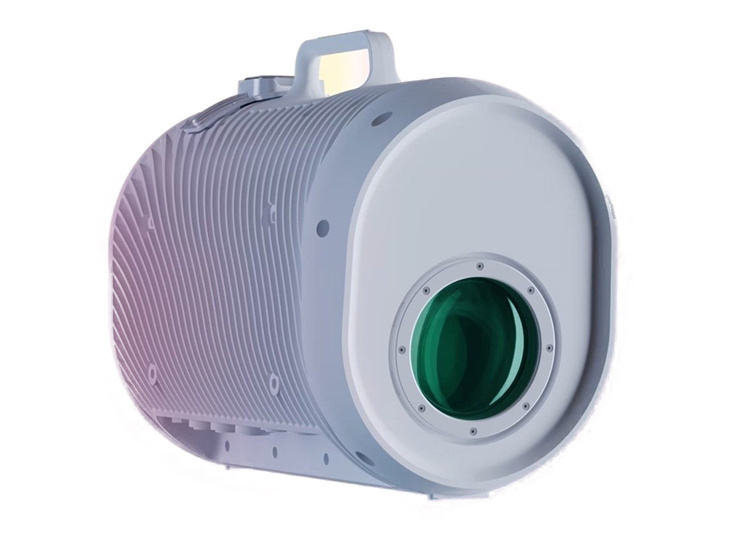
Former Alphabet moonshot startup Taara has introduced the Taara Beam, a compact broadband device that sends high-speed internet through the air using near-infrared light. The big idea is simple: deliver fiber-like speeds without the expense, delays, and construction headaches that come with laying optical cables underground.
Taara Beam is built for speed and practicality. The small, projector-sized unit can transmit up to 25Gbps over distances reaching 10 kilometers (about 6.2 miles). Despite its performance, it weighs around 17 pounds, making it far easier to handle than traditional fixed wireless infrastructure. Taara says deployments can happen in hours, not weeks, because the hardware can be mounted on existing cell towers, utility poles, and building rooftops—no trenching, no spectrum licensing, and no right-of-way permits.
That fast setup and flexible mounting make the Taara Beam a strong option for a wide range of internet expansion projects. It can help connect rural communities where cable installation is costly, link urban rooftops to extend coverage, deliver backhaul for mobile networks, and provide high-capacity connectivity across enterprise campuses. It also fits scenarios like data center clusters that need fast point-to-point links, or temporary high-bandwidth needs at event venues.
It’s also important to understand what kind of “Starlink rival” this is—and what it isn’t. While the Taara Beam targets similar problems around connecting hard-to-reach places, Taara is focusing on a business-to-business model. Instead of selling service directly to consumers, the company plans to sell the technology to internet service providers and mobile carriers who can use it to expand and strengthen their networks.
The Taara Beam is powered by a newly developed chip that helps shrink the platform significantly compared to Taara’s earlier Lightbridge system. The Beam is roughly 50% smaller than Lightbridge, dropping from 29 pounds to 17 pounds. It also increases maximum throughput to 25Gbps, up from Lightbridge’s 20Gbps. The tradeoff is range: Beam tops out at 10km, while Lightbridge can reach up to 20km. Taara notes that the two systems can work together, allowing operators to mix and match links to cover a neighborhood or even scale across a city.
One of the challenges with over-the-air optical internet is weather—especially heavy fog, which can weaken or disrupt light-based transmission. To address reliability concerns, Taara recently announced a companion system called Lightbridge Pro, designed to maintain an uptime target of 99.999% even when conditions are less than ideal.
Taara is expected to showcase the Taara Beam and its broader lineup at Mobile World Congress (MWC) in Barcelona as it pushes to win enterprise customers and network operators. Pricing hasn’t been announced yet, but the pitch is clear: fiber-class speed where fiber is too slow, too expensive, or too complicated to build.