SpaceX Plans Massive Starlink Gen3 Expansion With Up to 100,000 Satellites
SpaceX is preparing for one of the most ambitious upgrades in the history of satellite internet. A recent filing with the Federal Communications Commission shows that the company is seeking permission to launch and operate as many as 100,000 next-generation Starlink satellites, known as Gen3 or V3 satellites.
The proposed network would be placed in very-low Earth orbit, a much lower altitude than many traditional satellite constellations. SpaceX’s plan points to a major leap in broadband capacity, latency reduction, mobile connectivity, and global coverage as the company continues building Starlink into a high-performance space-based internet system.
According to the filing, the Starlink Gen3 constellation would operate in two very-low Earth orbit shells at nominal altitudes of approximately 323 to 327.5 kilometers and 473 to 477.5 kilometers. The satellites would use orbital inclinations ranging from 26 degrees to 96.9 degrees, allowing SpaceX to provide coverage across a wide range of regions around the world.
The scale of the project is enormous. Each Gen3 satellite is expected to weigh up to 2,000 kilograms, making it far larger and heavier than the current Gen2 Starlink satellites, which weigh around 575 kilograms. That added mass reflects a major redesign rather than a simple upgrade. These satellites are expected to carry more powerful antennas, larger solar arrays, advanced computing systems, improved modems, optical inter-satellite links, and more capable propulsion technology.
One of the biggest improvements will be raw network capacity. SpaceX’s Gen3 satellites are expected to deliver a major boost in both download and upload performance. Each satellite could support downlink capacity of up to 1 Tbps, a roughly 10-fold increase compared with current systems. Uplink capacity may rise to around 160 to 200 Gbps, representing an even larger improvement. Combined radio-frequency and laser backhaul capacity could reach approximately 4 Tbps per satellite.
For Starlink users, this could eventually mean faster speeds, lower latency, and more reliable service, especially in areas where current satellite internet networks face congestion. However, the full benefits may require upgraded user terminals or new Starlink dish hardware, since existing equipment may not be able to take advantage of the full performance offered by the Gen3 constellation.
The Gen3 satellites are also being designed for very-low Earth orbit, or VLEO. Operating closer to Earth can reduce latency and improve signal strength, which is especially important for applications such as video calls, online gaming, remote work, cloud services, and mobile connectivity. The tradeoff is that satellites in lower orbits experience more atmospheric drag, requiring stronger propulsion and more frequent station-keeping.
To handle this, SpaceX is expected to use argon Hall thrusters for orbital maneuvering and station-keeping. The satellites will also include autonomous collision avoidance capabilities, a critical feature for a constellation that could eventually include tens of thousands of spacecraft.
The filing also points to an advanced spectrum strategy. SpaceX plans to use Ku-, Ka-, V-, E-, W-, and D-band frequencies, including downlink bands such as 10.7 to 13.4 GHz, 17.3 to 21.2 GHz, and 37.5 to 42.5 GHz. The system would also use multiple uplink bands reaching as high as 231.5 to 275 GHz. These frequency ranges would help support extremely high data throughput, while advanced phased-array beamforming, electronic beam steering, optical links, and dynamic power control would help reduce interference and improve spectrum sharing.
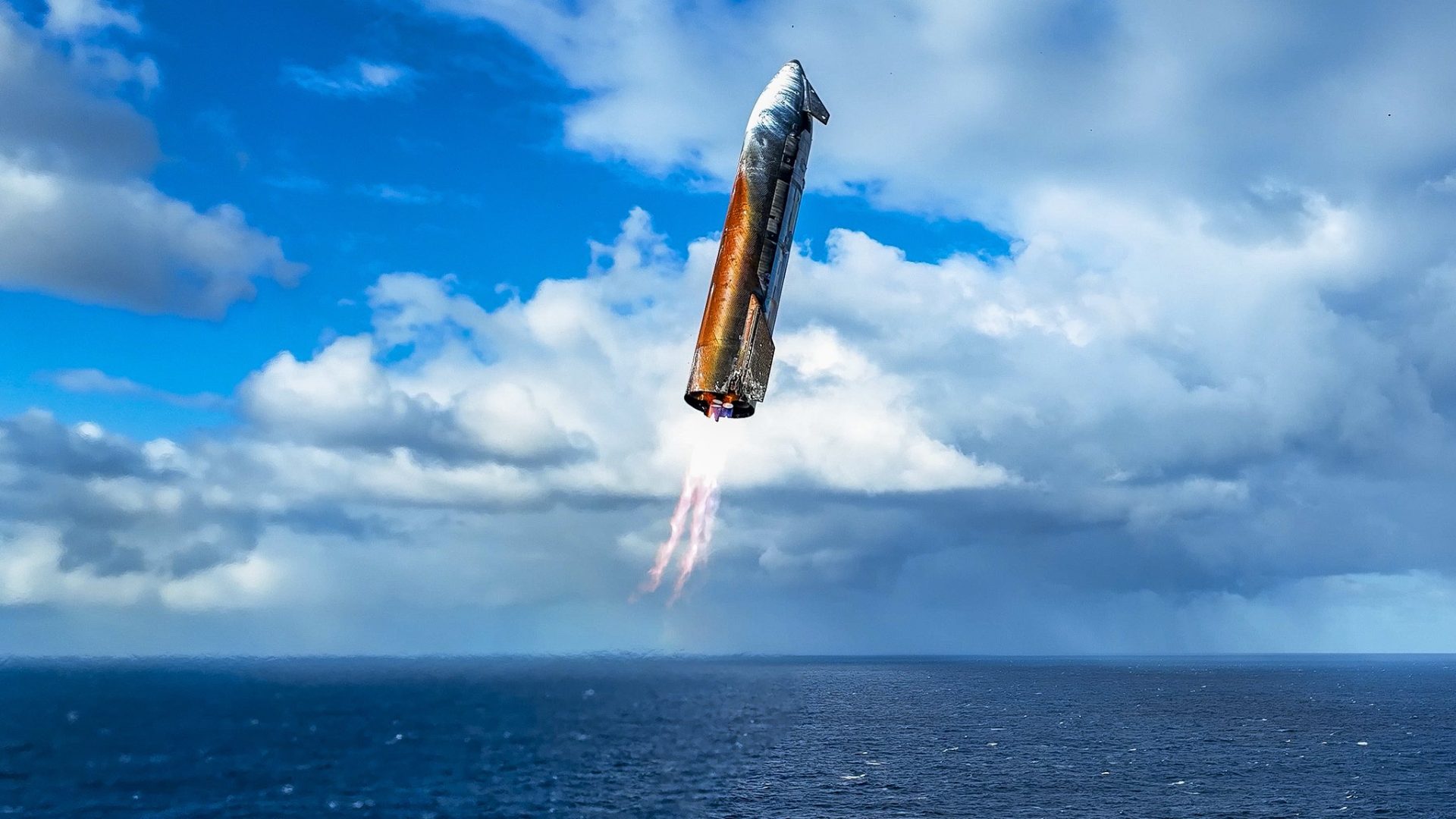
Another important part of the Gen3 design is its reliance on Starship. Because each satellite is expected to be significantly heavier than previous Starlink models, SpaceX’s Falcon 9 rocket would not be the ideal vehicle for full-scale deployment. Starship, with its much larger payload capacity, is expected to play a central role in launching the Gen3 constellation at the pace required for a network of this size.
SpaceX has already made major progress with its Gen2 Starlink satellites, which improved capacity and latency compared with Gen1. Gen2 also introduced support for Direct-to-Cell service, allowing satellites to connect with ordinary mobile phones without requiring special handset modifications. The Gen3 system appears to build on that foundation while pushing performance much further.
The company has also revealed a separate satellite concept focused on artificial intelligence computing in orbit. Known as AI1, that satellite design is intended to support up to 150 kW of peak compute payload, with features such as liquid radiators, micrometeoroid shielding, deployable solar arrays, and a centralized compute module. These AI-focused satellites are expected to be produced at SpaceX’s Gigasat facility in Texas, though they are separate from the Gen3 Starlink constellation described in the latest FCC filing.
The 100,000-satellite proposal is not SpaceX’s only large-scale orbital ambition. The company has also submitted a separate request related to launching up to 1 million satellites as part of a much longer-term vision for expanding humanity’s technological capabilities in space. For now, that filing remains separate from the Gen3 Starlink plan.
If approved and deployed successfully, SpaceX’s Gen3 Starlink network could reshape the satellite internet market. A constellation of this size, operating in very-low Earth orbit with terabit-class satellite capacity, would give SpaceX a powerful advantage in global broadband, mobile connectivity, enterprise networking, and possibly future space-based computing.
The plan is still subject to regulatory review, technical execution, and the successful scaling of Starship launches. But the direction is clear: SpaceX is no longer building Starlink as a simple rural broadband service. It is building a high-capacity orbital communications infrastructure designed to handle the next era of global internet demand.