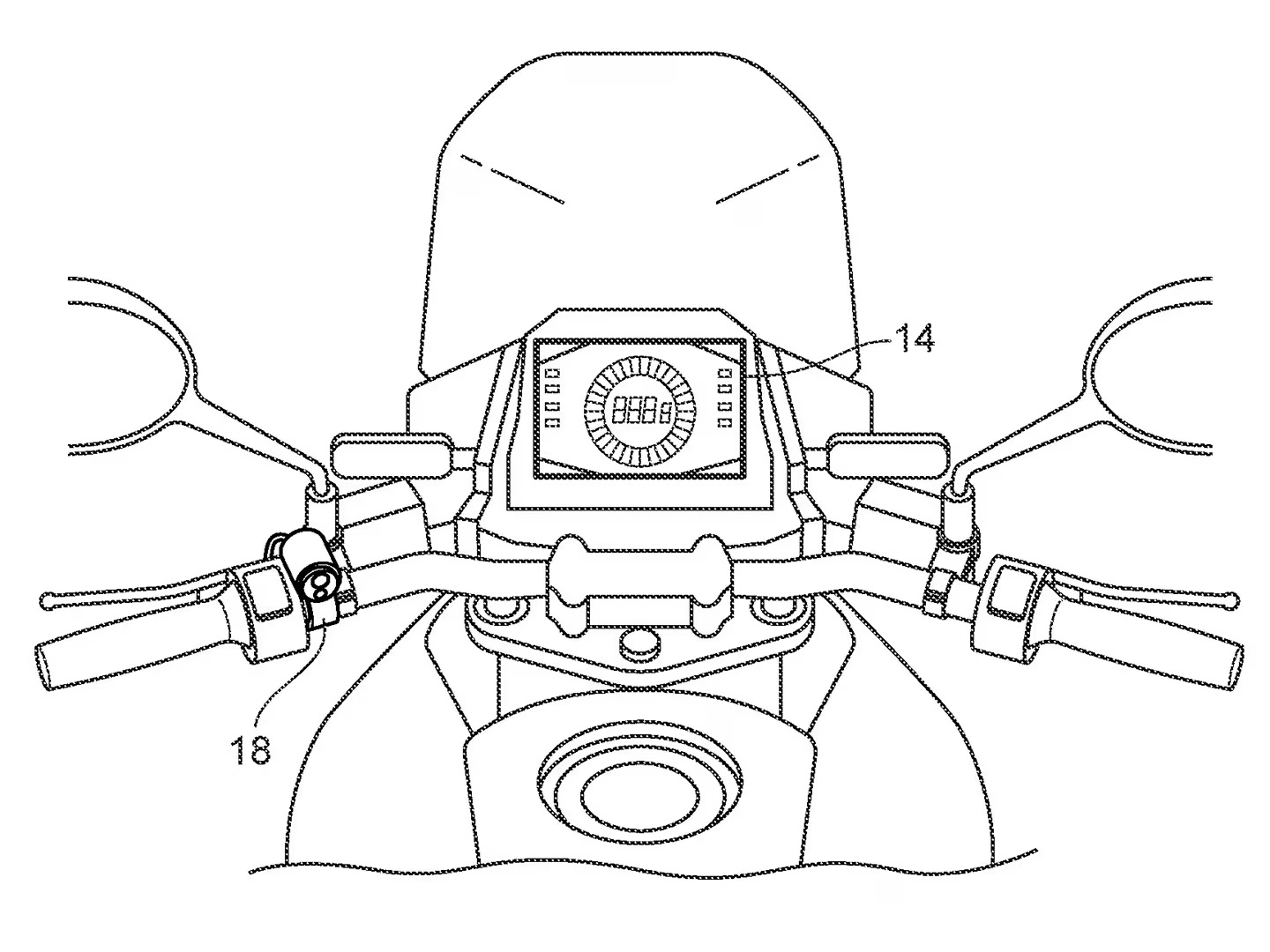
In the quest for enhanced motorcycle safety, Suzuki is developing a rear-view camera system designed to supplement traditional mirrors. This system aims to provide riders with a better view of their surroundings, which is particularly useful during lane changes or merging with traffic.
The technology in play involves a tail-mounted wide-angle camera paired with a TFT instrument display, which is not an entirely new concept in the motorcycle industry. The uniqueness of Suzuki’s approach lies in how the system addresses the limitations of depth perception often associated with wide-angle camera views. Such cameras can make objects appear further away than they actually are, posing a challenge for riders.
Suzuki proposes a dynamic solution that shifts the camera’s view to focus on specific blind spots, controlled both manually and automatically. Riders could use a handlebar switch to toggle the view between directly behind the motorcycle and the blind spots on either side. Furthermore, the system would automatically adjust the view when the rider signals a turn, focusing on the area over the shoulder that is relevant to the intended lane change. Riders would also have the capability to zoom in and customize the camera’s crop region to suit their personal preference for monitoring blind spots.
Despite this technological advancement, it is likely that conventional mirrors will remain a staple for motorcycles in the immediate future. Mirrors provide a level of reliability and instinctual use that camera systems are yet to match, and the marginal aerodynamic advantage gained by potentially removing mirrors is negligible for everyday road use.
The timeline for Suzuki’s implementation of its rear-view camera system is not clear, as is often the case with patents. Until such technologies become mainstream, motorcycle enthusiasts have the option of equipping their rides with dash cams that offer continuous video recording, and some deliver a reasonable degree of functionality as rear-view devices.
For those seeking a high-quality dash cam setup, there are premium options such as the Vantrue F1, which boasts reliability and ease of installation. Alternatively, those on a budget can consider options like the LBW Professional Motorcycle Dash Cam, which provides additional functionalities accessible through Apple CarPlay and Android Auto.
This new rear-view camera system could represent the next step in safer and more intuitive riding experiences, offering riders a blend of traditional and modern technology to confidently navigate the road.


