Automotive camera demand cools in 2025, but the long game still looks bright
After several years of double-digit expansion, the automotive cameras market is hitting the brakes in 2025. Industry insiders point to two main headwinds: the slower-than-expected rollout of autonomous driving services and frequent vehicle design changes that force suppliers to rework, revalidate, and delay camera programs. The near-term result is softer orders and elongated decision cycles, even as the number of vision applications in vehicles continues to rise.
What’s behind the slowdown
– Cautious autonomy timelines: Robotaxi pilots and higher-level autonomy features are scaling more gradually than anticipated. Fewer commercial deployments mean fewer high-spec camera setups hitting the road this year.
– Vehicle redesign churn: Rapid shifts in exterior styling, interior layouts, and electronics architectures trigger repeated camera requalification. Each tweak—mounting angles, sensor placement, thermal constraints, wiring harness changes—can push programs out by quarters.
– Inventory and budgeting discipline: After years of aggressive ordering and supply chain volatility, OEMs and Tier 1s are normalizing inventory and prioritizing margin over speed, tempering near-term volumes for imaging components.
– Compute and software dependencies: Advanced driver assistance features increasingly hinge on domain controllers, perception stacks, and data pipelines. If software or compute readiness lags, camera-rich trims can be deferred.
Why long-term demand remains compelling
– ADAS is becoming standard: Features like automatic emergency braking, lane keeping, traffic sign recognition, and parking assist rely on multiple cameras. Safety ratings and regional regulations continue to push adoption.
– Interior monitoring goes mainstream: Driver monitoring systems and occupant detection support fatigue mitigation and child presence detection, adding one or more cameras inside the cabin.
– More cameras per vehicle: Even if headline autonomy slows, Level 2 and 2+ systems benefit from surround-view, front long-range, side, and rear cameras, increasing content per car over time.
– Regulatory momentum: Safety frameworks and new vehicle assessment programs reward vision-based features, encouraging automakers to include camera systems across price segments.
– Commercial and fleet use cases: Logistics, delivery, and shared mobility operators value cameras for safety, telematics, and insurance benefits, creating steady multi-vehicle orders.
Where growth will re-accelerate
– Sensor fusion upgrades: Pairing cameras with radar and, in some cases, lidar improves perception in adverse weather and at night. As fusion stacks mature, camera volumes attached to L2+/L3 features should rise.
– High-dynamic-range and flicker mitigation: Next-gen image sensors that handle LED flicker and extreme lighting expand performance envelopes, enabling more reliable ADAS and e-mirror systems.
– Software-defined vehicles: Centralized compute and over-the-air updates let OEMs unlock or enhance camera-based features post-sale, improving ROI for camera hardware already on board.
– Interior innovation: Cabin-facing cameras will support personalization, gesture control, occupant safety, and in-cabin analytics, adding new revenue streams.
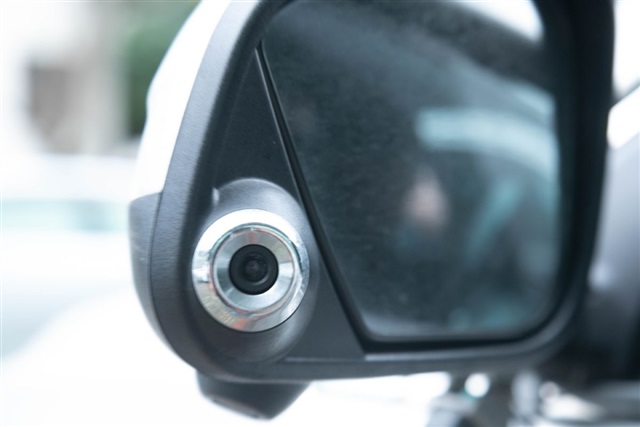
– E-mirrors and design trends: Replacing physical side mirrors with camera displays improves aerodynamics and range, particularly attractive for EVs.
What suppliers can do now
– Standardize and modularize: Develop camera modules with interchangeable lenses, sensors, and connectors to survive mid-cycle design tweaks without full requalification.
– Lean into validation speed: Invest in simulation, automated testing, and reference designs to cut time-to-PPAP and reduce program risk.
– Optimize total system cost: Balance sensor resolution, optics quality, and ISP sophistication to hit target performance without overspecifying.
– Build for data: Ensure robust pipelines for compression, cybersecurity, and time synchronization so cameras plug cleanly into centralized ECUs.
– Plan for lifecycle updates: Support firmware and perception model updates that extend camera utility across a vehicle’s life.
Short-term outlook
Expect a choppy 2025 marked by program delays, tighter purchasing, and selective feature bundling. Content per vehicle should keep edging up even if total unit shipments flatten. The mix will favor front ADAS and surround-view externally, with driver monitoring and occupancy sensing building momentum inside the cabin.
Long-term outlook
Vision remains foundational to assisted driving and in-cabin intelligence. As regulatory tailwinds strengthen and software stacks mature, camera attach rates and performance requirements are set to climb. The market’s trajectory is shifting from hype-driven autonomy to durable, safety-led adoption—slower this year, but sturdier for the decade ahead.