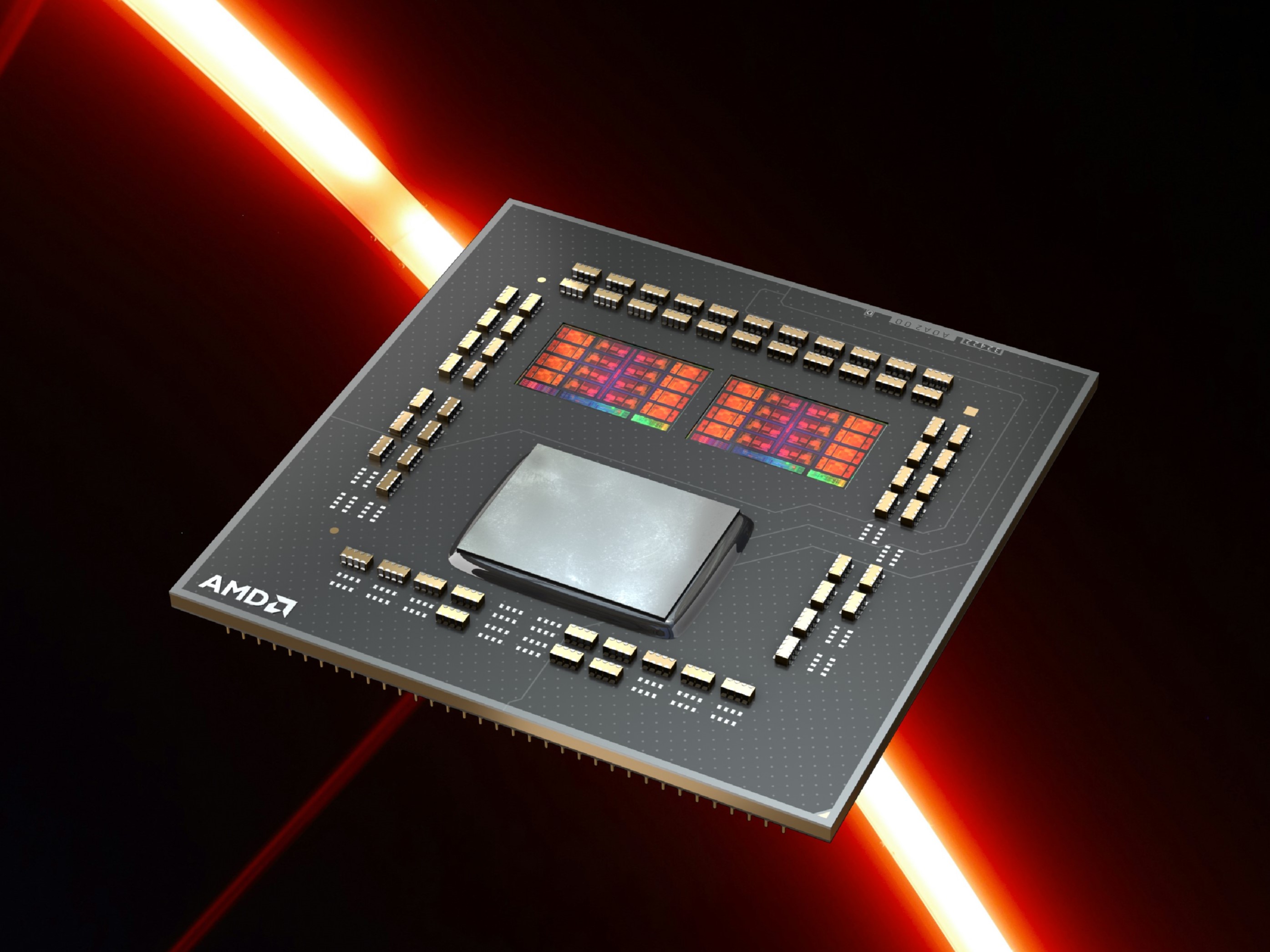
The tech world is buzzing with anticipation as new synthetic performance results for the Strix Halo APU have surfaced, showcasing its potential to revolutionize the integrated graphics scene. Harnessing the power of 16 Zen 5 cores coupled with a substantial 40 CU RDNA 3.5 iGPU, the Strix Halo is not just living up to expectations—it’s exceeding them.
Early benchmarks have emerged online for the Strix Halo’s Radeon 8060S and 8050S integrated GPUs, and they’re already making waves by outmatching some entry-level desktop GPUs, like the RX 7600. This is exciting news for gamers and tech enthusiasts alike, as it suggests that these integrated graphics could rival the performance of mid-range discrete GPUs found in laptops.
In line with their innovative stride, AMD appears to be revamping its GPU branding as well. Departing from the usual “RX xx00 XT” naming paradigm, the upcoming lineup, including the anticipated RDNA 4 series, may adopt a new “RX x0x0 XT” branding scheme. This rebranding subtly hints that the traditional RX 7700 XT could evolve into the RX 9070 XT.
The integrated GPUs of Strix Halo, branded under “Radeon 80x0S,” include the currently recognized Radeon 8060S and 8050S models housed within the advanced Ryzen AI Max Pro 395 and Ryzen AI Max Pro 390 APUs. Initial database entries from PassMark have provided a glimpse into how these iGPUs are performing. According to these entries, the Radeon 8050S, surprisingly surpasses the Radeon 8060S, pointing to their prototype nature rather than final retail versions.
Based on these initial PassMark scores of 15,965 and 16,663, the Radeon 8060S and 8050S are outperforming the RX 7600, albeit marginally. For comparison, an RTX 4070 laptop GPU scores approximately 19,609 points on the same test. This suggests that while the Strix Halo iGPU lags behind by about 15%, there’s a significant potential for these scores to improve by the time they hit the retail market.
All of this builds anticipation for their official release, hinting that we might soon witness integrated graphics capable of seamless gaming performance, potentially eliminating the need for a dedicated GPU in many use cases. This represents a significant leap forward in APU capabilities and points to a future where high-performance gaming could become more accessible.