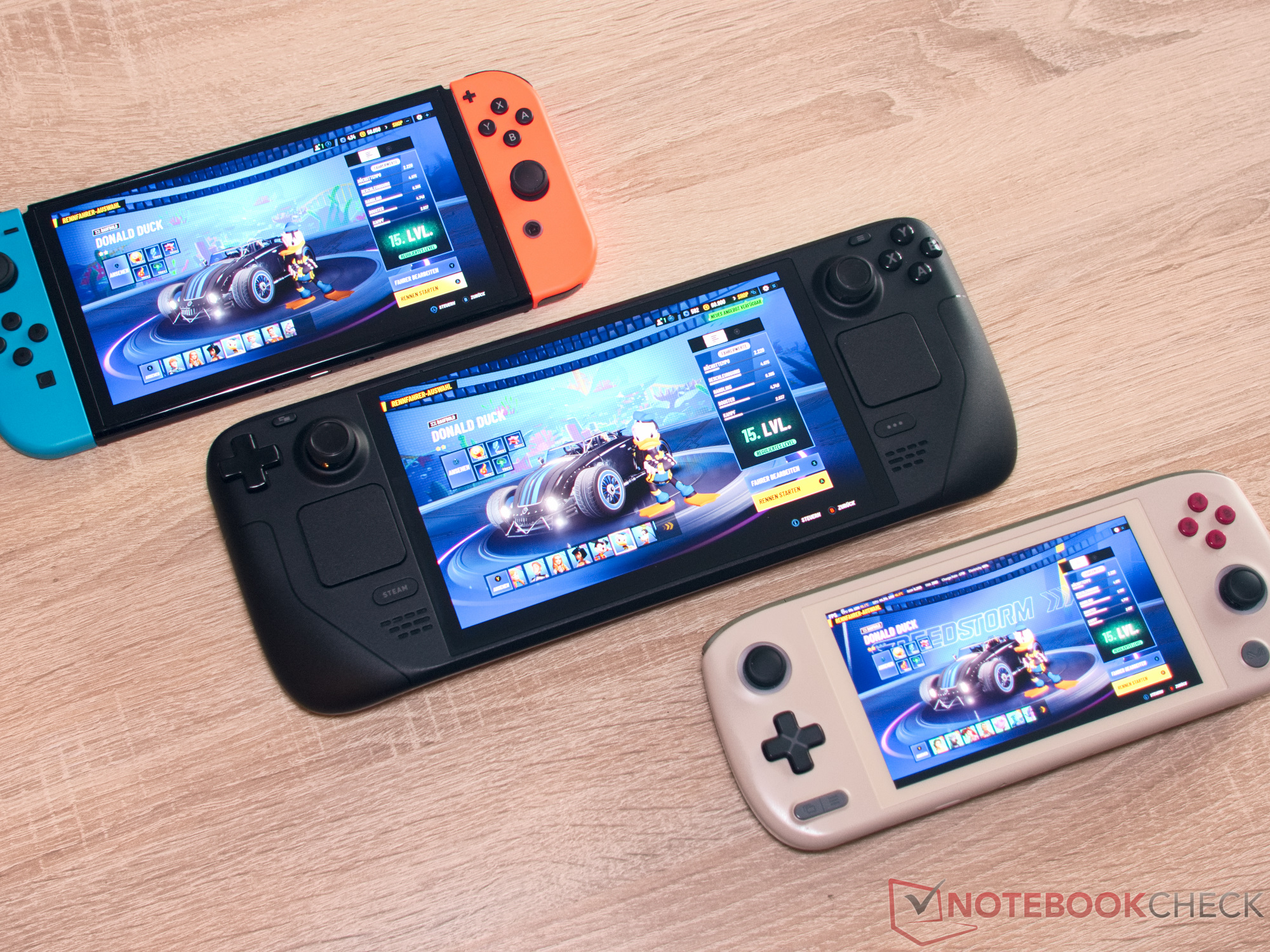
When it comes to handheld gaming, the Steam Deck OLED and Windows-based handhelds offer distinctly different experiences for users, with each having their own set of advantages. The Steam Deck, with its Linux-based system, and Windows handhelds like the Ayaneo Air 1S, Lenovo Legion Go, Ayaneo Kun, and OneXplayer 2 Pro come with powerful AMD processors, appealing to different segments of the gaming market.
These competitors often boast the AMD Ryzen 7 7840U or the AMD Z1 Extreme processors, offering formidable performance. However, when it comes to battery life, Valve’s Steam Deck reigns supreme. Despite the stronger performance metrics of these Windows handhelds, they often fall behind in battery efficiency. Interestingly, during our testing, all games that ran on Windows handhelds were just as smooth on the Steam Deck.
Valve’s focus on creating a balanced system is evident in their choice to forego 2K resolution, RGB lighting, and overtly powerful hardware. This allows the Steam Deck to achieve longer battery life, a crucial factor for portable gaming. While Linux may not be everyone’s preferred operating system, the Steam Deck facilitates an easy transition with user-friendly tools for navigating Linux.
The display on the Steam Deck OLED might seem dated with its 800p resolution, but its 7.4-inch OLED panel with a resolution of 1280 x 800 delivers a solid DPI of 200. This makes it difficult for users to discern individual pixels, providing a clear and crisp visual experience that competes with higher resolution laptop displays.
The Steam Deck’s AMD Custom APU 0405 is tailored specifically for gaming, and when it comes to raw processing power, it falls behind its Windows counterparts. Windows handhelds like the Ayaneo Kun and the OneXPlayer stand out as versatile, being capable of replacing everyday computers. While the Steam Deck can be put to productive use, its limited connectivity options compared to other handhelds makes it less preferable for non-gaming tasks.
As the handheld gaming market continues to evolve, the choices between devices like the Steam Deck and various Windows handhelds boil down to personal preference, needed performance, and use case considerations. Whether it’s gaming on the go with exceptional battery life or a more versatile device that can also handle productivity, there is a handheld option available to suit different desires and needs.
Please remember to share this article if you’ve found it informative and helpful!