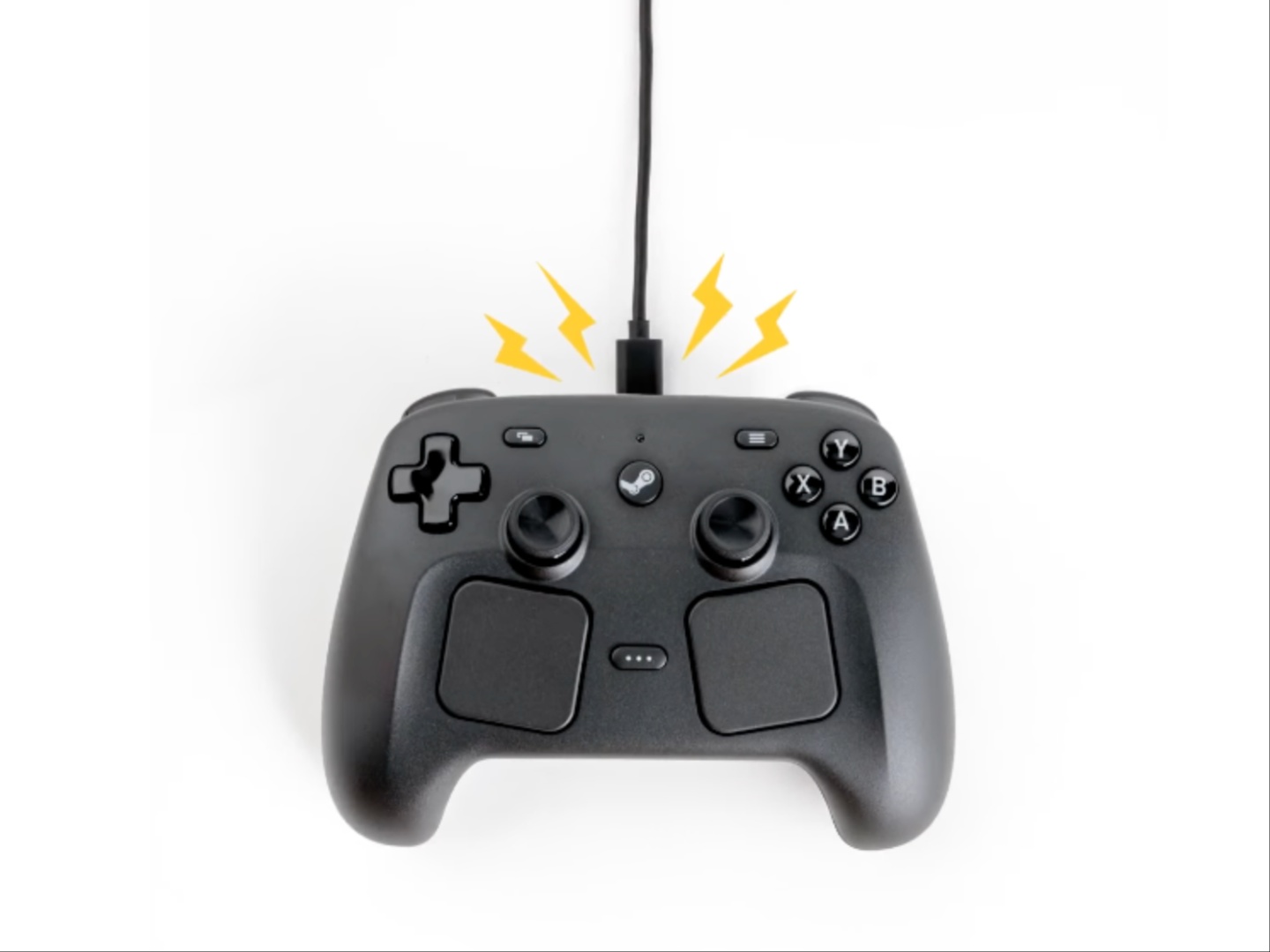
Valve has officially locked in the details for its new Steam Controller, confirming a $99 price tag and a May 4 release date. With early hands-on coverage already circulating, the controller is shaping up to be more than just a fresh accessory for PC gamers—it’s showing strong performance in latency testing, promising battery life, and a design that looks surprisingly friendly for repairs.
One of the biggest takeaways from early testing is responsiveness. Using Nvidia’s LDAT tool to measure end-to-end input latency (where lower numbers are better), the Steam Controller delivered impressive results in both wired and wireless play. In a wired connection, it averaged around 19ms. Using the included wireless puck, it came in at about 21.6ms. That wireless figure is slightly faster than an Xbox One controller in the same type of test (around 22.6ms), though the difference is small enough that most players wouldn’t notice it during actual gameplay. The bigger jump happens over Bluetooth, where latency climbed to roughly 37.3ms and showed more variation—useful to know for anyone who prioritizes competitive responsiveness and is deciding which connection mode to use.
Battery life is another area where the new Steam Controller seems to deliver. Valve claims more than 35 hours per charge, and early testing suggests that number is realistic. In lighter-use scenarios, such as running only joystick activity, the controller reportedly lasted as long as 73 hours. With rumble running on its own, it still cleared 24 hours. Real gaming sessions combine constant inputs, wireless communication, and vibration effects, so the final experience will land somewhere in between—but the evidence so far supports Valve’s 35+ hour estimate as a reasonable expectation.
Connectivity and convenience also appear to be central to the design. The controller supports pairing with multiple wireless pucks, in addition to Bluetooth, and includes quick button-combination shortcuts for switching between modes. That could be particularly useful for players who move between devices—like a living-room PC setup, a desk setup, and a handheld or laptop—without wanting to re-pair every time.
A teardown has also revealed an angle many players care about more than ever: repairability. Early impressions describe the controller as easy to service, and Valve is expected to collaborate with iFixit to offer replacement parts after launch. For gamers who keep hardware for years—or who simply don’t want a minor issue to turn into a full replacement purchase—that’s an encouraging step.
Customization is another highlight aimed at PC players who prefer fine control. The Steam Controller supports fully configurable buttons and inputs, and will also include preset profiles to make setup easier for those who don’t want to tweak everything manually. That combination of deep customization and ready-to-go presets should help the controller appeal to both enthusiasts and casual users.
The Steam Controller launches May 4 for $99. If these early results hold up in broader real-world use, it may be one of the more compelling controller options for PC gaming—especially for players who value low latency, long battery life, flexible connectivity, and a repairable design.