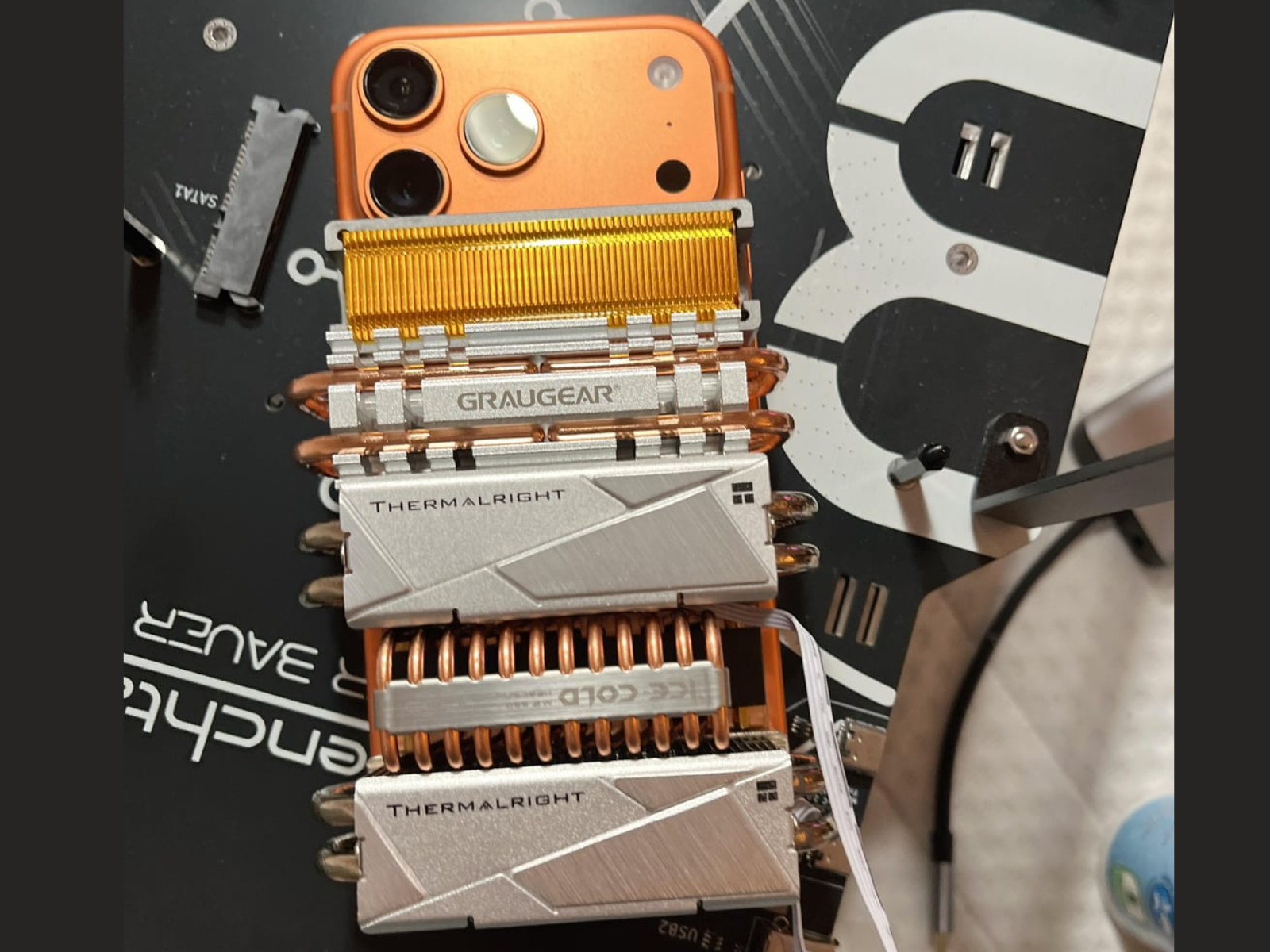
A wild DIY cooling mod for an iPhone is turning heads—and sparking surprisingly smart debate. After a creator strapped a compact SSD-style cooler with tiny fans onto their phone, the reactions ranged from playful jabs to genuinely technical advice.
One commenter joked that the build looks almost as slim as an Air model, prompting the modder to dub it the “True Air Version” thanks to the fans. Others pushed the idea even further, teasing plans to slap a water block on an Air and chase Pro-level performance. And in a dig many can relate to, someone noted the rig still seems thinner than an Air paired with an “optional” MagSafe battery.
Beyond the humor, there was solid engineering talk. A user with an iPhone 17 Pro pointed out that the phone’s vapor chamber sits beneath the display, which means heat spreads across the screen. Their take: you’d need multiple coolers across more of the front to efficiently wick heat away. Another observer summed up the current state bluntly—battery cooling looks handled, but the CPU could use more attention.
Why are tinkerers obsessed with this? Sustained performance. High-end iPhones can throttle under heavy gaming, video capture, or sustained workloads. While Apple’s vapor chambers and thermal design do a lot, they’re tuned for everyday use, silence, and water resistance. External coolers—especially SSD heatsinks with fans and thermal pads—can pull extra heat during intense sessions, keeping frame rates steadier and temps lower. But there are trade-offs, including noise, dust, comfort, and the risk of obstructing airflow or compromising durability. And, of course, any hardware mod can carry warranty and safety risks.
This experiment is part performance hack, part comedy sketch—and it’s working on both fronts. It highlights the gap between stock thermal design and what power users want for marathon gaming or pro workflows. It also underscores a key technical insight: cooling the battery alone isn’t enough. To truly boost sustained performance on devices like the iPhone 17 Pro, you need to target the heat sources that matter most and where they actually dissipate—often across the display area above the vapor chamber.
Expect more DIY builds to push boundaries, from fan-assisted heatsinks to ambitious water-cooling experiments. Whether you’re a modder or just mod-curious, the takeaway is clear: good cooling is a system, not a sticker. If you try something similar, focus on safe mounting, even contact with quality thermal pads, minimal added pressure on the display, and an airflow path that doesn’t block speakers or antennas. For everyone else, it’s one more reason to hope future iPhones invest in even smarter thermal solutions—so the only fans you need are the ones cheering when your frame rate doesn’t drop.