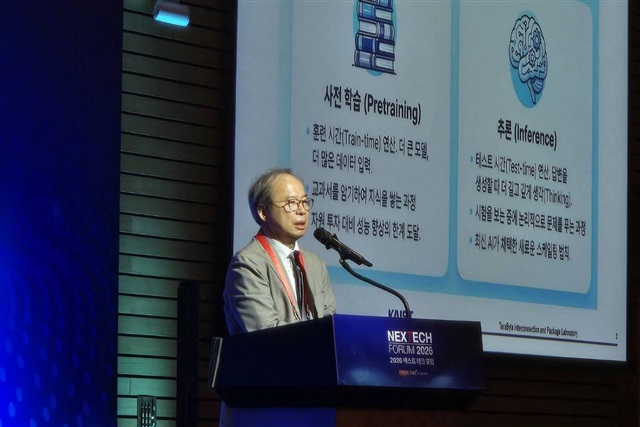
As artificial intelligence enters its next phase, the center of gravity in the hardware race may be starting to move. With AI rapidly shifting from training massive models to running them efficiently in real-world applications, South Korea’s semiconductor industry is pushing a bold idea: the next wave of AI dominance could be led by memory, not just GPUs.
For years, the AI boom has been closely tied to high-performance graphics processors, largely because training large language models and other advanced systems requires enormous parallel computing power. But the AI workload is evolving. More companies are now focused on inference, the process of deploying AI models to answer questions, generate content, automate tasks, and make decisions in real time. Inference tends to be less about raw compute at any cost and more about speed, efficiency, scalability, and cost per query.
At the same time, AI is moving beyond single-purpose tools. The industry is increasingly talking about multi-agent AI, where multiple specialized AI systems work together, exchange information, and coordinate actions. This kind of collaboration increases the need for fast access to large amounts of data, quick memory retrieval, and seamless movement of information between components. That plays directly into the strengths of advanced memory technologies.
South Korea, home to some of the world’s most influential memory manufacturers, sees an opening. If the market narrative can shift toward memory-centric AI architectures, the country could strengthen its leadership position in the global semiconductor race. Researchers and industry leaders in South Korea are reportedly emphasizing that future AI performance will depend not only on compute power, but also on how efficiently data can be stored, accessed, and moved. In other words, memory bandwidth, latency, and capacity could become just as strategically important as GPU performance.
This push isn’t about replacing GPUs overnight. It’s about reframing what “AI hardware leadership” means as inference becomes the bigger commercial battlefield. Running AI at scale requires handling huge volumes of prompts, context windows, user interactions, and background processes. As those demands grow, memory constraints can become a bottleneck. Solving that bottleneck with next-generation memory solutions could reshape how data centers are built and how AI services are delivered.
If South Korea succeeds in steering attention toward memory-led AI systems, it could influence where investment flows next, which technologies get prioritized, and how the global AI supply chain evolves. The big takeaway is simple: as AI changes, the definition of the most valuable hardware may change with it, and South Korea wants memory to be at the heart of that conversation.