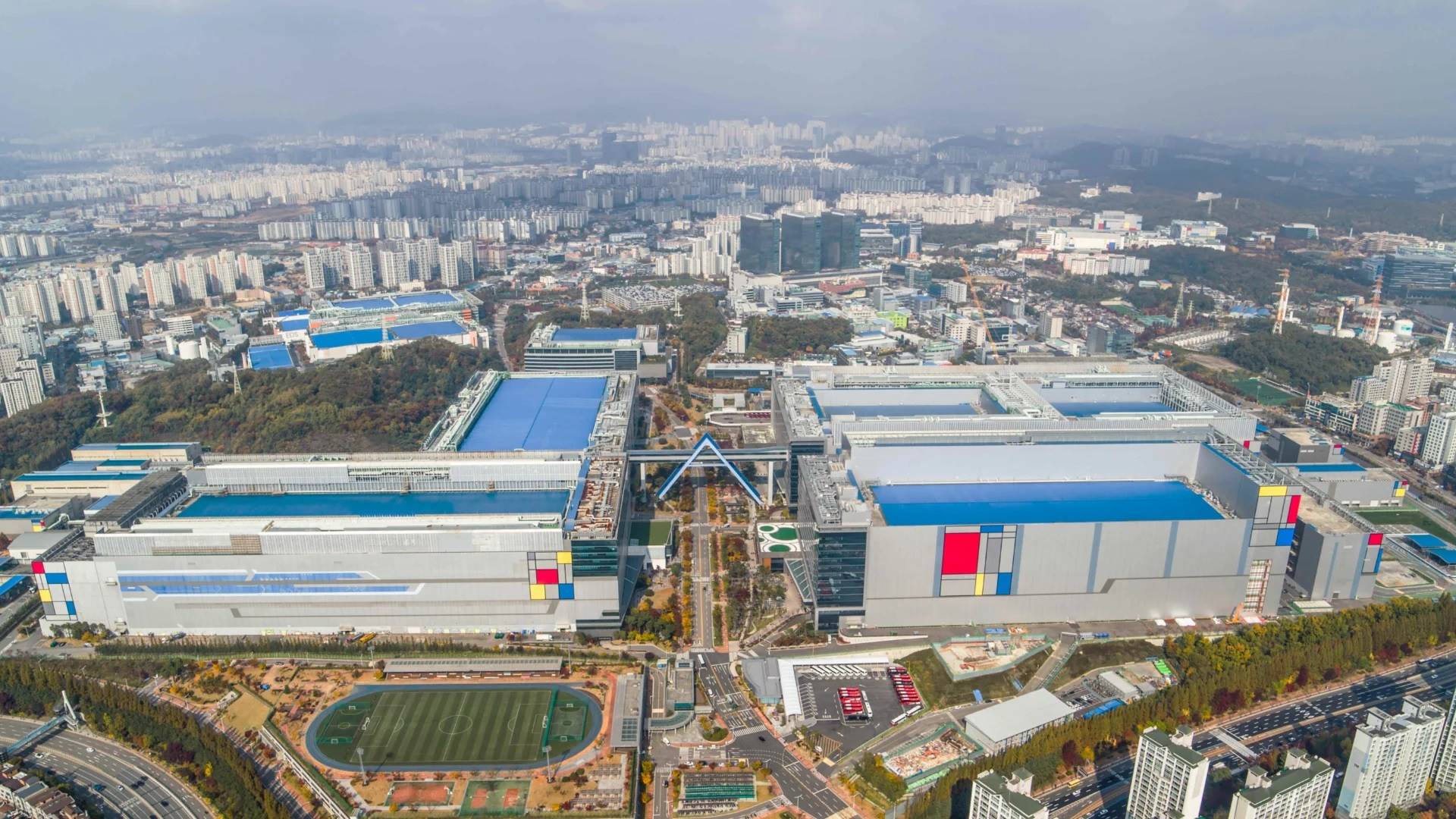
The competition in the semiconductor industry has become increasingly fierce, with Taiwan’s TSMC leading the charge in technological advancements. While TSMC is making strides with a remarkable 60 percent yield in the trial production of its groundbreaking 2nm process, Samsung is struggling to get its 3nm GAA technology off the ground. This growing divide has prompted South Korea to consider creating its own competitive force, namely the Korea Semiconductor Manufacturing Company (KSMC), backed by state funding.
The ambitious inception of KSMC is aimed at bolstering South Korea’s chipmaking capabilities. As reported by The Korea Bizwire, the concept was discussed during a seminar organized by the National Academy of Engineering of Korea. The vision for KSMC is to cultivate a harmonious ecosystem of foundries and fabless firms, fostering the development of cutting-edge technology. However, this is no small undertaking, as KSMC would require a massive investment.
Experts predict that establishing KSMC would necessitate a financial injection of around 20 trillion Korean won, or approximately $13.9 billion. Despite the hefty price tag, the anticipated economic returns are significant, with potential benefits estimated at 300 trillion Korean won, or around $208.7 billion, by the year 2045. KSMC’s establishment would also provide substantial support to other semiconductor companies focused on mass-producing wafers using older 10nm technology.
According to Professor Kwon Seok-jun of Sungkyunkwan University, the launch of KSMC with government backing could lead to a balanced ecosystem similar to that of TSMC, which benefits from partnerships with foundries like UMC and PSMC for mature node production. This synergy allows TSMC to concentrate on cutting-edge technologies.
Nonetheless, the proposed creation of KSMC does raise some valid concerns. There is skepticism about whether a government-backed entity could efficiently manage advanced manufacturing processes. The CEO of SK hynix has suggested that Samsung’s accumulated expertise might be repurposed to overcome such challenges. Furthermore, Ahn Ki-hyun of the Semiconductor Industry Association underscores the critical importance of timely government funding. He believes that subsidies and tax incentives will be crucial in propelling KSMC and South Korea back to a leading position in the semiconductor industry by 2047.


