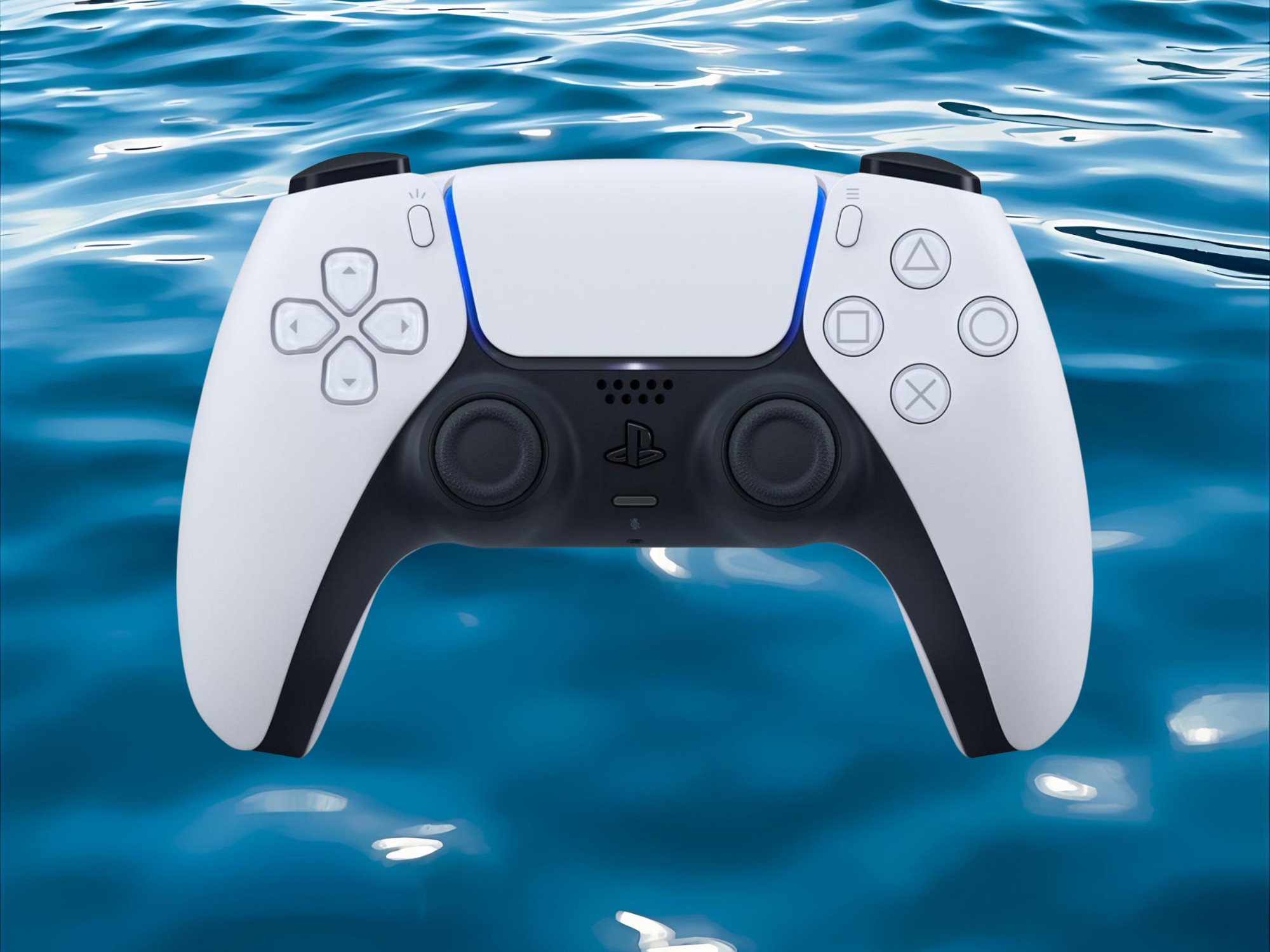
Sony is exploring a bold new twist on controller feedback, and it goes far beyond the rumble motors you’re used to in the DualSense. A newly published patent describes a fluid-based system that could change how buttons, analog sticks, and triggers feel under your fingers, responding dynamically to your actions with lifelike resistance and even temperature cues.
At the heart of the concept is a central liquid reservoir inside the controller, with fluid routed to smaller chambers positioned near inputs like face buttons, sticks, and triggers. By shifting pressure between these chambers, the controller could increase or decrease resistance in real time, matching what’s happening on screen. Imagine trudging through a swamp and feeling heavier, stickier pushback on your movement, or sensing subtle tension changes as you draw a bowstring. The patent suggests this system could scale resistance proportionally to how hard you press, delivering a more nuanced sensation than today’s haptic motors and adaptive triggers.
Sony’s filing also floats the idea of heating or cooling the liquid to simulate environmental effects, adding another layer of immersion. A warm glow from a campfire or the chill of an icy cavern could be communicated through temperature variations in the controller itself. It’s an ambitious vision aimed squarely at deeper sensory engagement in games.
Of course, fluid-filled hardware raises immediate practical questions. Concerns about leaks, long-term durability, and overall repairability are top of mind for many players. The patent acknowledges trade-offs with existing designs, arguing that magnetic or purely mechanical systems can add weight. A fluid-driven approach might help reduce bulk or enable finer control, but plumbing a controller with reservoirs and channels introduces complexity that could complicate maintenance.
There’s also the bigger question of priorities. Many PS5 owners would rather see improvements to everyday pain points before radical new features roll out. Battery life remains a common complaint about the current DualSense, and a recent rumor suggested a refreshed model might include an easily replaceable battery. That idea alone would win plenty of fans, but there’s no sign of such a controller hitting store shelves yet.
Analog stick drift is another hot-button issue. While alternative technologies like Hall-effect or TMR sensors can mitigate wear associated with traditional potentiometers, they haven’t become standard across Sony’s lineup. A move toward designs with fewer friction-prone parts could help reduce drift over time, but a fluid pressure system by itself doesn’t automatically make a controller simpler to repair or less susceptible to mechanical failure.
It’s important to remember that patents are blueprints for possibilities, not promises. Companies file them to protect ideas, many of which never reach consumers. This particular design hints at a future where PlayStation controllers—whether a next-gen DualSense or a VR-focused model—can deliver granular, context-aware resistance and temperature feedback that better mirrors in-game environments. Used wisely, such tech could elevate immersion across genres, from racing and shooters to adventure and simulation.
For now, it’s a fascinating glimpse into how controller haptics might evolve. If Sony can balance immersion with practicality—keeping weight down, battery life up, and reliability front and center—fluid-driven feedback could be one of the most significant leaps in game feel since the introduction of adaptive triggers. Until then, players will be watching to see whether the next wave of PlayStation accessories focuses on solving familiar issues, pushing sensory boundaries, or both.