Astrolab Plans Solar-Powered 5G Network for Future Moon Missions
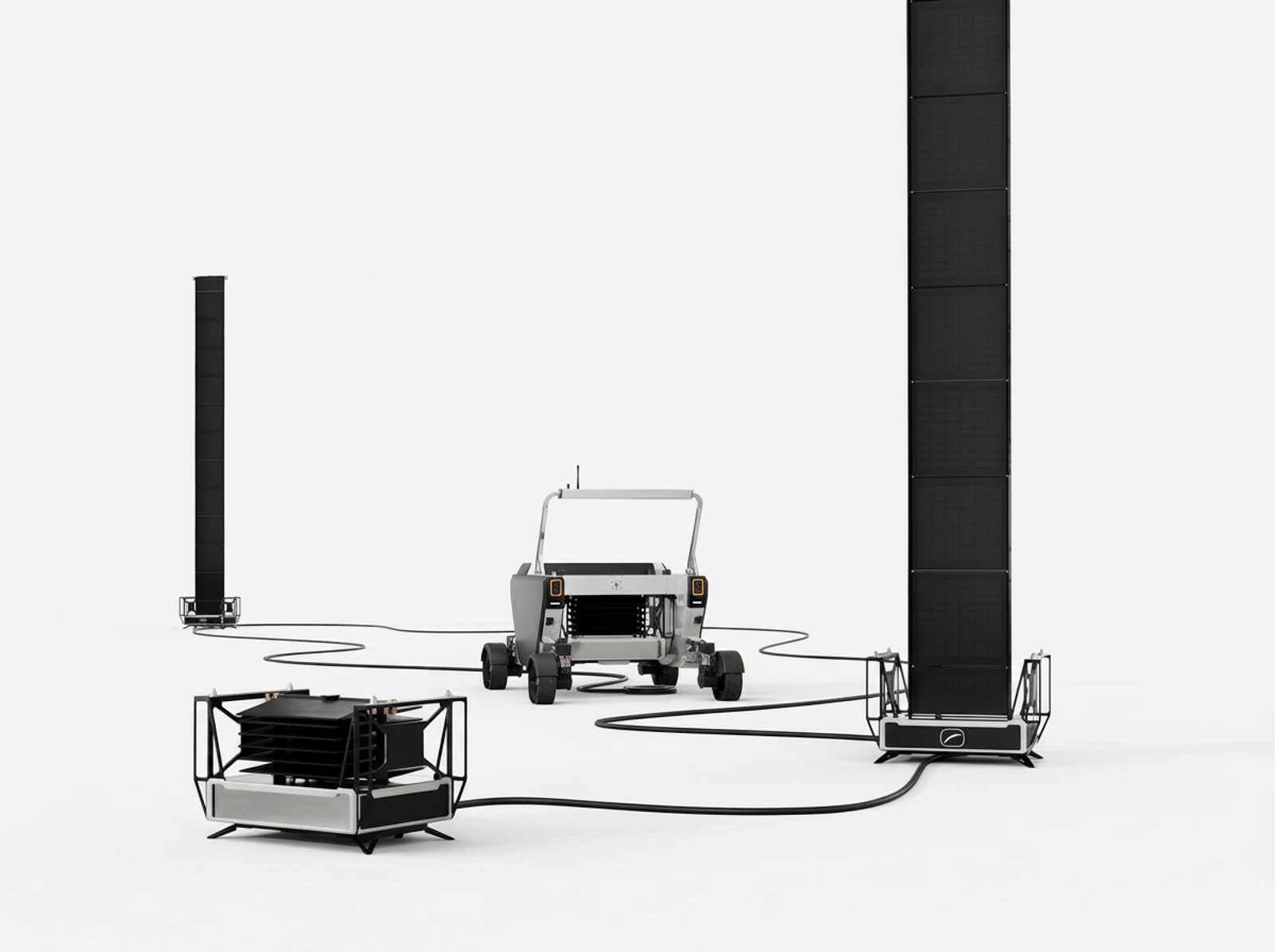
Building a dependable mobile network is challenging enough on Earth, but creating one on the Moon is a far more ambitious task. Astrolab, a US-based space technology company, has introduced LUMIS, short for Lunar Utility Module for Industrial Services, a proposed lunar infrastructure system designed to provide power, communications, and computing support for future missions on the Moon.
The concept combines solar energy, Wi-Fi, 5G connectivity, onboard computing, antennas, batteries, and rover-deployed infrastructure into a network of modular lunar stations. If successful, LUMIS could help future spacecraft, rovers, habitats, and scientific equipment stay powered and connected across the lunar surface.
Astrolab is currently aiming for its first LUMIS deployment in 2028. The initial demonstration units are expected to generate around 2 kW of power, while future versions could scale up to 20 kW per station. Over time, the company envisions multiple connected nodes delivering more than 100 kW of power across key lunar locations.
One of the most important features of the LUMIS concept is mobility. Instead of being fixed permanently at a landing site, the stations would be transported by Astrolab’s FLEX robotic rovers. This would allow each station to be placed in areas with better sunlight exposure, stronger communication lines, and improved coverage for lunar operations.
That flexibility could be especially valuable near the Moon’s south pole, one of the most promising regions for future exploration. In that area, even moving equipment by about 50 metres could make a major difference. A small change in location may determine whether a station receives near-continuous sunlight or spends hundreds of additional hours in darkness. It could also affect whether equipment maintains a steady line of sight to Earth or loses direct visibility for long periods.
Astrolab says LUMIS stations could also create relay links stretching more than 100 kilometres. This would allow rovers, instruments, or astronauts operating in areas without direct Earth communication to stay connected through the network. For future lunar missions, that could be a major advantage, particularly as exploration moves farther away from landing zones.
Each station is expected to include vertical solar arrays, energy storage systems, communications hardware, and computing equipment. According to Astrolab, the design could continue operating for more than 400 hours using internal power reserves while still supporting external devices and mission hardware.
The broader goal is not just to create standalone power stations, but to build shared lunar infrastructure. Astrolab’s proposed Lunar Operating System, or Lunar OS, would allow future Moon missions to access electricity, connectivity, and computing services from an existing network. Instead of every mission needing to bring all of its own support systems, spacecraft and rovers could rely on infrastructure already positioned on the lunar surface.
This approach could change how future lunar exploration is planned. A rover travelling far from its landing site, for example, might not need to carry as much power and communications equipment if it can connect to nearby LUMIS stations. Scientific instruments placed in remote locations could remain online longer. Human missions could benefit from more reliable communications and expanded operational range.
Astrolab plans to showcase full-scale LUMIS models at Kennedy Space Center in November, giving the public and industry observers a closer look at how the system could work. The first planned deployment is targeted for 2028 as part of a commercial FLEX rover mission expected to use SpaceX’s Starship.
For now, LUMIS remains a proposed system rather than an active lunar network. Still, the idea points toward a future where the Moon has more than isolated landers and short-range rovers. If Astrolab’s plans move forward, upcoming lunar missions may depend on shared power grids, communication relays, and solar-powered 5G stations much like operations on Earth depend on utility networks and mobile infrastructure.