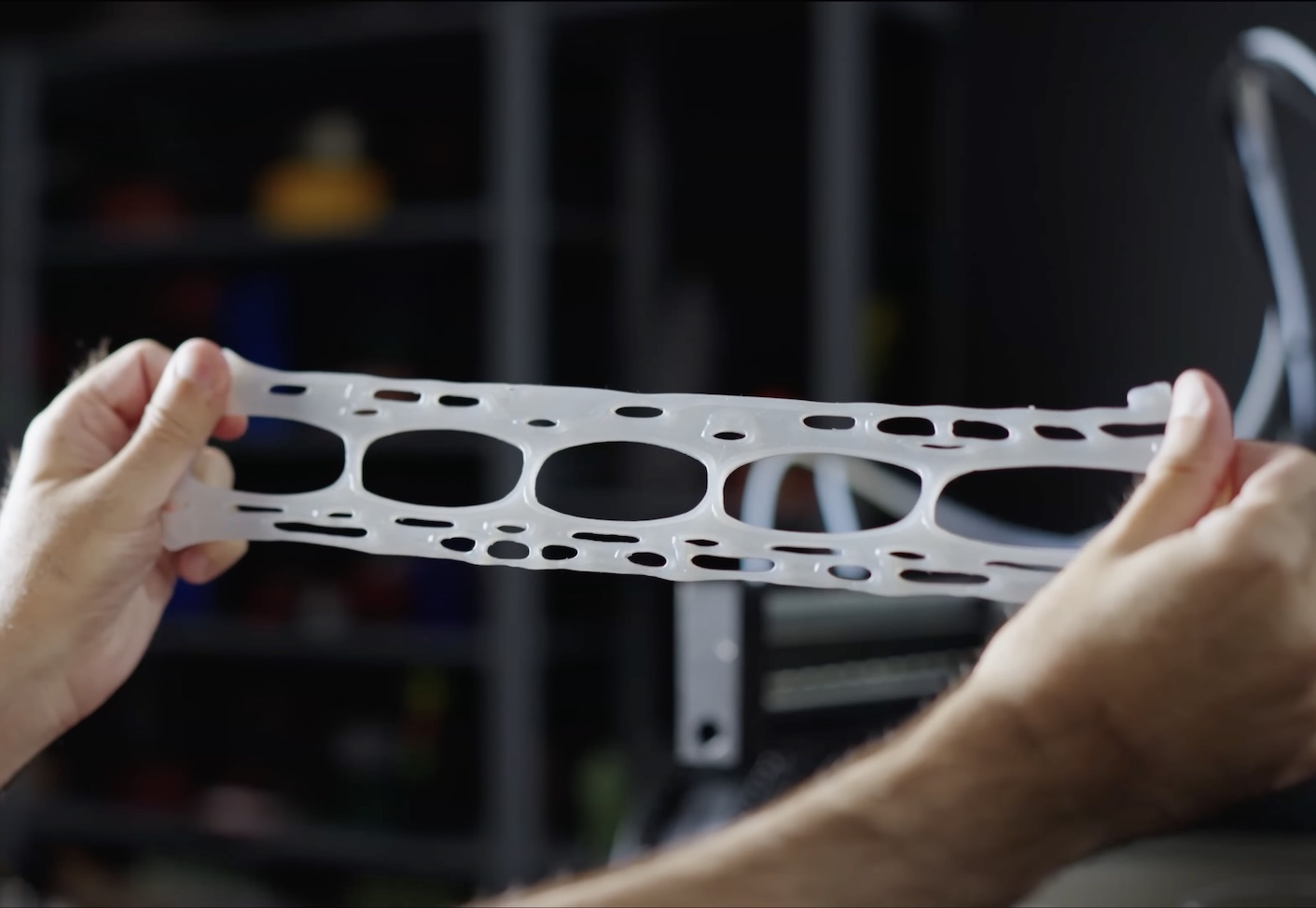
Silicone 3D printing is coming to the desktop in a big way. At its recent Prusa Day event, the Czech maker unveiled a first-of-its-kind, plug-and-play silicone printing toolhead for the Original Prusa XL, developed in partnership with Filament2. The breakthrough lies in Filament2’s patented liquid filament system, which brings paste and liquid materials like two-part silicone to standard FDM machines without the usual bulky pressure tanks or complex hardware.
How it works is surprisingly elegant. Instead of feeding solid plastic, the printer draws from a long, hollow tube filled with material and wound on a standard spool. For silicone, there are two separate spools—one for each part of the silicone compound. A specialized cutter in the new toolhead removes the tube’s outer layer just before extrusion, allowing the two components to mix precisely at the nozzle. The extruded silicone then cures on the build plate in roughly eight minutes. Filament2 says the same approach has even been tested with liquid chocolate, and the company is exploring polyurethane and epoxy-based materials next.
Prusa claims print precision matches typical FDM results, but with silicone’s unique properties: stretch, resilience, and heat resistance. That combination opens the door to a wide range of functional parts and prototypes. Different silicone grades can be used to tune firmness, and they can even be combined in a single model for tailored performance.
Potential applications include:
– Medical prototypes and prosthetic components
– Seals and gaskets
– Flexible hinges and compliant mechanisms
– Wearables like wristbands
– Casting molds and soft tooling
Just as important, the workflow stays simple. You slice with the familiar PrusaSlicer software and print as usual, without extra steps or exotic settings. The Original Prusa XL is a natural fit for this upgrade thanks to its multi-material design that supports up to five toolheads, strong print consistency, and focus on minimizing waste.
If this takes off, it could reshape expectations for desktop additive manufacturing. Other brands may follow suit; for instance, Bambu Lab’s multi-material printers are popular for their price-to-performance ratio and accessibility. That said, Filament2’s liquid filament technology is patented, so the wider market will likely hinge on partnerships or alternative approaches.
The silicone toolhead for the Prusa XL is priced at 999 dollars. While not cheap, Prusa argues it’s a fraction of the cost of current silicone-printing systems, which can be more than twenty times pricier. The toolhead and compatible filaments are slated for release in 2026, with silicone filament pricing to be announced.
For designers, engineers, and makers looking to print soft, durable, and heat-resistant parts on a familiar FDM platform, this could be one of the most exciting 3D printing upgrades in years.


