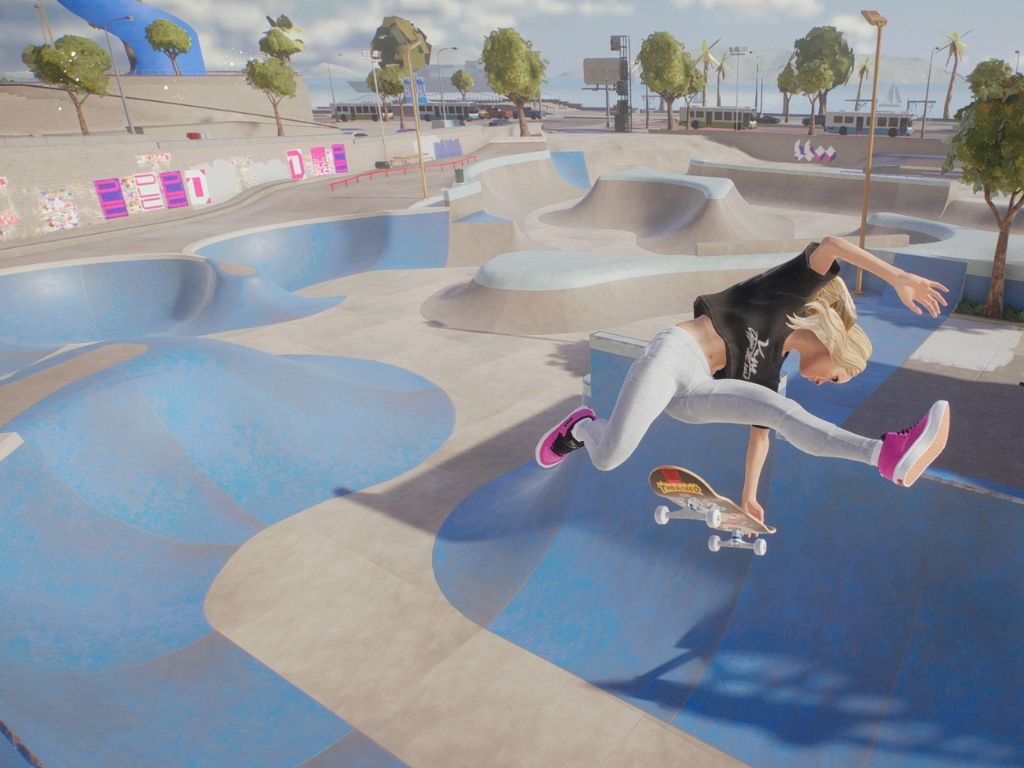
Skate. launches in Steam Early Access with a bang—and a backlash. EA and Full Circle’s long-awaited reboot hit Steam on September 16, 2025, pulling in more than 80,000 concurrent players on day one. The surge overwhelmed servers, leading to instability, crashes, and long waits to log in, a tough start for fans who’ve waited roughly 15 years since Skate 3.
Early impressions paint a split picture. On Steam, the game currently sits at a Mixed rating, with about half of the more than 9,000 reviews leaning positive. Players consistently praise the core skateboarding mechanics. The updated Flick-It system and physics-driven control model deliver a grounded, authentic feel—especially during freestyle sessions—recapturing the thrill of landing a clean line or creative street combo. For many, the board itself feels great.
But much of the community sentiment turns sour around the live-service, free-to-play framework. There’s no offline mode, no narrative campaign, and several fan-favorite modes are missing at launch, including Hall of Meat, S.K.A.T.E., and Death Races. That absence has left returning players feeling like the soul of the series—its quirky challenges and iconic chaos—has been sidelined.
Monetization is another flashpoint. While Skate. is free-to-play, players report aggressive pushes toward virtual currency for cosmetic customization, from character outfits to branded decks. For a series known for self-expression and style, the perception that many beloved looks sit behind paywalls has been a major sticking point.
Visual direction is under scrutiny as well. The art style leans brighter and more stylized than past entries, with some calling it cartoonish or Fortnite-like. Combined with the modernized setting of San Vansterdam, that shift has made the world feel less gritty and immersive to longtime fans who preferred the earlier games’ street-level realism.
Beyond aesthetics, there are mechanical and technical rough edges. Players cite inconsistent physics where grinds can randomly drop or launch into unintended speed bursts. Some analog inputs feel less responsive across different controllers, and the current trick catalog is thinner than expected—no Dark Slides yet and just a single Lip Trick without variations. There are also reports of challenges failing to register tricks correctly, blocking mission completion and undercutting progression.
It’s not all negative. The off-board exploration system has earned compliments for expanding how and where you can move through the city, and cross-platform play is a popular addition that makes it easier to session with friends. Those quality-of-life wins hint at a broader vision for Skate. as a social, evolving skate playground.
Context matters: Skate. is still in early access, with Full Circle outlining roughly a year of ongoing development before a planned full release around September 2026. That timeline leaves room for the team to address server stability, polish physics, expand the trick set, tune controller responsiveness, and restore or reimagine classic modes. It also gives the studio an opportunity to recalibrate monetization and progression in ways that better respect player time and self-expression.
What happens next will likely define the reboot’s legacy. The foundation—the board feel, the Flick-It nuance, the physics-first approach—has the authenticity fans demanded. But restoring fan trust will require concrete steps: meaningful content updates, a clearer roadmap for missing modes, better challenge detection, and a more generous, transparent approach to cosmetics and rewards. A rethink on offline play and a more grounded art pass would also go a long way toward easing concerns.
For now, Skate. is a paradox: a return to form in the way it plays, wrapped in a live-service package that many longtime skaters feel clashes with the series’ identity. If Full Circle can align the business model and feature set with the purity of its skating, this early access could still grind into a triumphant full release. Until then, expect a passionate community to keep pushing for the game they’ve been waiting to land for over a decade.