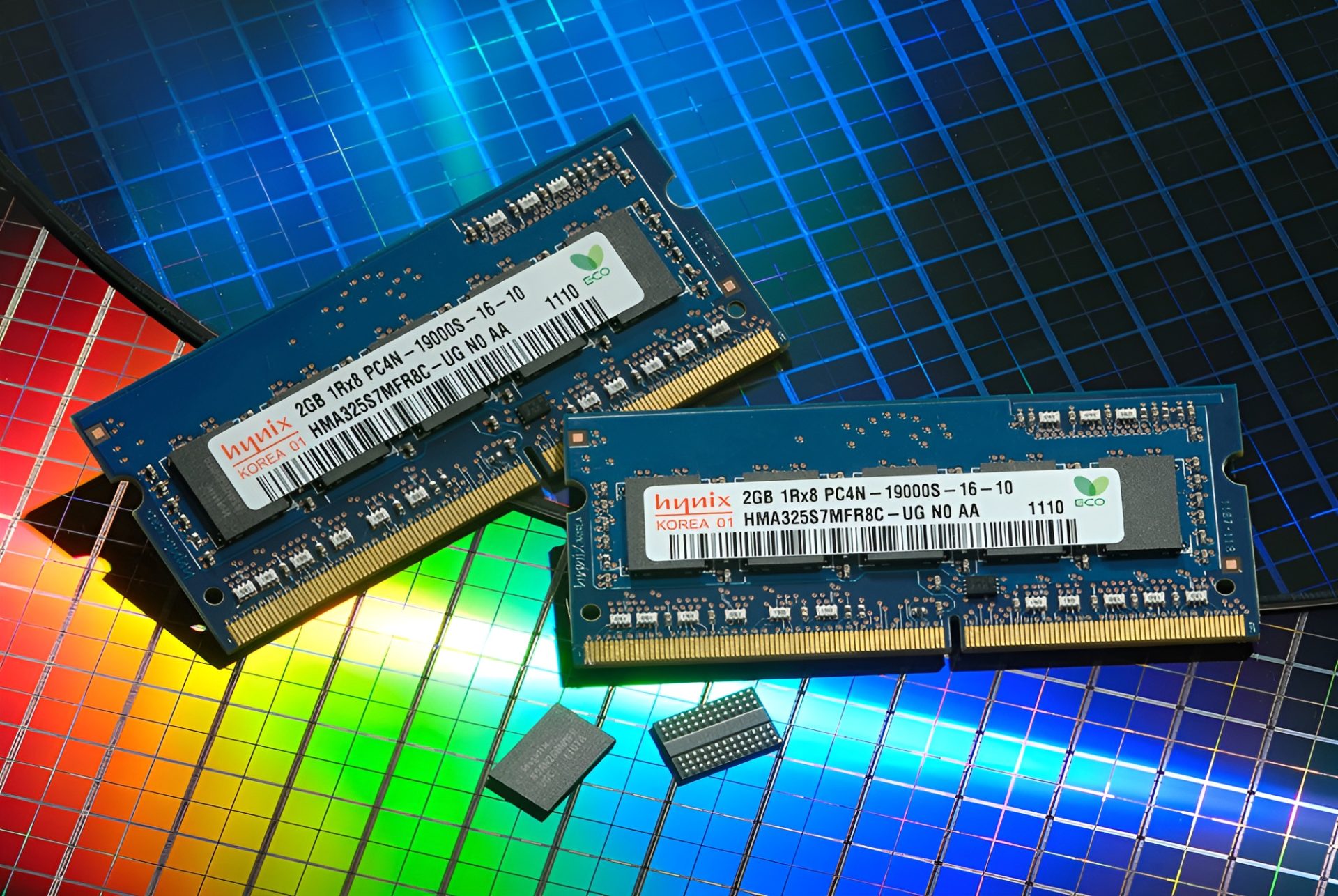
SK Hynix is feeling the squeeze from a historic surge in memory demand, and the pressure is coming from the same place driving much of today’s semiconductor boom: artificial intelligence. As AI workloads evolve and spread across data centers, the need for DRAM and high-bandwidth memory (HBM) keeps climbing, leaving even top-tier memory suppliers struggling to keep up.
Demand for DRAM remains strong because both GPUs and CPUs depend heavily on fast, reliable memory to feed data-hungry AI models. And as more companies build or expand AI infrastructure, memory becomes one of the biggest bottlenecks. SK Hynix, one of the world’s leading DRAM makers, is now operating under serious production constraints—and outside companies have taken notice.
According to reporting cited in the original post, multiple tech firms, especially those tied to AI, have been approaching SK Hynix with investment proposals aimed at expanding its manufacturing capacity. These offers range from funding dedicated memory production lines to helping finance costly advanced tools, including extreme ultraviolet (EUV) lithography equipment that plays a key role in producing cutting-edge DRAM.
Even with that interest, SK Hynix isn’t rushing to accept customer-backed funding. The company is reportedly cautious about deals that could tie it too closely to specific buyers. The concern is straightforward: taking money from customers can come with strings attached, such as locking in supply commitments, allocating capacity to a single partner, or agreeing to lower prices in exchange for long-term contracts. While that might provide predictable revenue, it can also reduce flexibility in a market where demand is rising and memory pricing power matters.
One major obstacle is that there simply isn’t spare capacity to offer. The post notes that available capacity is effectively zero right now, meaning SK Hynix can’t easily carve out a “reserved” slice of output for any one customer, even if that customer is willing to invest. With the supply chain still tight and demand accelerating, the company’s production is already spoken for.
At the technology level, SK Hynix has also been pushing aggressively into next-generation manufacturing. The company has already integrated High-NA EUV into its roadmap for upcoming DRAM, positioning itself ahead of key rivals in this area. Advanced lithography choices are becoming increasingly strategic because they directly affect cost, yields, and how fast manufacturers can transition to denser, faster memory products.
To meet rising AI-driven demand, SK Hynix is expanding on multiple fronts. A central part of that plan is its new P&T7 “Mega-Fab,” a massive facility described as being the size of 32 soccer fields. The site is planned to focus on next-generation HBM production and is expected to be ready by 2028. Alongside that, the company is also expanding existing production lines, which may help increase supply sooner than greenfield facilities alone.
Still, the bigger industry outlook suggests tight memory markets aren’t going away anytime soon. DRAM makers are estimated to be meeting only about 60–70% of demand this year, and demand is expected to rise further as new multi-gigawatt data centers come online. On top of that, memory leaders have already warned that shortages could persist for years, with the expectation that future years may be even more strained than today.
In other words, even with new fabs, new tools, and major investment interest, the world’s appetite for DRAM and HBM is growing faster than supply can comfortably expand. For customers, that means securing memory supply will remain a strategic priority. For SK Hynix, it means balancing rapid expansion with the need to stay independent, protect margins, and avoid getting locked into deals that limit its options in a market where flexibility is becoming just as valuable as capacity.
Longer term, emerging memory technologies could help ease pressure if they become cost-effective and scalable. But for now, the trajectory is clear: AI is turning memory into one of the most critical—and constrained—resources in the semiconductor supply chain, and SK Hynix sits right at the center of that demand wave.