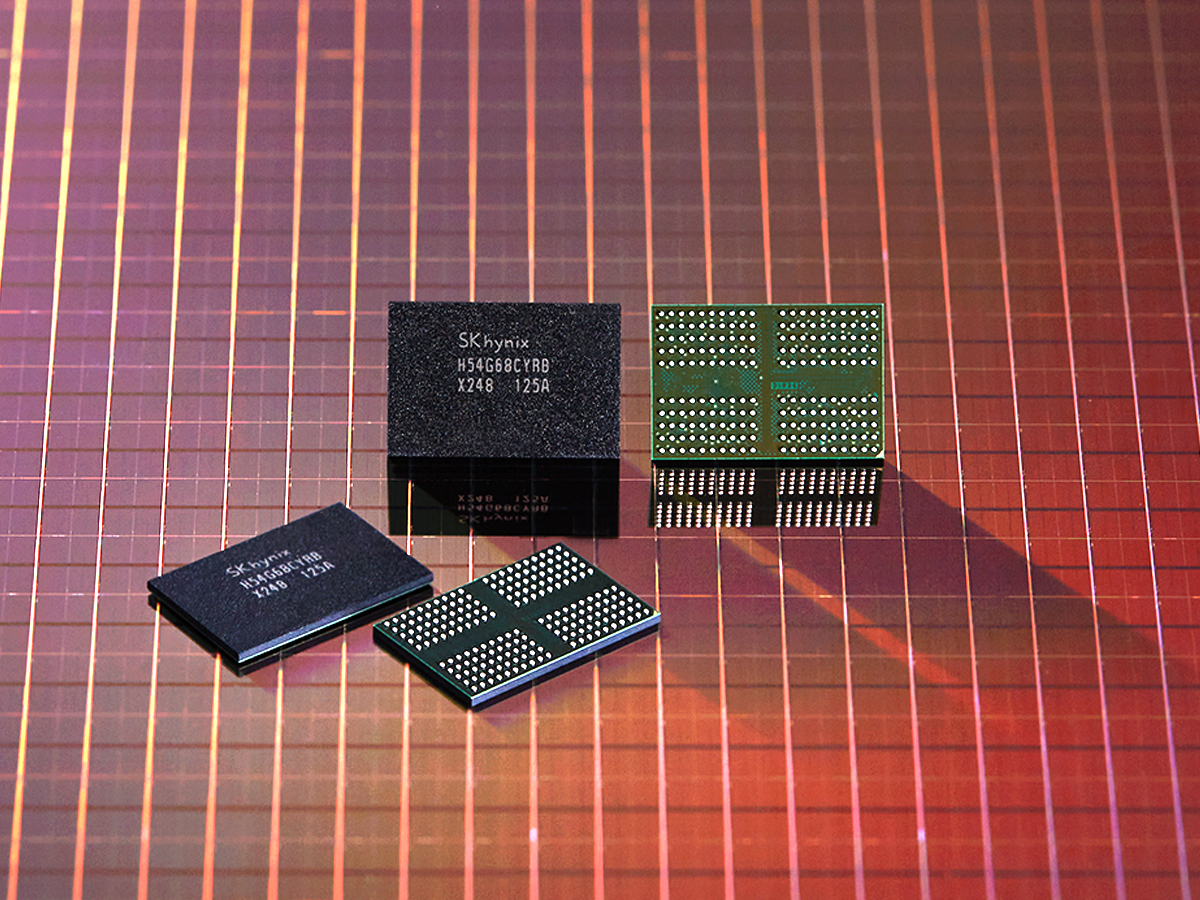
Memory shortages are no longer a niche problem limited to a few PC builders. They’re rippling across the entire tech industry, and the effects are starting to show up in pricing for everyday products. Laptops, desktop PCs, smartphones, and a long list of memory-dependent devices could become more expensive as DRAM supply tightens and manufacturers respond with aggressive price increases.
Industry watchers have been warning that this could turn into a prolonged “memory supercycle,” with pressure that may last well into 2027 and potentially beyond. To better understand what’s happening inside the DRAM supply chain and what’s realistically being done to ease the strain, we contacted SK hynix for an update on current conditions and expansion plans.
One of the clearest takeaways is that ramping memory production isn’t something that can be fixed quickly. Even when companies decide to expand, building new capacity and rebalancing production lines takes months—or, in the case of major fabrication projects, years. SK hynix indicated that it’s still too early to make firm claims about exactly how long shortages will last because the supply chain is still adjusting and future demand—especially from AI—remains difficult to predict.
What SK hynix did share is how it’s preparing for a world where DRAM demand rises faster than earlier expectations, largely due to AI-driven computing. The company says it has finished two years of construction on its new M15X fabrication facility and opened it ahead of schedule. M15X is focused on HBM (High Bandwidth Memory), the high-performance memory increasingly used in AI accelerators and advanced computing, and SK hynix expects the site to begin full-scale mass production next year.
The company also emphasized that it’s proactively securing more “fab space” and “production capacity” through advanced infrastructure projects. Alongside M15X, SK hynix is also working toward the Yongin fab, which is targeted to open in the first half of 2027. The goal is to respond efficiently to rising AI memory demand and changing customer requirements.
While SK hynix didn’t offer a detailed timeline for when broader pricing might stabilize, it did point to how these investments are designed to materially increase supply. M15X is described as a major project—reportedly around $3.6 billion—expected to contribute a notable share of the company’s monthly wafer output, focused specifically on HBM. The company also expects a significant boost in DRAM production capacity by the first half of 2027, aligning with the opening of additional infrastructure.
Another major concern for consumers is whether memory makers will prioritize the most profitable customers as shortages intensify. Large cloud service providers and major tech companies are increasingly pursuing long-term DRAM contracts, and that can leave general consumer segments—like gaming PCs and mainstream laptops—fighting over what’s left. On customer allocation, SK hynix didn’t go into specifics, but it said its DRAM production lines support a diverse range of customers and that it’s working to respond to overall market demand.
SK hynix also made it clear it intends to sustain a high market share in HBM not only with major GPU customers but across a wider set of buyers, including ASIC-focused segments. The company says it plans to collaborate with customers on next-generation product development as AI hardware continues to evolve, and that expanding production through new fab projects remains a key part of meeting demand.
For consumers, the practical reality is straightforward: when DRAM is tight, the cost pressure doesn’t stay confined to the memory aisle. It spreads into the final price of PCs, laptops, phones, and components. And with AI demand accelerating while expansion projects take time to deliver meaningful volume, the near-term outlook suggests pricing could get worse before it gets better—especially for buyers in the mainstream market who don’t have long-term supply contracts backing their purchases.