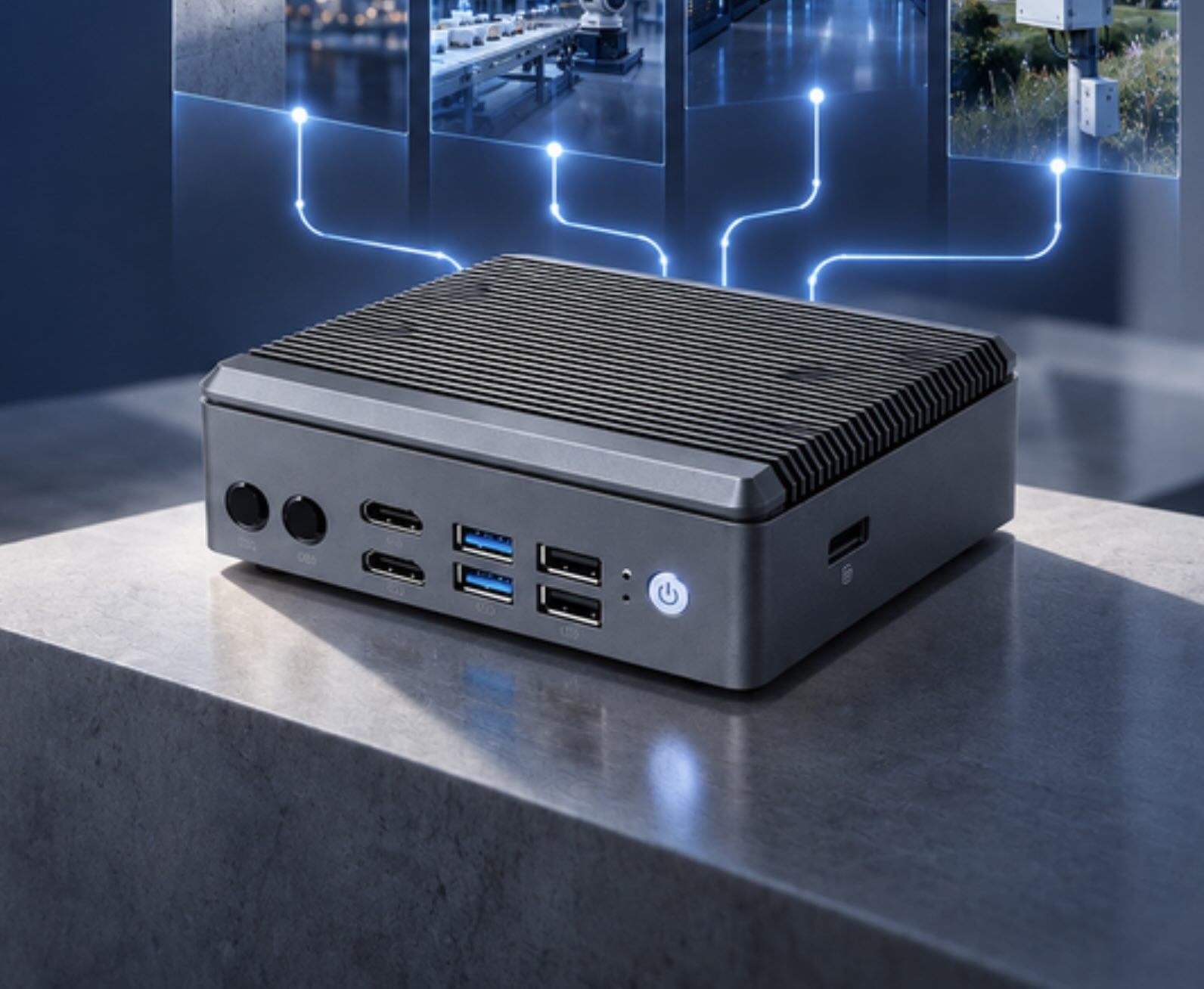
Maxtang NXALN51 Mini PC Debuts With Fanless Design, Intel Twin Lake CPUs, and Four 2.5G Ethernet Ports
Maxtang has unveiled the NXALN51, a compact fanless mini PC designed for users who want silent operation, low power consumption, and strong wired networking in a small desktop footprint. Built around Intel’s Twin Lake processor lineup, the system targets home labs, firewall setups, edge computing, office deployments, digital signage, and other lightweight workloads where reliability and connectivity matter more than raw processing power.
The NXALN51 can be configured with Intel N100 or Intel N150 processors. Both chips feature four cores and four threads, making them suitable for everyday computing tasks, basic server duties, network management, media playback, and light productivity. The Intel N150 reaches a maximum clock speed of 3.6 GHz, while the Intel N100 tops out at 3.4 GHz.
One of the biggest advantages of these processors is efficiency. Both CPUs are rated at just 6 W, allowing the NXALN51 to operate without a cooling fan. That means the system can run silently, with fewer moving parts and potentially improved long-term durability compared with traditional fan-cooled mini PCs.
Performance is modest, but that is expected for a system focused on low power and silent operation. The Intel N100 and N150 are not meant to compete with more powerful mini PCs using newer AMD Ryzen or higher-end Intel chips. Instead, the NXALN51 is aimed at practical, always-on use cases where quiet performance and low energy draw are more important than heavy multitasking or demanding creative workloads.
Networking is the standout feature of the Maxtang NXALN51. The mini PC includes four 2.5G Ethernet ports, giving it far more wired connectivity than most compact desktops in its class. This makes it an appealing option for users building a small router, firewall appliance, VPN server, NAS controller, or network monitoring system.
For businesses and advanced home users, the four 2.5G LAN ports could be especially useful. They allow the system to handle multiple network segments, high-speed local transfers, or dedicated connections for different devices and services. This level of networking flexibility is rarely found in ultra-compact fanless PCs.
The port selection also includes dual USB 2.0 ports, dual USB 3.2 ports, a SIM slot, an RS232 COM port, and dual HDMI 2.0 outputs. The HDMI ports allow the system to drive two displays, which could be useful for kiosks, dashboards, monitoring stations, or office setups.
Storage options include an M.2 2280 slot and a SATA 3 connection, giving users flexibility when configuring the device. The M.2 slot can be used for a compact SSD, while the SATA interface allows support for additional storage depending on the configuration and enclosure design.
Memory support is handled through a single DDR4 SODIMM slot, with support for up to 16 GB of RAM. This makes upgrades simple, especially for users who prefer buying a barebones configuration and adding their own memory and storage.
The NXALN51 is also impressively compact. It measures 12.7 x 12.7 x 4.35 cm, or about 5 x 5 x 1.71 inches. That small size makes it easy to place on a desk, mount behind a display, install in a network cabinet, or deploy in tight spaces where a traditional desktop would be impractical.
Pricing and availability have not yet been confirmed. Maxtang sells products in the United States and select international markets, so the NXALN51 may eventually appear in multiple regions. Given its low-power Intel processor options, the mini PC could arrive at a relatively affordable price, though the fanless chassis and four 2.5G Ethernet ports may push it above basic entry-level models.
Overall, the Maxtang NXALN51 looks like a specialized but practical mini PC for users who need silent operation and strong wired networking in a tiny form factor. It may not be the best choice for demanding desktop workloads, but for home networking, edge computing, light server tasks, industrial use, and always-on deployments, it offers a compelling mix of efficiency, connectivity, and compact design.