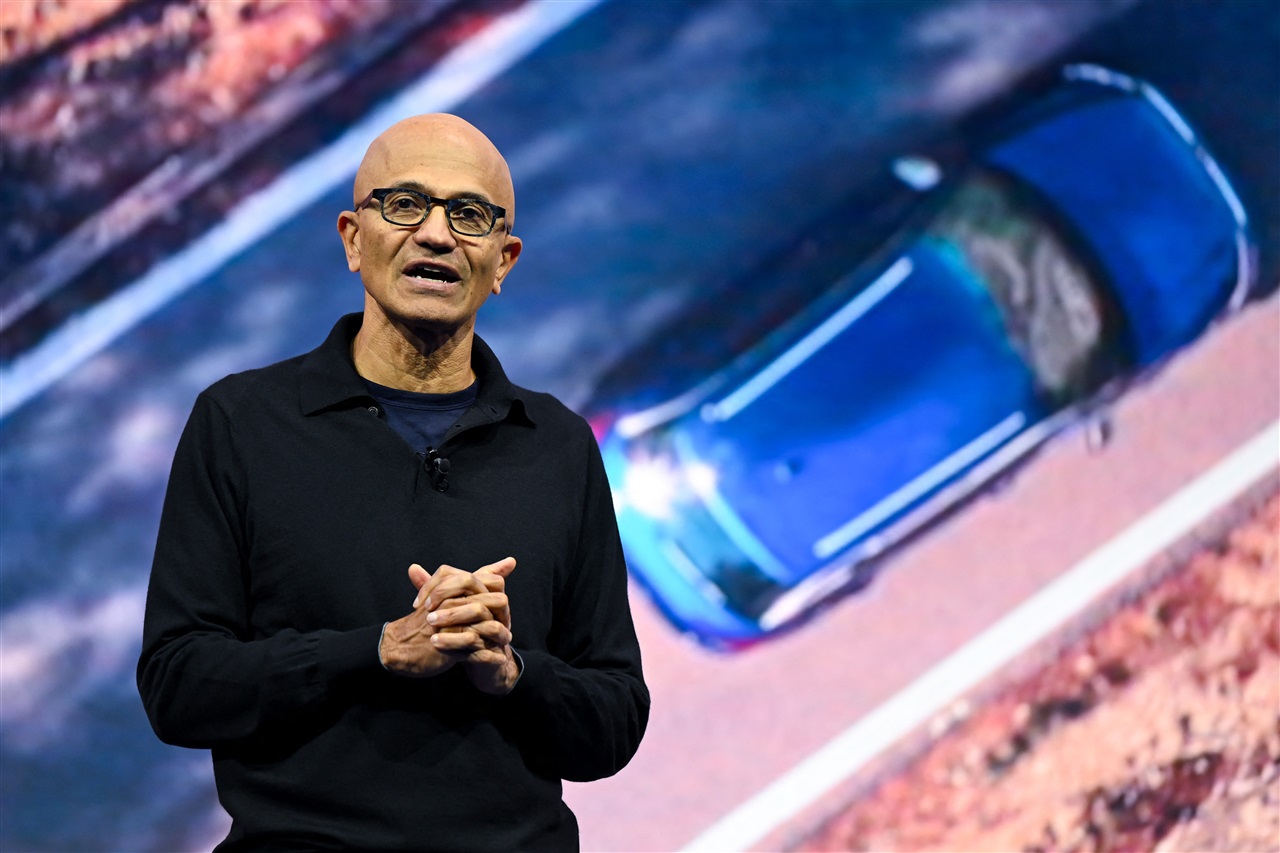
Satya Nadella Warns AI Profits Must Not Be Captured by Only a Few Companies
Microsoft CEO Satya Nadella has issued a timely warning about the future of artificial intelligence, urging the technology industry to avoid a scenario where the economic rewards of AI are concentrated in the hands of only a small group of powerful companies.
As the AI race accelerates, major technology firms are investing billions of dollars into advanced models, cloud infrastructure, data centers, and AI-powered software. While this rapid development is reshaping the global digital economy, Nadella believes the real measure of success should not be limited to which companies dominate the market. Instead, he argues that AI must create broad economic value across industries, businesses, workers, and society as a whole.
In recent comments, Nadella criticized the current direction of the AI boom, suggesting that the industry should focus less on competition for dominance and more on practical impact. For AI to truly deliver on its promise, its benefits need to reach beyond the largest corporations and become accessible to startups, small businesses, developers, and everyday users.
The concern is clear: if AI becomes a tool controlled mainly by a few companies with the resources to build and operate massive computing systems, the technology could widen existing economic gaps. Businesses without access to advanced AI tools may struggle to compete, while workers and smaller organizations could be left behind in a market increasingly shaped by automation and intelligent software.
Nadella’s comments arrive at a moment when artificial intelligence is becoming one of the most important forces in business strategy. Companies are using AI to improve customer service, write code, analyze data, generate content, automate repetitive tasks, and enhance productivity. At the same time, the cost of building leading AI systems remains extremely high, giving an advantage to firms with deep financial resources and extensive cloud computing capacity.
For Microsoft, AI has become central to its long-term vision. The company has integrated AI features across its productivity tools, cloud services, developer platforms, and enterprise products. However, Nadella’s warning suggests that the next chapter of AI should not be judged only by revenue growth or market share. It should also be judged by how widely the technology improves productivity and creates opportunity.
This perspective highlights a larger debate now unfolding across the tech world: who should benefit most from artificial intelligence? If AI is viewed only as a profit engine for a small number of corporations, public trust could weaken. But if AI helps businesses become more efficient, supports workers in doing higher-value tasks, and opens new opportunities for innovation, it could become a major driver of global economic growth.
Nadella’s message is also important for policymakers and business leaders. As AI becomes more powerful, questions around access, competition, regulation, and responsible deployment will become harder to ignore. Ensuring that AI tools remain widely available may be essential to preventing market concentration and encouraging healthy innovation.
The next phase of the AI era will likely be defined not just by better models or faster systems, but by how effectively the technology is distributed across the economy. Nadella’s warning serves as a reminder that artificial intelligence should not become a winner-takes-all industry. Its greatest potential lies in helping more people and organizations succeed, not simply increasing the profits of a few dominant players.